


A synthetic 7,8-dihydroxyflavone derivative promotes neurogenesis and exhibits potent antidepressant effect
- PMID: 21073191
- PMCID: PMC3150605
- DOI: 10.1021/jm101206p
A synthetic 7,8-dihydroxyflavone derivative promotes neurogenesis and exhibits potent antidepressant effect
Abstract
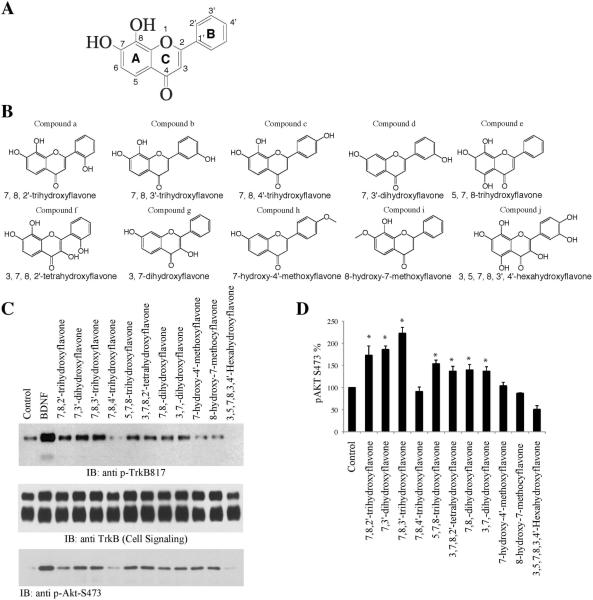
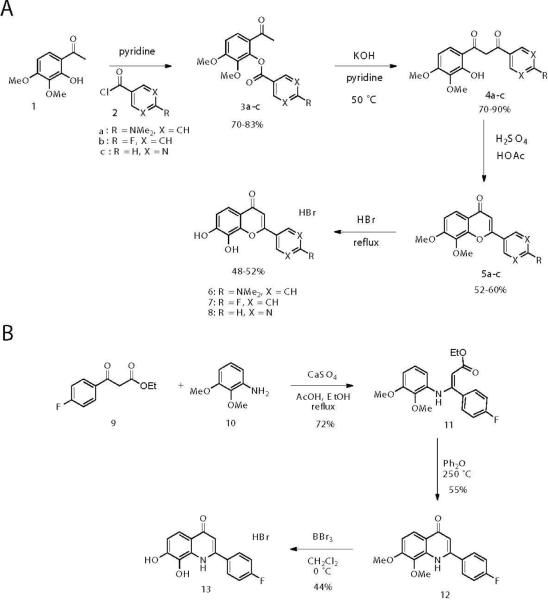
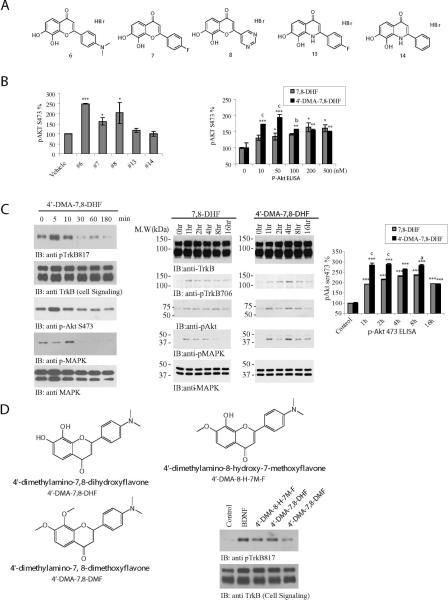
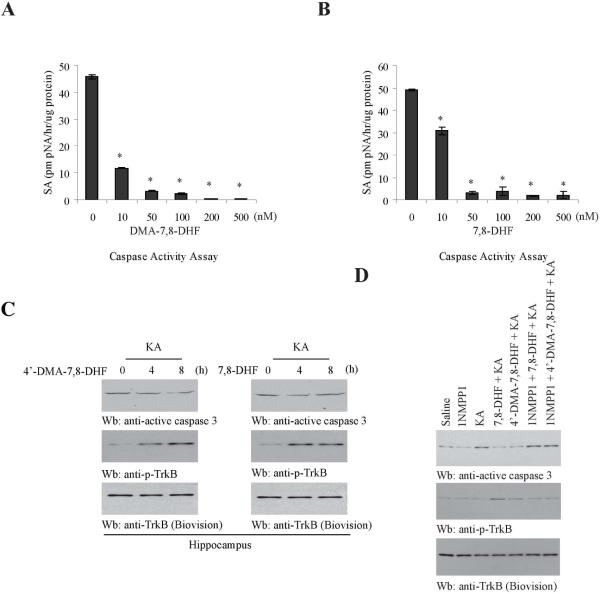
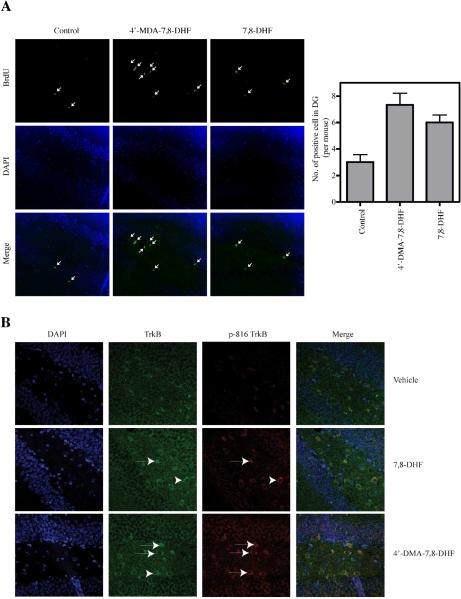
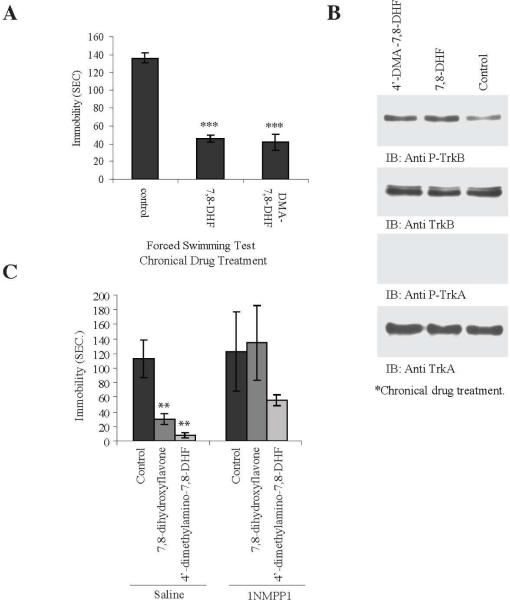
7,8-Dihydroxyflavone is a recently identified small molecular tropomyosin-receptor-kinase B (TrkB) agonist. Our preliminary structural-activity relationship (SAR) study showed that the 7,8-dihydroxy groups are essential for the agonistic effect. To improve the lead compound's agonistic activity, we have conducted an extensive SAR study and synthesized numerous derivatives. We have successfully identified 4'-dimethylamino-7,8-dihydroxyflavone that displays higher TrkB agonistic activity than that of the lead. This novel compound also exhibits a more robust and longer TrkB activation effect in animals. Consequently, this new compound reveals more potent antiapoptotic activity. Interestingly, chronic oral administration of 4'-dimethylamino-7,8-dihydroxyflavone and its lead strongly promotes neurogenesis in dentate gyrus and demonstrates marked antidepressant effects. Hence, our data support that the synthetic 4'-dimethylamino-7,8-dihydroxyflavone and its lead both are orally bioavailable TrkB agonists and possess potent antidepressant effects.
Figures
References
-
- Lewin GR, Barde YA. Physiology of the neurotrophins. Annu Rev Neurosci. 1996;19:289–317. - PubMed
-
- Thoenen H. The changing scene of neurotrophic factors. Trends Neurosci. 1991;14:165–170. - PubMed
-
- Kaplan DR, Miller FD. Neurotrophin signal transduction in the nervous system. Curr Opin Neurobiol. 2000;10:381–391. - PubMed
-
- Nagappan G, Lu B. Activity-dependent modulation of the BDNF receptor TrkB: mechanisms and implications. Trends Neurosci. 2005;28:464–471. - PubMed
Publication types
MeSH terms
Substances
Grants and funding
LinkOut - more resources
Full Text Sources
Other Literature Sources
Medical
Miscellaneous
