Effects of posttraumatic carbamylated erythropoietin therapy on reducing lesion volume and hippocampal cell loss, enhancing angiogenesis and neurogenesis, and improving functional outcome in rats following traumatic brain injury
- PMID: 21073254
- PMCID: PMC3057520
- DOI: 10.3171/2010.10.JNS10925
Effects of posttraumatic carbamylated erythropoietin therapy on reducing lesion volume and hippocampal cell loss, enhancing angiogenesis and neurogenesis, and improving functional outcome in rats following traumatic brain injury
Abstract
Object: Carbamylated erythropoietin (CEPO) is a modified erythropoietin molecule that does not affect hematocrit. In this study, the authors compared the efficacy of a single dose with a triple dose of CEPO treatment for traumatic brain injury (TBI) in rats.
Methods: Traumatic brain injury was induced by controlled cortical impact over the left parietal cortex. Carbamylated erythropoietin (50 μg/kg) was administered intraperitoneally in rats with TBI at 6 hours (CEPO × 1) or at 6, 24, and 48 hours (CEPO × 3) postinjury. Neurological function was assessed using a modified neurological severity score and foot fault and Morris water maze tests. Animals were killed 35 days after injury, and brain sections were stained for immunohistochemical analysis to assess lesion volume, cell loss, cell proliferation, angiogenesis, and neurogenesis after CEPO treatment.
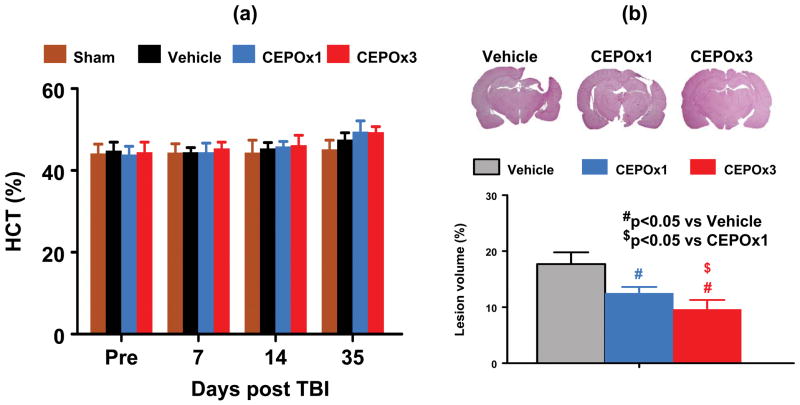
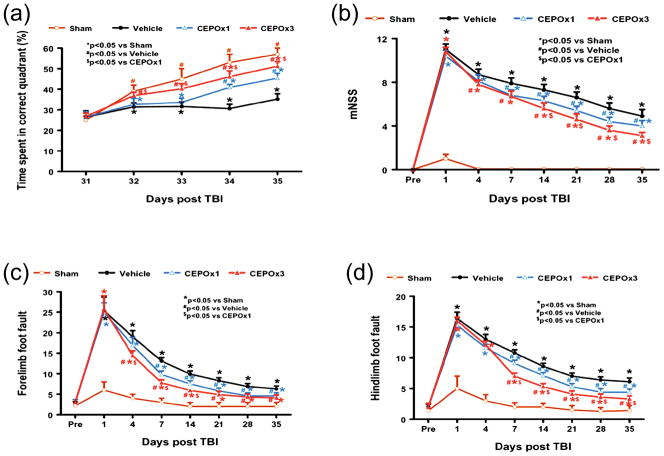
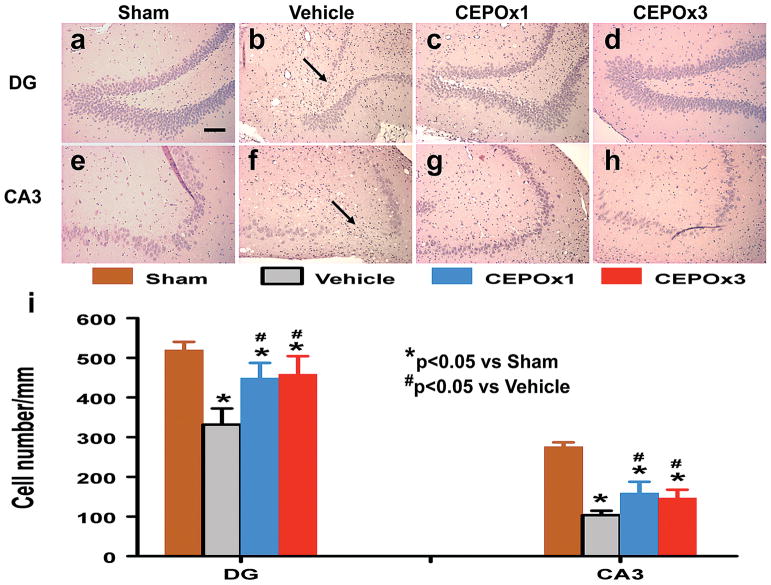
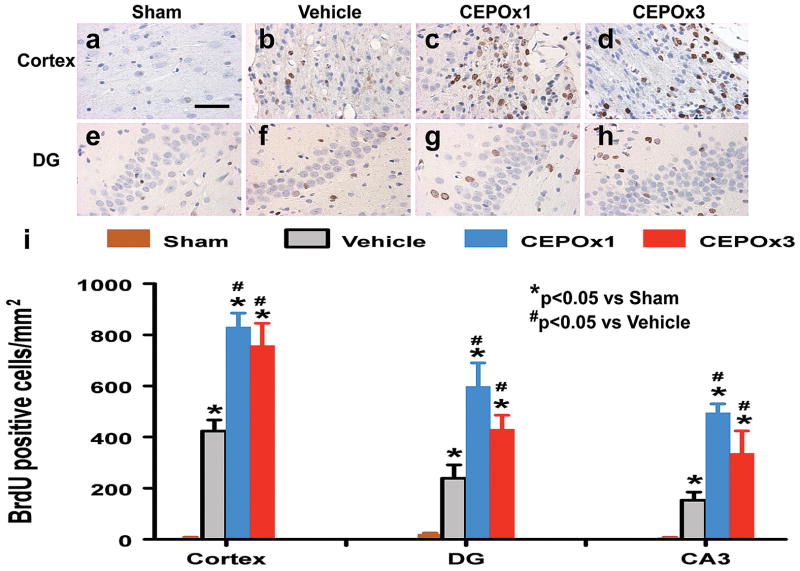
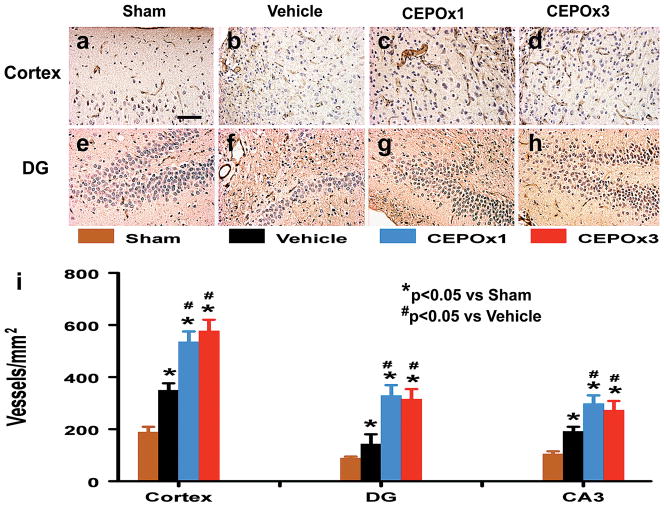
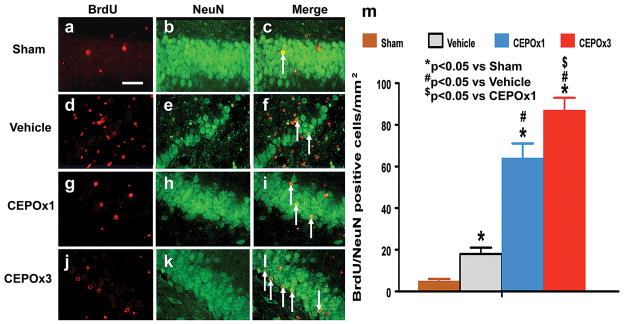
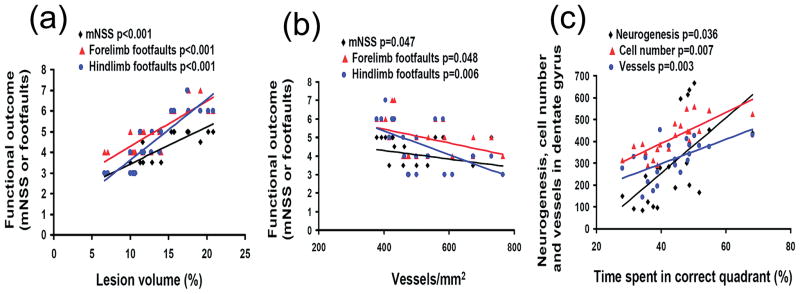
Results: Compared with the vehicle treatment, single treatment of CEPO (6 hours) significantly reduced lesion volume and hippocampal cell loss, enhanced angiogenesis and neurogenesis in the injured cortex and hippocampus, and significantly improved sensorimotor functional recovery and spatial learning in rats after TBI. Importantly, triple dosing of CEPO (6, 24, and 48 hours) further reduced lesion volume and improved functional recovery and neurogenesis compared with the CEPO × 1 group.
Conclusions: The authors' results indicate that CEPO has considerable therapeutic potential in TBI and related pathologies and furthermore that repeated dosing in the subacute phase might have important pharmacological relevance.
Conflict of interest statement
Figures
References
-
- Adembri C, Massagrande A, Tani A, Miranda M, Margheri M, De Gaudio R, et al. Carbamylated erythropoietin is neuroprotective in an experimental model of traumatic brain injury. Crit Care Med. 2008;36:975–978. - PubMed
-
- Baskin YK, Dietrich WD, Green EJ. Two effective behavioral tasks for evaluating sensorimotor dysfunction following traumatic brain injury in mice. J Neurosci Methods. 2003;129:87–93. - PubMed
-
- Cerami A, Brines ML, Ghezzi P, Cerami CJ. Effects of epoetin alfa on the central nervous system. Semin Oncol. 2001;28:66–70. - PubMed
Publication types
MeSH terms
Substances
Grants and funding
LinkOut - more resources
Full Text Sources
Other Literature Sources