


Dose-dependent toxic effects of high-dose estrogen on renal and cardiac injury in surgically postmenopausal mice
- PMID: 21074543
- PMCID: PMC3019261
- DOI: 10.1016/j.lfs.2010.11.008
Dose-dependent toxic effects of high-dose estrogen on renal and cardiac injury in surgically postmenopausal mice
Abstract
Aims: We previously found that in mice with experimental myocardial infarction (MI), 17β-estradiol (E2) increased mortality and worsened cardiac remodeling and these deleterious effects were associated with renal enlargement and hydronephrosis in a dose-dependent manner. In the present study we questioned whether E2-induced renal damage predisposes to rather than results from its adverse effects on the heart.
Main methods: Ovariectomized (ovx) mice received either placebo (P) or E2 at 0.02 (E2-L, low dose), 0.42 (E2-M, moderate dose) or 4.2 μg/d (E2-H, high dose) for 8 weeks.
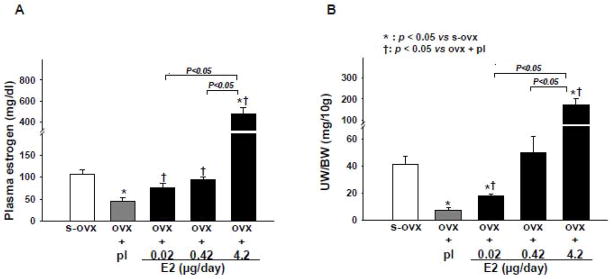
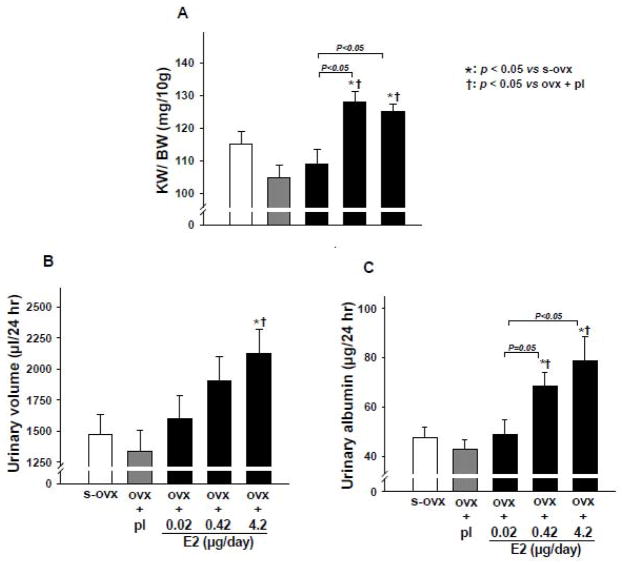
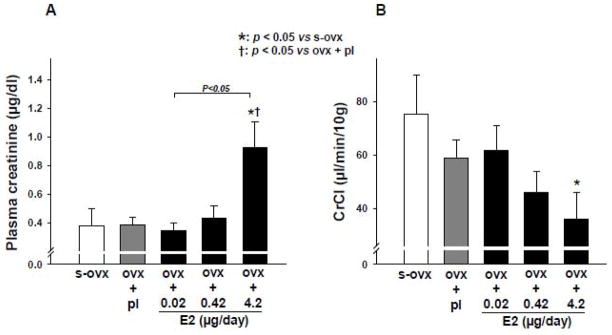
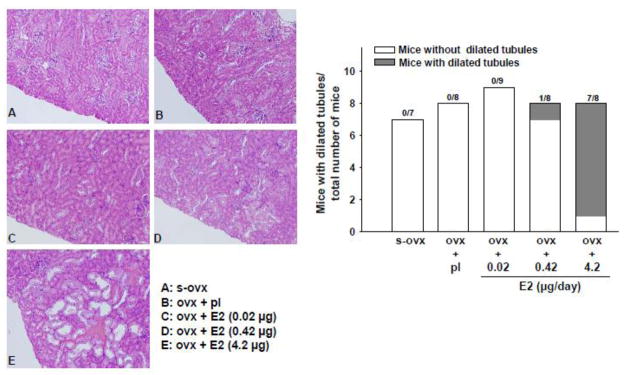
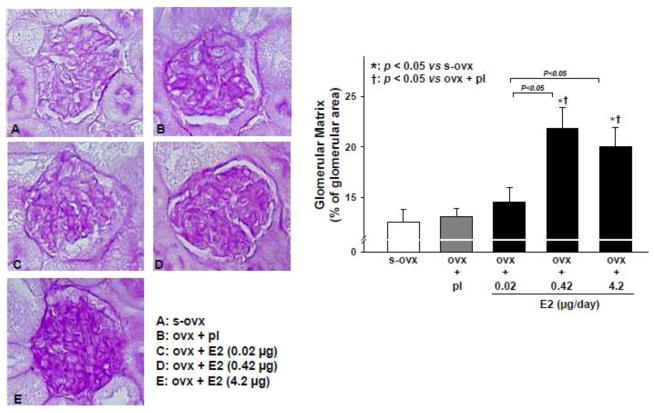
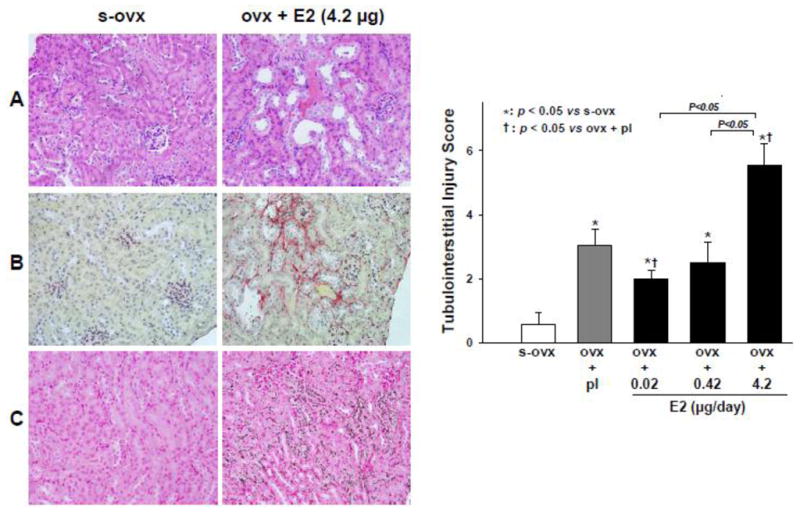
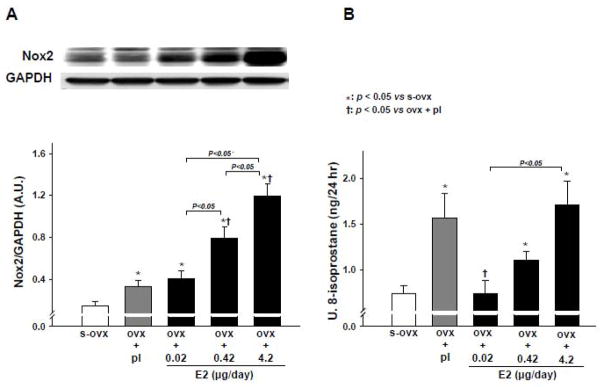
Key findings: E2-L partially restored uterine weight and plasma estrogen levels without affecting heart, lung and liver weight, hemodynamic parameters, or heart and kidney morphology and function. E2-M restored normal uterine weight, but this was accompanied by a significant increase in kidney weight, albuminuria, glomerular matrix formation and markers for oxidative stress. E2-H increased uterine weight 4.5-fold and resulted in higher plasma creatinine levels, severe albuminuria, renal tubular dilatation, tubulointerstitial injury, hydronephrosis, glomerulosclerosis and oxidative stress. E2-H also caused ascites, hepatomegaly and fluid retention in the uterine horns but had no significant effect on blood pressure or heart function.
Significance: Our data demonstrated that an excessive dose of E2 that raises uterine weight beyond physiological levels adversely affects the kidney even before it damages the heart. We believe estrogen dosage should be taken into account when considering hormonal replacement therapy, since inappropriate doses of E2 may damage not only the heart but also the kidney.
Copyright © 2010 Elsevier Inc. All rights reserved.
Figures
References
-
- Adams KF, Jr, Sueta CA, Gheorghiade M, O’Connor CM, Schwartz TA, Koch GG, Uretsky B, Swedberg K, McKenna W, Soler-Soler J, Califf RM for the FIRST Investigators. Gender differences in survival in advanced heart failure. Insights from the FIRST study. Circulation. 1999;99 (14):1816–1821. - PubMed
-
- Agarwal M, Selvan V, Freedman BI, Liu Y, Wagenknecht LE. The relationship between albuminuria and hormone therapy in postmenopausal women. American Journal of Kidney Disease. 2005;45 (6):1019–1025. - PubMed
-
- Ba J, Friedman PA. Calcium-sensing receptor regulation of renal mineral ion transport. Cell Calcium. 2004;35 (3):229–237. - PubMed
-
- Beer S, Reincke M, Kral M, Callies F, Stromer H, Dienesch C, Steinhauer S, Ertl G, Allolio B, Neubauer S. High-dose 17beta-estradiol treatment prevents development of heart failure post-myocardial infarction in the rat. Basic Research of Cardiology. 2007;102 (1):9–18. - PubMed
-
- Blakeman PJ, Hilton P, Bulmer JN. Oestrogen and progesterone receptor expression in the female lower urinary tract, with reference to oestrogen status. BJU International. 2000;86 (1):32–38. - PubMed
Publication types
MeSH terms
Substances
Grants and funding
LinkOut - more resources
Full Text Sources
