


Evidence for prenylation-dependent targeting of a Ykt6 SNARE in Plasmodium falciparum
- PMID: 21075148
- PMCID: PMC3030980
- DOI: 10.1016/j.molbiopara.2010.11.007
Evidence for prenylation-dependent targeting of a Ykt6 SNARE in Plasmodium falciparum
Abstract
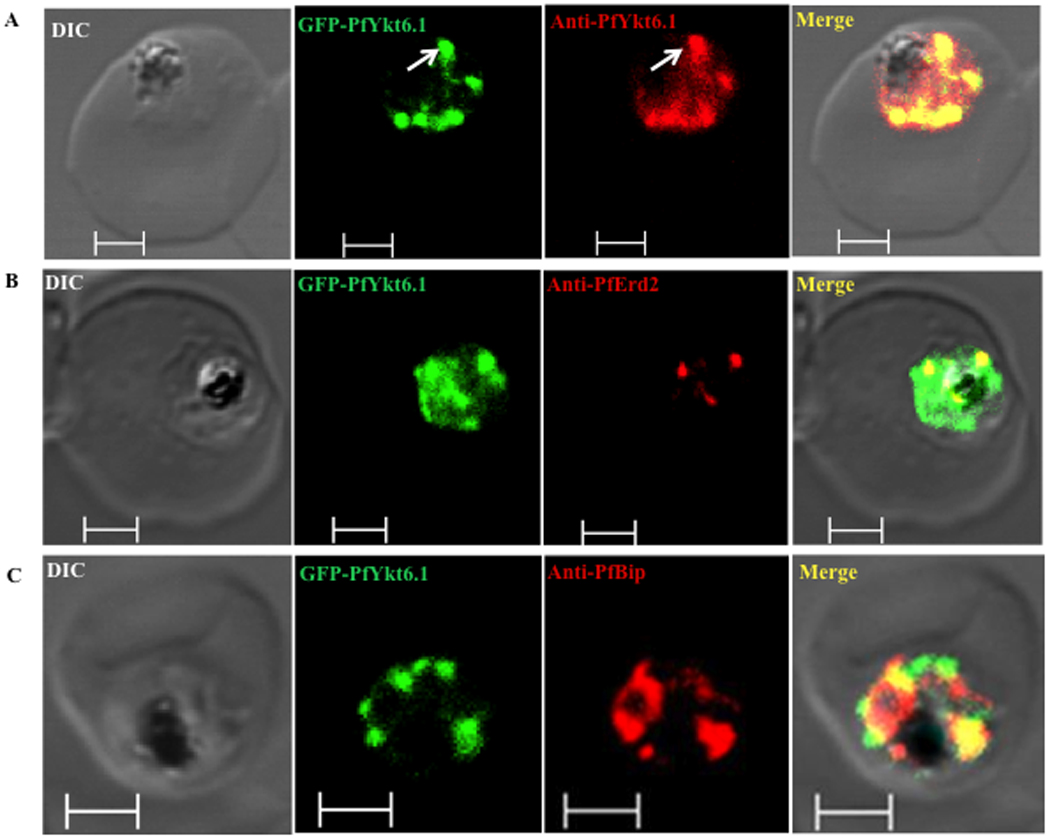
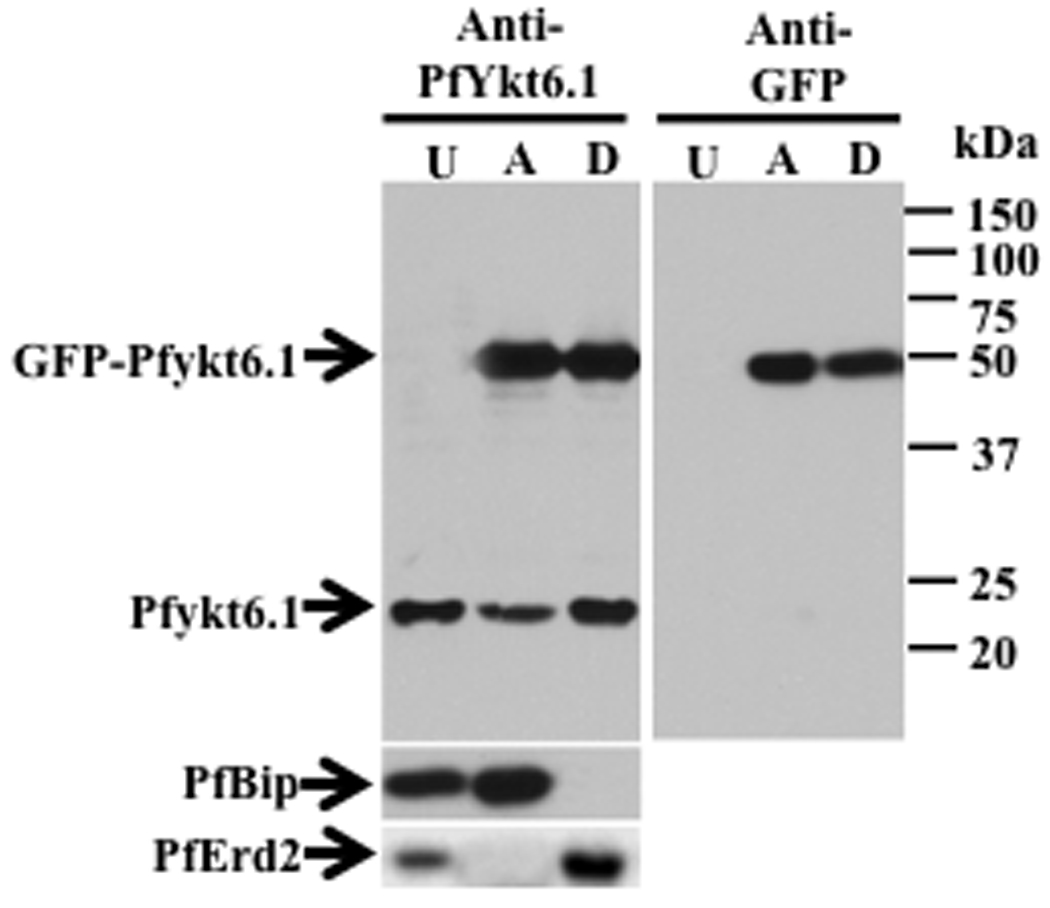
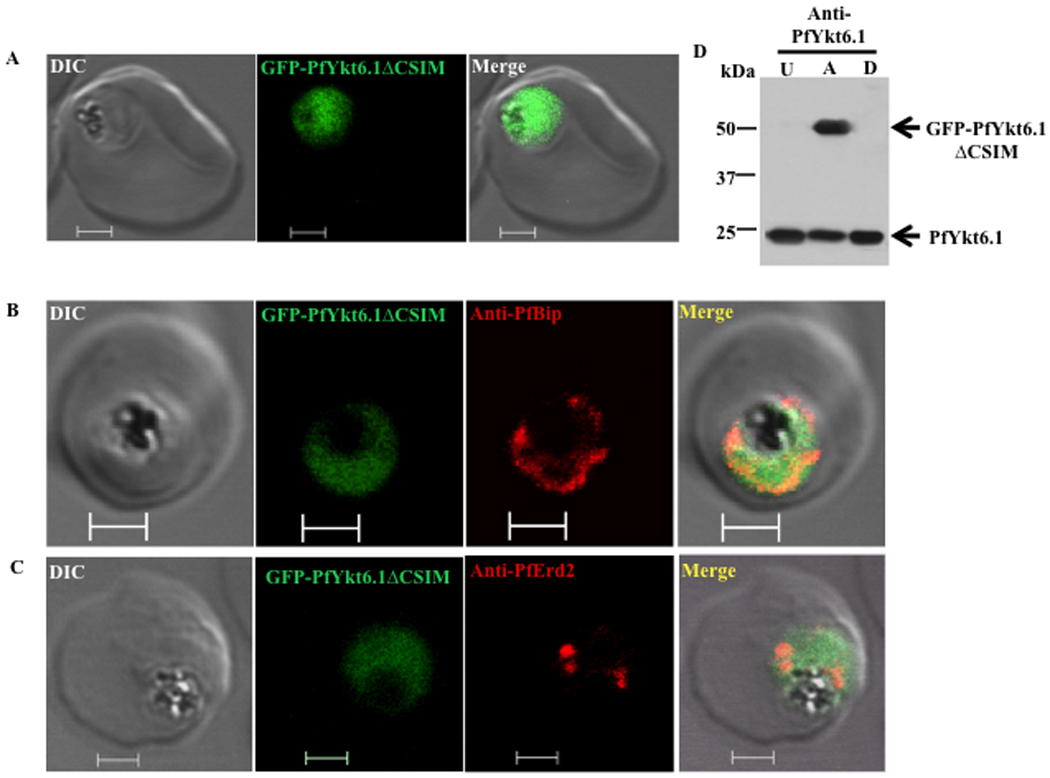
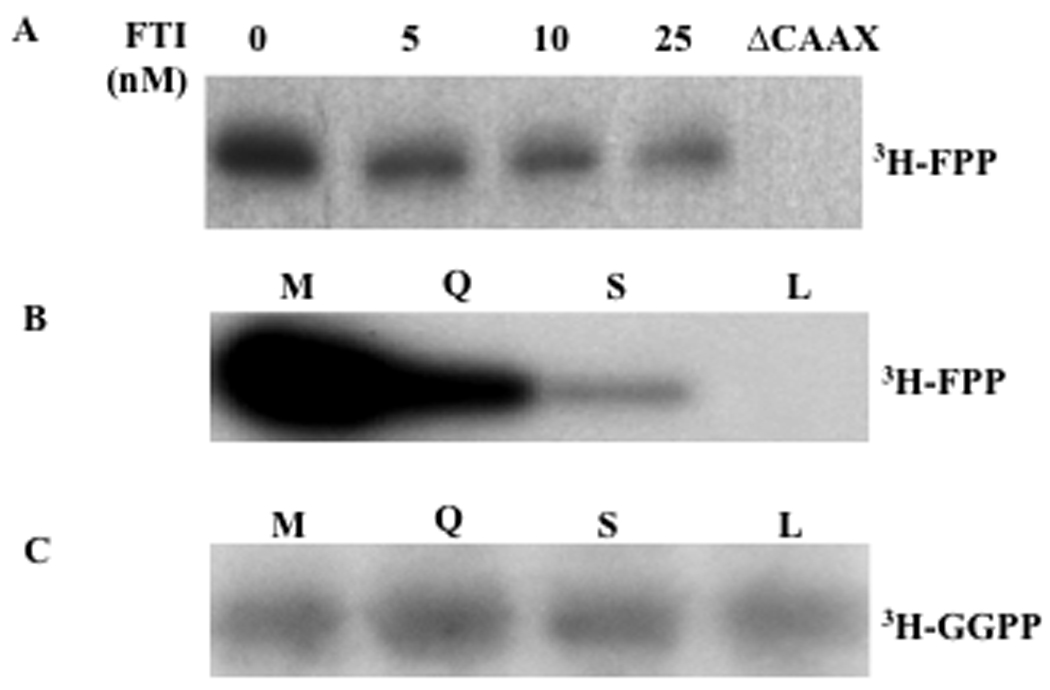
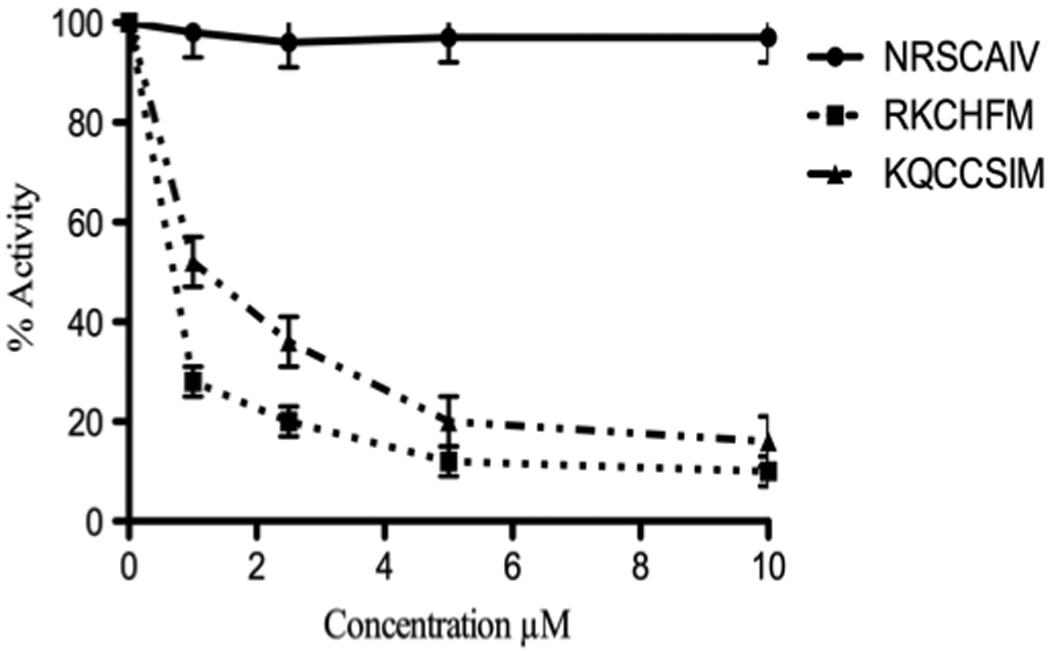
Ykt6 proteins are the most versatile fusogens in eukaryotic cells, and the only SNAREs that can be both prenylated and acylated at a C-terminal CAAX motif. Unlike yeast and mammalian cells where a single Ykt6 gene is expressed, the Plasmodium falciparum genome encodes two Ykt6 proteins. We have investigated the expression and prenylation of the Ykt6 orthologue, PfYkt6.1 in intra-erythrocytic stages of P. falciparum. PfYkt6.1 localized to the parasite Golgi and other unidentified cytoplasmic compartments, and was partly cytosolic (∼50% in early trophozoites). The membrane-association of PfYkt6.1 was dependent on the presence of a conserved C-terminal CAAX motif (CCSIM). By expressing full-length and mutant proteins in Escherichia coli, we have shown that PfYkt6.1 indeed serves as substrate for prenylation by P. falciparum farnesyltransferases. Surprisingly, PfYkt6.1 could also be geranylgeranylated by parasite extracts independent of the C-terminal amino acid residue. Deletion of the CAAX motif inhibited both farnesylation and geranylgeranylation activities. Additionally, the PfYkt6.1 heptapeptide KQCCSIM, corresponding to the C-terminal CAAX sequence, inhibited the parasite farnesyltransferase activity with an IC(50) of 1 μM. Our findings underscore the importance of CAAX motif-derived peptidomimetics for antimalarial drug development.
Copyright © 2010 Elsevier B.V. All rights reserved.
Figures
References
-
- Hong W. SNAREs and traffic. Biochim Biophys Acta. 2005;1744:120–144. - PubMed
-
- Jahn R, Scheller RH. SNAREs--engines for membrane fusion. Nat Rev Mol Cell Biol. 2006;7:631–643. - PubMed
-
- Pelham HR. SNAREs and the specificity of membrane fusion. Trends Cell Biol. 2001;11:99–101. - PubMed
-
- Borgese N, Brambillasca S, Soffientini P, Yabal M, Makarow M. Biogenesis of tail-anchored proteins. Biochem Soc Trans. 2003;31:1238–1242. - PubMed
-
- Steel GJ, Brownsword J, Stirling CJ. Tail-anchored protein insertion into yeast ER requires a novel posttranslational mechanism which is independent of the SEC machinery. Biochemistry. 2002;41:11914–11920. - PubMed
MeSH terms
Substances
Grants and funding
LinkOut - more resources
Full Text Sources
Molecular Biology Databases
