


Characterisation of source-separated household waste intended for composting
- PMID: 21075618
- PMCID: PMC3024507
- DOI: 10.1016/j.biortech.2010.10.075
Characterisation of source-separated household waste intended for composting
Abstract
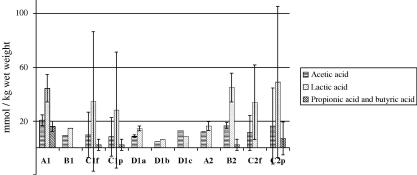
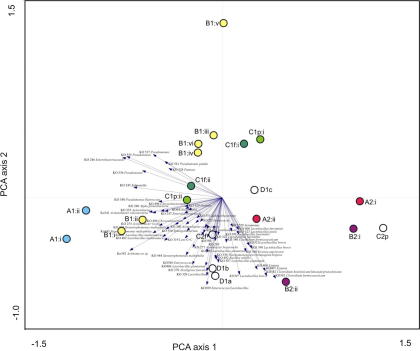
Large-scale composting of source-separated household waste has expanded in recent years in the Nordic countries. One problem can be low pH at the start of the process. Incoming biowaste at four composting plants was characterised chemically, physically and microbiologically. The pH of food waste ranged from 4.7 to 6.1 and organic acid concentration from 24 to 81 mmol kg(-1). The bacterial diversity in the waste samples was high, with all samples dominated by Gammaproteobacteria, particularly Pseudomonas and Enterobacteria (Escherichia coli, Klebsiella, Enterobacter). Lactic acid bacteria were also numerically important and are known to negatively affect the composting process because the lactic acid they produce lowers the pH, inhibiting other bacteria. The bacterial groups needed for efficient composting, i.e. Bacillales and Actinobacteria, were present in appreciable amounts. The results indicated that start-up problems in the composting process can be prevented by recycling bulk material and compost.
Copyright © 2010 Elsevier Ltd. All rights reserved.
Figures


References
-
- Aasen, R., Lystad, H. 2002. Bruk av strukturmateriale i kompostering av våtorganisk avfall. (Use of structure material in biowaste composting). Ås, Norge, Jordforsk: Rapport 26/02. In Norwegian.
-
- Adhikari B.K., Barrington S., Martinez J., King S. Characterization of food waste and bulking agents for composting. Waste Manage. 2008;28:795–804. - PubMed
-
- Cayuela M.L., Mondini C., Insam H., Sinicco T., Franke-Whittle I. Plant and animal wastes composting: effects of the N source on process performance. Bioresour. Technol. 2009;100:3097–3106. - PubMed
-
- Danon M., Franke-Whittle I.H., Insam H., Chen Y., Hadar Y. Molecular analysis of bacterial community succession during prolonged compost curing. Fems Microbiol. Ecol. 2008;65:133–144. - PubMed
-
- Ebringer A., Rashid T., Wilson C. Bovine spongiform encephalopathy, multiple sclerosis, and Creutzfeldt-Jakob disease are probably autoimmune diseases evoked by Acinetobacter bacteria. Annals of the New York Academy of Sciences. 2005;1050:417–428. - PubMed
Publication types
MeSH terms
LinkOut - more resources
Full Text Sources
