


Proteomics of spermatogenesis: from protein lists to understanding the regulation of male fertility and infertility
- PMID: 21076435
- PMCID: PMC3739396
- DOI: 10.1038/aja.2010.71
Proteomics of spermatogenesis: from protein lists to understanding the regulation of male fertility and infertility
Abstract
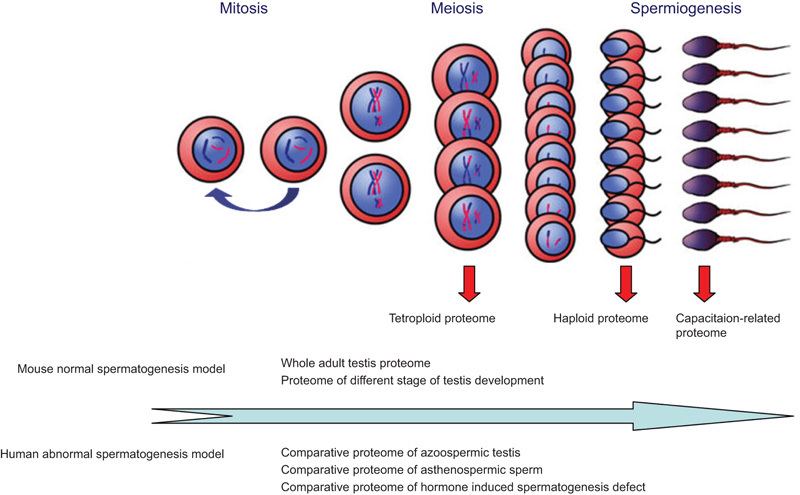
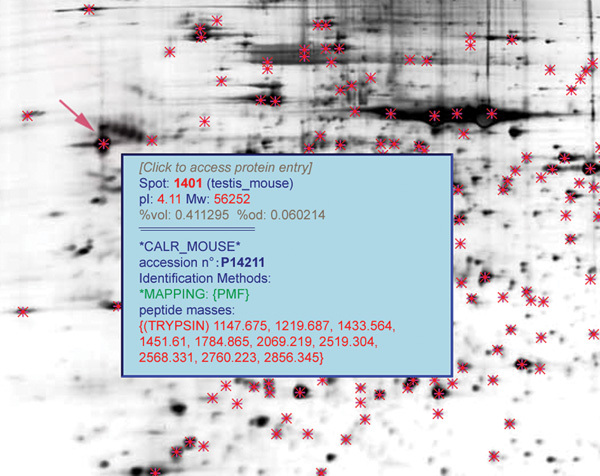
Proteomic technologies have undergone significant development in recent years, which has led to extensive advances in protein research. Currently, proteomic approaches have been applied to many scientific areas, including basic research, various disease and malignant tumour diagnostics, biomarker discovery and other therapeutic applications. In addition, proteomics-driven research articles examining reproductive biology and medicine are becoming increasingly common. The key challenge for this field is to move from lists of identified proteins to obtaining biological information regarding protein function. The present article reviews the available scientific literature related to spermatogenesis. In addition, this study uses two-dimensional electrophoresis mass spectrometry (2DE-MS) and liquid chromatography (LC)-MS to construct a series of proteome profiles describing spermatogenesis. This large-scale identification of proteins provides a rich resource for elucidating the mechanisms underlying male fertility and infertility.
Figures
References
-
- Baccetti B, Afzelius BA. The biology of the sperm cell. Monogr Dev Biol. 1976;10:1–254. - PubMed
-
- Eddy EM. Male germ cell gene expression. Recent Prog Horm Res. 2002;57:103–28. - PubMed
-
- Anway MD, Li Y, Ravindranath N, Dym M, Griswold MD. Expression of testicular germ cell genes identified by differential display analysis. J Androl. 2003;24:173–84. - PubMed
-
- Sha J, Zhou Z, Li J, Yin L, Yang H, et al. Identification of testis development and spermatogenesis-related genes in human and mouse testes using cDNA arrays. Mol Hum Reprod. 2002;8:511–7. - PubMed
-
- Guo R, Yu Z, Guan J, Ge Y, Ma J, et al. Stage-specific and tissue-specific expression characteristics of differentially expressed genes during mouse spermatogenesis. Mol Reprod Dev. 2004;67:264–72. - PubMed
Publication types
MeSH terms
Substances
LinkOut - more resources
Full Text Sources
Medical
