


Laxative effects of agarwood on low-fiber diet-induced constipation in rats
- PMID: 21078136
- PMCID: PMC2995776
- DOI: 10.1186/1472-6882-10-68
Laxative effects of agarwood on low-fiber diet-induced constipation in rats
Abstract
Background: Agarwood (Aquilaria sinensis), well known as incense in Southeast Asia, has been used as a digestive in traditional medicine. We investigated the laxative effects of an ethanol extract of agarwood leaves (EEA) in a rat model of low-fiber diet-induced constipation.
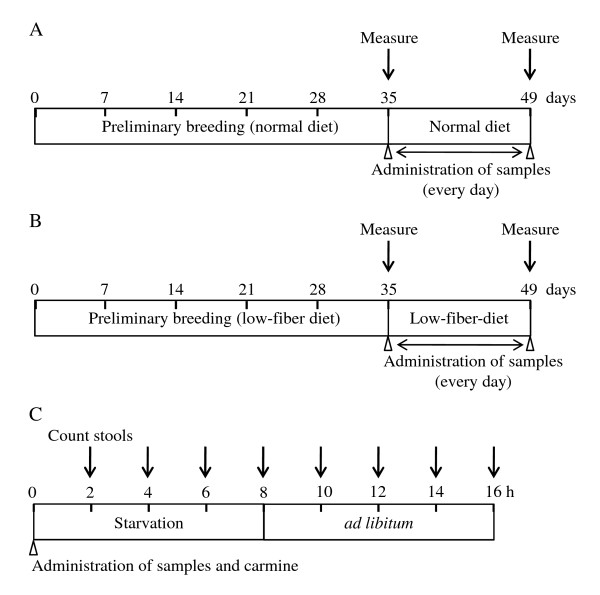
Methods: A set of rats was bred on a normal diet while another set was placed on a low-fiber diet to induce constipation. The laxative effect of agarwood was then investigated on both sets of rats.
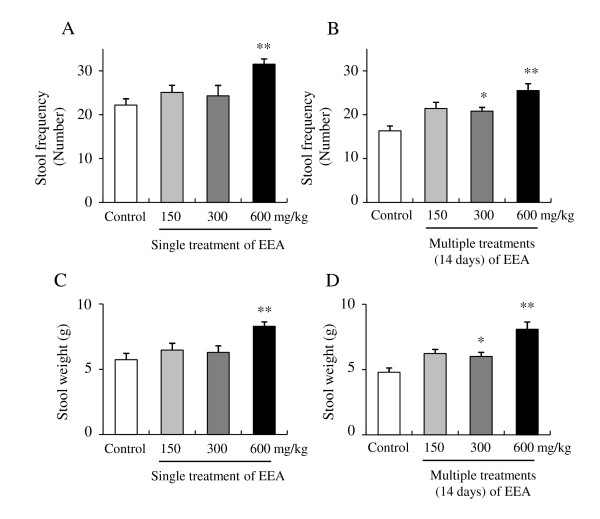
Results: Pretreatment of normal rats with single dose of EEA (600 mg/kg, p.o.) significantly increased frequency and weight of stools. Also, treatments with EEA (300 and 600 mg/kg, p.o.) for 14 days caused a significant increase in stool frequency and weight. Feeding of the animals with a low-fiber diet resulted in a decrease in stool weight, frequency, and water content and also delayed carmine egestion. A single treatment with EEA (600 mg/kg) or senna (150 and 300 mg/kg) significantly increased stool frequency, weight, and water content and also accelerated carmine egestion in the model rats. Once daily administrations of EEA (150 mg/kg), for 14 days, caused a significant increase in water content of stools. The higher doses of EEA (300 and 600 mg/kg) significantly increased frequency, weight, and water content of the stools while accelerating carmine egestion in the constipated rats. Senna (150 and 300 mg/kg) produced similar effect as the higher doses of EEA but, in addition, induced severe diarrhea.
Conclusion: These findings indicate that EEA has a laxative effect, without causing diarrhea, in a rat model of low-fiber diet-induced constipation. These findings suggest that EEA may be highly effective on constipation as a complementary medicine in humans suffering from life style-induced constipation.
Figures


References
-
- Cooke WT. Laxative abuse. Acta Gastroenterol Belg. 1981;44:448–458. - PubMed
-
- Kakino M, Izuta H, Ito T, Tsuruma K, Araki Y, Shimazawa M, Oyama M, Iinuma M, Hara H. Agarwood induces laxative effects via acetylcholine receptors on loperamide-induced constipation in mice. Biosci Biotechnol Biochem. in press (accepted April 30, 2010) - PubMed
Publication types
MeSH terms
Substances
LinkOut - more resources
Full Text Sources
Other Literature Sources
Medical
