


Configurational approach to identifying the earliest hominin butchers
- PMID: 21078985
- PMCID: PMC3000273
- DOI: 10.1073/pnas.1013711107
Configurational approach to identifying the earliest hominin butchers
Abstract
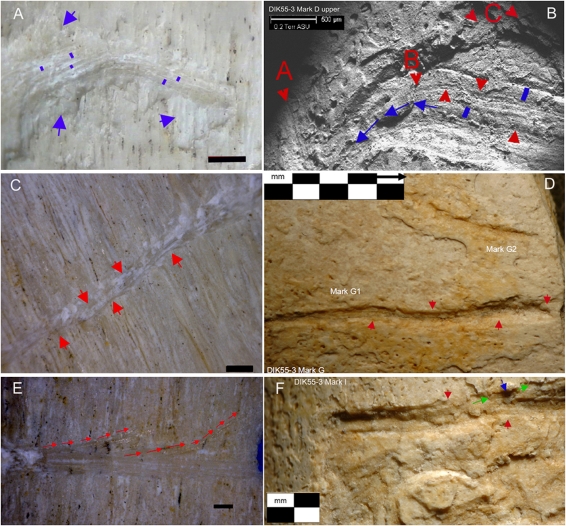
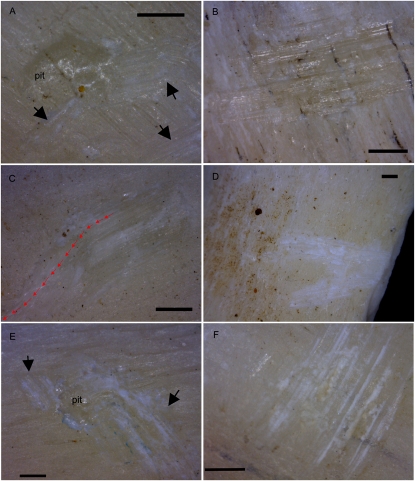
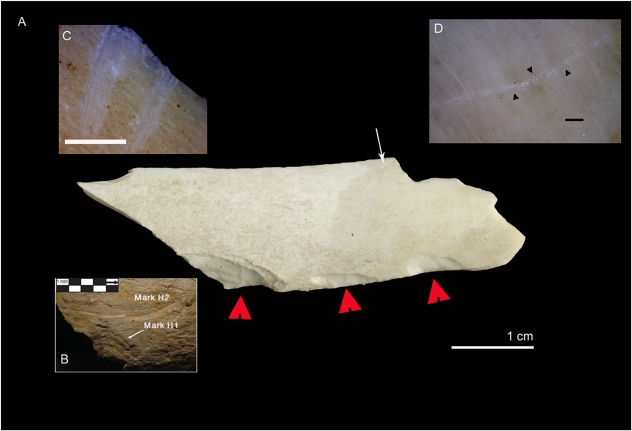
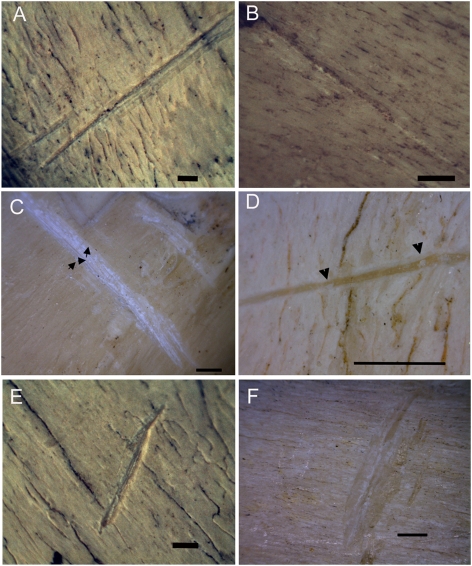
The announcement of two approximately 3.4-million-y-old purportedly butchered fossil bones from the Dikika paleoanthropological research area (Lower Awash Valley, Ethiopia) could profoundly alter our understanding of human evolution. Butchering damage on the Dikika bones would imply that tool-assisted meat-eating began approximately 800,000 y before previously thought, based on butchered bones from 2.6- to 2.5-million-y-old sites at the Ethiopian Gona and Bouri localities. Further, the only hominin currently known from Dikika at approximately 3.4 Ma is Australopithecus afarensis, a temporally and geographically widespread species unassociated previously with any archaeological evidence of butchering. Our taphonomic configurational approach to assess the claims of A. afarensis butchery at Dikika suggests the claims of unexpectedly early butchering at the site are not warranted. The Dikika research group focused its analysis on the morphology of the marks in question but failed to demonstrate, through recovery of similarly marked in situ fossils, the exact provenience of the published fossils, and failed to note occurrences of random striae on the cortices of the published fossils (incurred through incidental movement of the defleshed specimens across and/or within their abrasive encasing sediments). The occurrence of such random striae (sometimes called collectively "trampling" damage) on the two fossils provide the configurational context for rejection of the claimed butchery marks. The earliest best evidence for hominin butchery thus remains at 2.6 to 2.5 Ma, presumably associated with more derived species than A. afarensis.
Conflict of interest statement
The authors declare no conflict of interest.
Figures
Comment in
-
Tool-marked bones from before the Oldowan change the paradigm.Proc Natl Acad Sci U S A. 2011 May 24;108(21):E116; author reply E117. doi: 10.1073/pnas.1101298108. Epub 2011 May 2. Proc Natl Acad Sci U S A. 2011. PMID: 21536920 Free PMC article. No abstract available.
References
-
- McPherron SP, et al. Evidence for stone-tool-assisted consumption of animal tissues before 3.39 million years ago at Dikika, Ethiopia. Nature. 2010;466:857–860. - PubMed
-
- de Heinzelin J, et al. Environment and behavior of 2.5-million-year-old Bouri hominids. Science. 1999;284:625–629. - PubMed
-
- Semaw S, et al. 2.6-Million-year-old stone tools and associated bones from OGS-6 and OGS-7, Gona, Afar, Ethiopia. J Hum Evol. 2003;45:169–177. - PubMed
-
- Domínguez-Rodrigo M, Pickering TR, Semaw S, Rogers MJ. Cutmarked bones from Pliocene archaeological sites at Gona, Afar, Ethiopia: implications for the function of the world's oldest stone tools. J Hum Evol. 2005;48:109–121. - PubMed
-
- Alemseged Z, et al. A juvenile early hominin skeleton from Dikika, Ethiopia. Nature. 2006;443:296–301. - PubMed
Publication types
MeSH terms
LinkOut - more resources
Full Text Sources
