. 2011 Jan;57(1):94-102.
doi: 10.1161/HYPERTENSIONAHA.110.160242. Epub 2010 Nov 15.

Adenoviral delivery of VEGF121 early in pregnancy prevents spontaneous development of preeclampsia in BPH/5 mice

Affiliations

Adenoviral delivery of VEGF121 early in pregnancy prevents spontaneous development of preeclampsia in BPH/5 mice

Ashley K Woods et al. Hypertension. 2011 Jan.

Abstract

An imbalance in circulating proangiogenic and antiangiogenic factors is postulated to play a causal role in preeclampsia (PE). We have described an inbred mouse strain, BPH/5, which spontaneously develops a PE-like syndrome including late-gestational hypertension, proteinuria, and poor feto-placental outcomes. Here we tested the hypothesis that an angiogenic imbalance during pregnancy in BPH/5 mice leads to the development of PE-like phenotypes in this model. Similar to clinical findings, plasma from pregnant BPH/5 showed reduced levels of free vascular endothelial growth factor (VEGF) and placental growth factor (PGF) compared to C57BL/6 controls. This was paralleled by a marked decrease in VEGF protein and Pgf mRNA in BPH/5 placentae. Surprisingly, antagonism by the soluble form of the FLT1 receptor (sFLT1) did not appear to be the cause of this reduction, as sFLT1 levels were unchanged or even reduced in BPH/5 compared to controls. Adenoviral-mediated delivery of VEGF(121) (Ad-VEGF) via tail vein at embryonic day 7.5 normalized both the plasma-free VEGF levels in BPH/5 and restored the in vitro angiogenic capacity of serum from these mice. Ad-VEGF also reduced the incidence of fetal resorptions and prevented the late-gestational spike in blood pressure and proteinuria observed in BPH/5. These data underscore the importance of dysregulation of angiogenic factors in the pathogenesis of PE and suggest the potential utility of early proangiogenic therapies in treating this disease.


Conflict of interest statement

Conflict of Interest/Disclosure: none

Figures

Figure 1
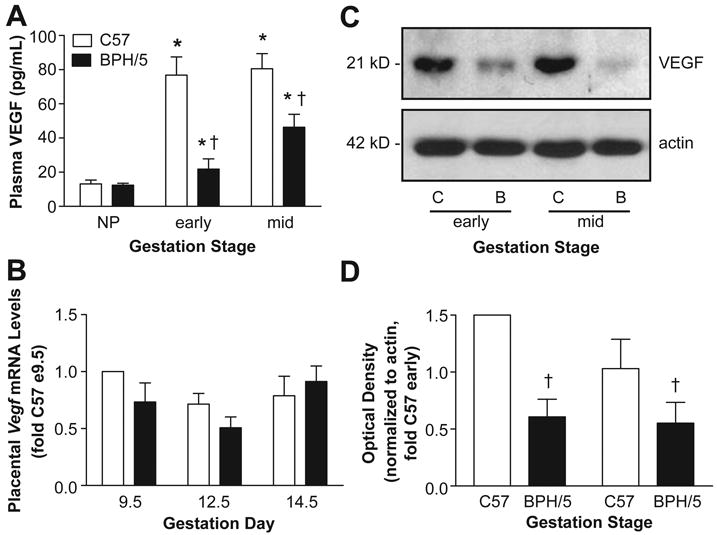
Figure 1. Circulating and placental VEGF levels are decreased in BPH/5
A) Summary of circulating free VEGF as determined by ELISA in non-pregnant (NP) and at early and mid-gestation C57 and BPH/5 (n=4-6 per group). B) Summary of real-time qPCR analysis of placental Vegf mRNA levels at different days of gestation (n=5 per group). Data are expressed relative to C57 at e9.5 C) Representative Western blot of VEGF protein levels in placenta samples from C57 (C) and BPH/5 (B) at early and mid-gestation. β-actin served as loading control. D) Summary of Western blot quantification (n=3 per group at each time-point) normalized to actin and expressed relative to C57 early. *p<0.05 vs NP in matched strain; †p<0.05 vs. time-matched C57.
Figure 2
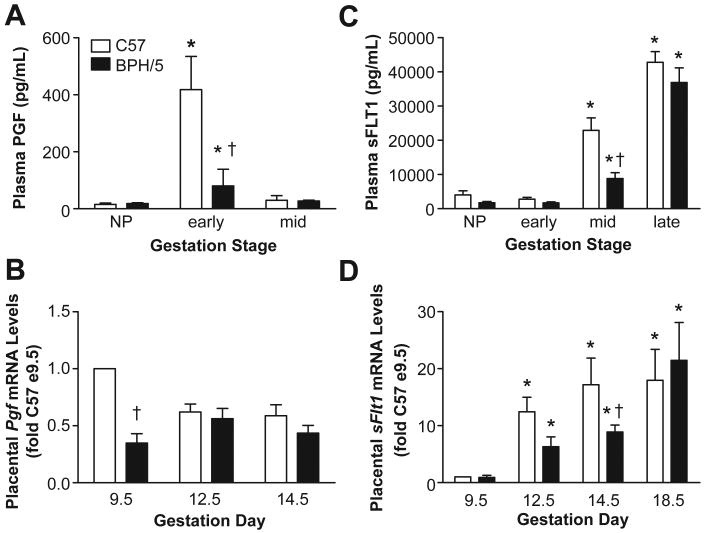
Figure 2. Pro-angiogenic PGF is downregulated, whereas anti-angiogenic sFLT1 is unchanged or even decreased in BPH/5
A) Summary of free plasma PGF levels as determined by ELISA in non-pregnant (NP) and at different gestational stages of C57 and BPH/5 (n=4-6 per group). B) Summary of Pgf mRNA expression from placental tissue at different gestational days (n=5 per group). Data are expressed relative to C57 at e9.5. C) Summary of circulating sFLT1 levels as determined by ELISA in NP and at different gestational stages of C57 and BPH/5 (n=4-6 per group). D) Summary of real-time qPCR analysis of sFlt1 from placental tissue of C57 and BPH/5 at different gestational days (n=5 per group). *p<0.05 vs NP in matched strain; †p<0.05 vs. time-matched C57.
Figure 3
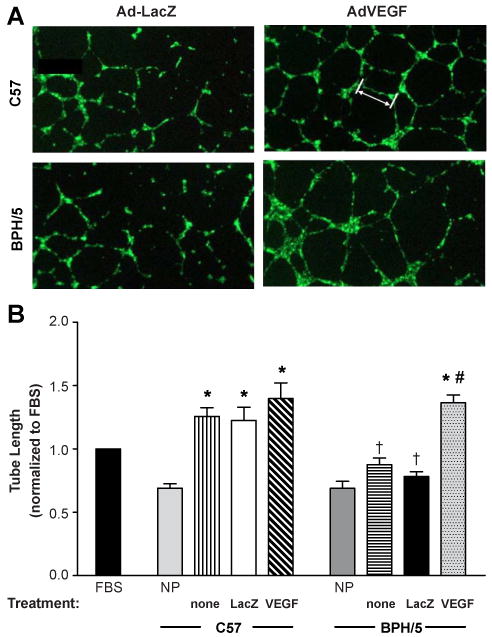
Figure 3. Ad-VEGF therapy rescues the angiogenic potential of BPH/5 serum as measured in an endothelial tube formation assay
A) Representative images of individual wells of HUVEC cells treated with serum collected from e12.5 C57 and BPH/5 that had undergone tail vein injections of Ad-LacZ or Ad-VEGF on e7.5. White bar (upper right) indicates a representative measurement of tube length. B) Summary of tube lengths normalized to 5% FBS in cells treated with serum from non-pregnant (NP) mice or from e12.5 C57 and BPH/5 mice given no treatment (none) or administered Ad-LacZ or Ad-VEGF on e7.5. NP: n=8 per strain; no treatment and Ad-LacZ: n=5-8 per group and strain; Ad-VEGF: n=5-12 per group and strain. *p<0.05 vs NP matched strain; † p<0.05 vs. C57 in matched treatment; # p<0.05 vs BPH/5 none or Ad-LacZ.
Figure 4
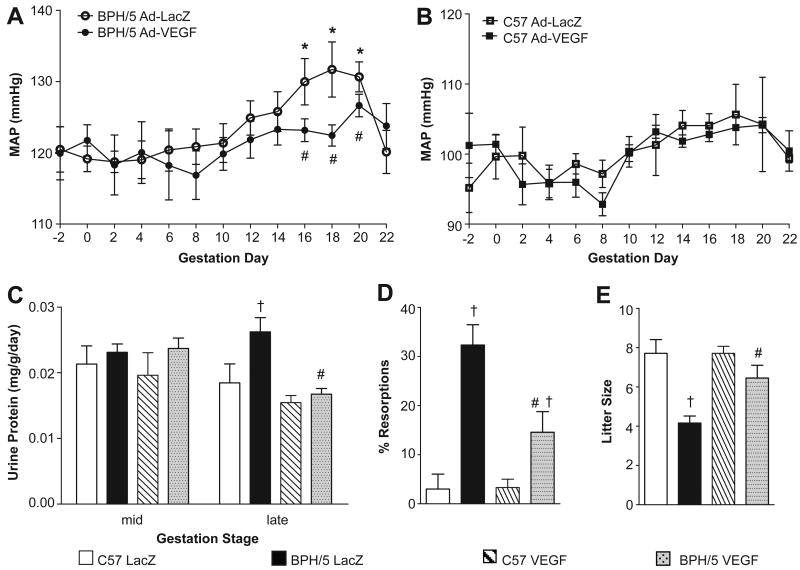
Figure 4. Adenoviral-mediated delivery of VEGF121 early in pregnancy prevents the hallmark maternal symptoms and rescues fetal demise in BPH/5
Summary of radiotelemetric measurements of mean arterial pressure (MAP) before, during and after pregnancy in BPH/5 (panel A) and C57 (panel B) mice. Ad-VEGF or Ad-LacZ were injected by tail vein on e7.5; n=6-8 for each strain and treatment. C) Summary of urinary protein levels at mid- and late-gestation in BPH/5 and C57 mice that had undergone virus injections on e7.5; n=6-12 per group at each time-point. D) Summary of incidence of fetal resorptions at e14.5 in C57 and BPH/5 mice that had undergone virus injections on e7.5; n=8-11 per group. E) Term litter sizes in each of the strains and virus treatment groups; n=11-18 litters per group. *p<0.05 vs baseline in matched strain; #p<0.05 vs BPH/5 Ad-LacZ; †p<0.05 vs C57 in matched treatment.

References

    1. Maynard S, Epstein FH, Karumanchi SA. Preeclampsia and angiogenic imbalance. Annu Rev Med. 2008;59:61–78. - PubMed
    1. Roberts JM, Pearson G, Cutler J, Lindheimer M, NHLBI Working Group on Research on Hypertension During Pregnancy Summary of the NHLBI working group on research on hypertension during pregnancy. Hypertension. 2003;41:437–445. - PubMed
    1. Duley L. The global impact of pre-eclampsia and eclampsia. Semin Perinatol. 2009;33:130–137. - PubMed
    1. Myatt L, Webster RP. Vascular biology of preeclampsia. J Thromb Haemost. 2009;7:375–384. - PubMed
    1. Ferrara N. Vascular endothelial growth factor: Basic science and clinical progress. Endocr Rev. 2004;25:581–611. - PubMed

Publication types

Substances