Review
. 2010 Nov 15;15(11):8260-78.
doi: 10.3390/molecules15118260.

Radiolabeled small molecule protein kinase inhibitors for imaging with PET or SPECT

Affiliations
Review

Radiolabeled small molecule protein kinase inhibitors for imaging with PET or SPECT

Justin W Hicks et al. Molecules. .

Abstract

Imaging protein kinase expression with radiolabeled small molecule inhibitors has been actively pursued to monitor the clinical potential of targeted therapeutics and treatments as well as to determine kinase receptor density changes related to disease progression. The goal of the present review is to provide an overview of the breadth of radiolabeled small molecules that have been synthesized to target intracellular protein kinases, not only for imaging in oncology, but also for other areas of interest, particularly the central nervous system. Considerable radiotracer development has focused on imaging receptor tyrosine kinases of growth factors, protein kinases A, B and C, and glycogen synthase kinase-3ß. Design considerations, structural attributes and relevant biological results are summarized.


Figures
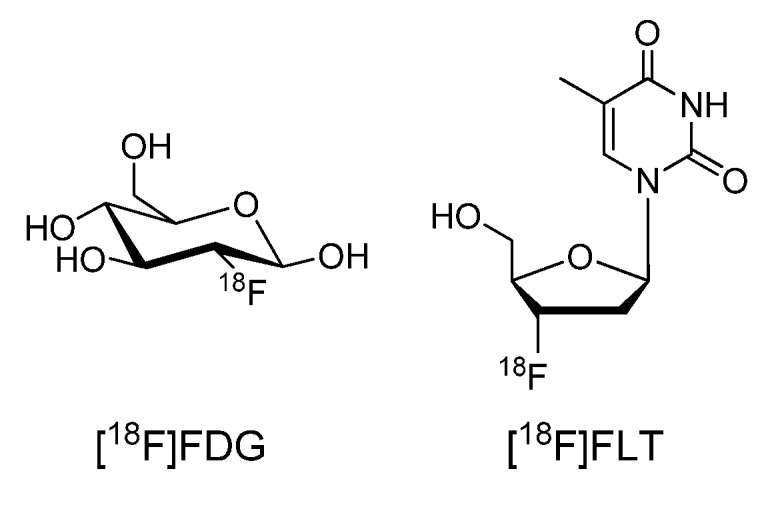
Figure 1
Figure 1
18F-labeled 2-fluoro-2-deoxy-D-glucose and 3'-deoxy-3'-fluorothymidine.
Figure 2
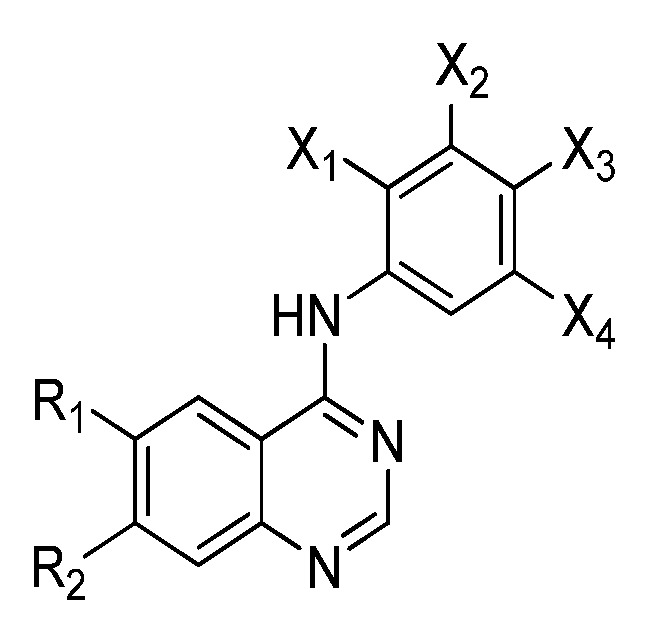
Figure 2
4-Anilino-quinazoline core of radiolabeled EGFR tyrosine kinase inhibitors (substituents listed in Table 1 and Table 2).
Figure 3
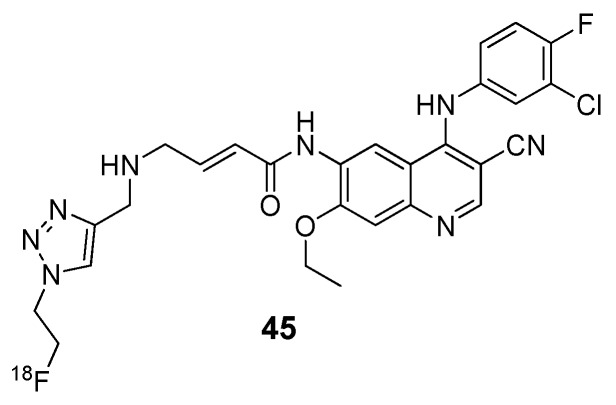
Figure 3
Recent click chemistry to form a [18F]-labeled EGFR tyrosine kinase targeting probe.
Figure 4
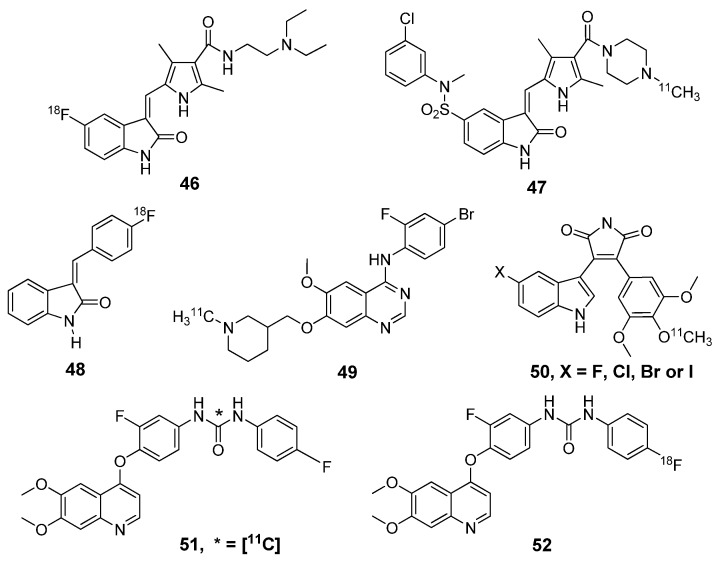
Figure 4
Radiolabeled VEGFR tyrosine kinase inhibitors.
Figure 5
Figure 5
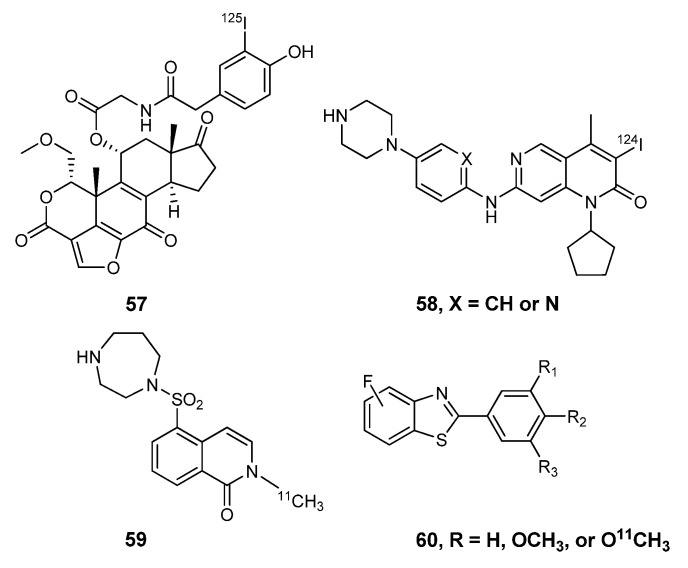
Radiotracers of other kinase inhibitors for cancer imaging.
Figure 6
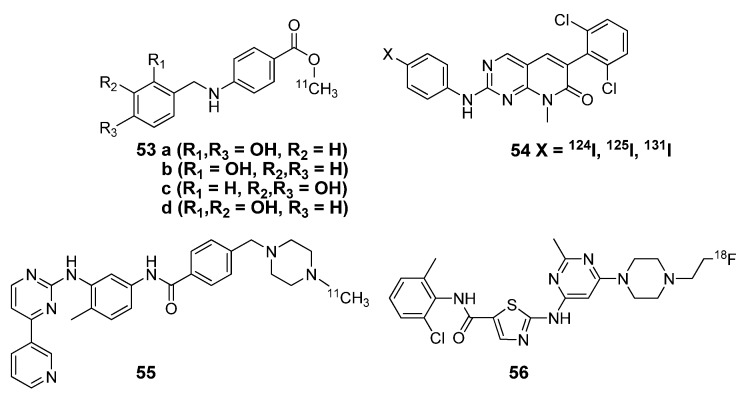
Figure 6
Radiolabeled small molecule inhibitors of multifunctional protein kinases.
Figure 7
Figure 7
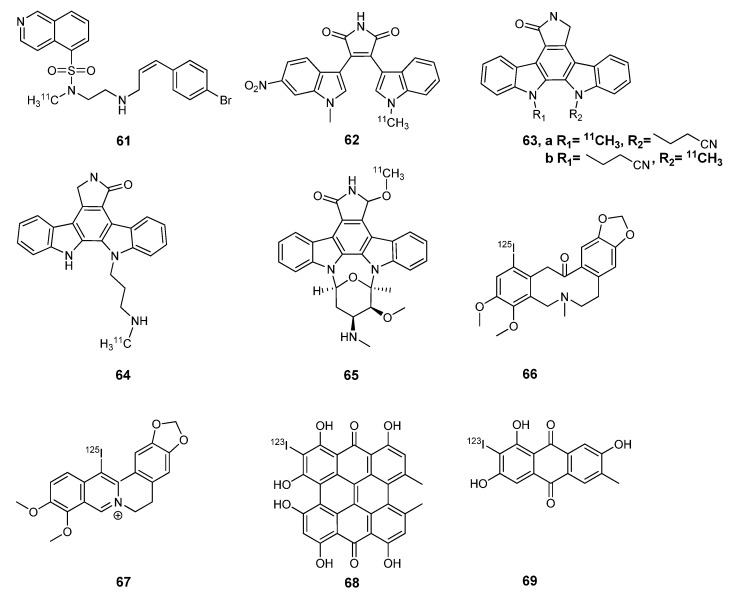
Radiolabeled small molecule inhibitors of protein kinases with potential CNS applications.
Figure 8
Figure 8
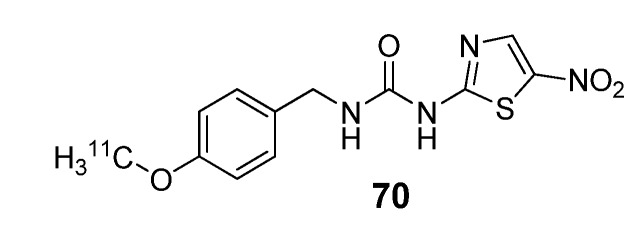
N-(4-[11C]methoxy)-N'-(5-nitro-1,3-thiazole-2-yl)urea ([11C]methoxy-AR-A014418).
Figure 9
Figure 9
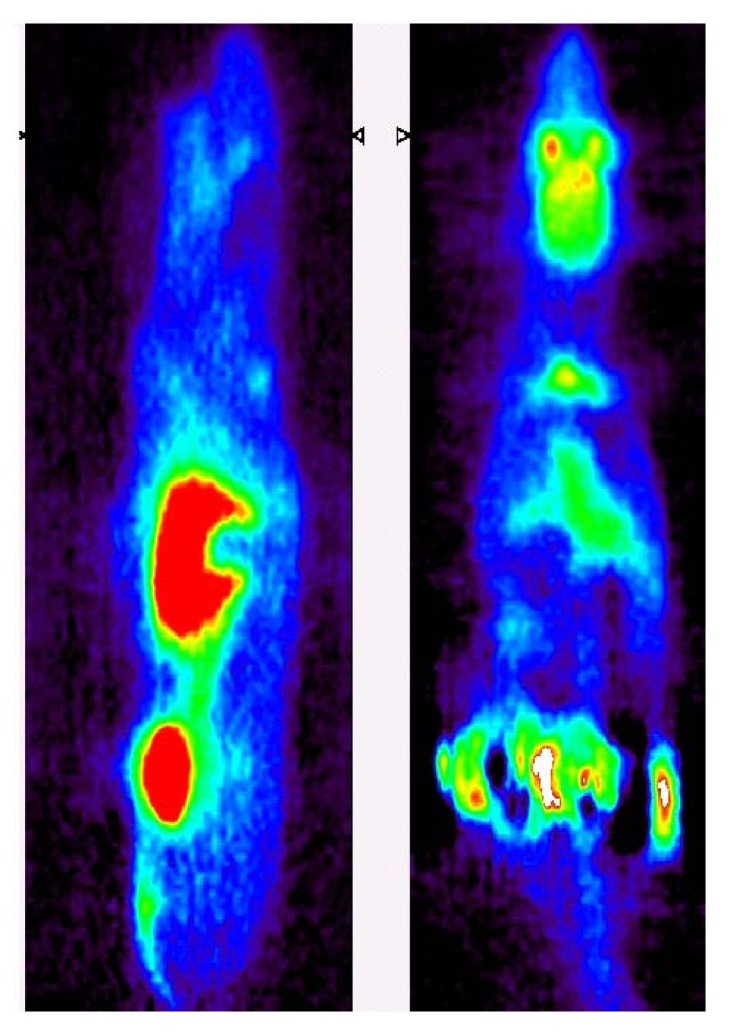
Representative in vivo PET images following intravenous administration of 70 (left) or [18F]FDG (right) in Sprague-Dawley rats [98].

References

    1. Liao J.J. Molecular recognition of protein kinase binding pockets for design of potent and selective kinase inhibitors. J. Med. Chem. 2007;50:409–424. doi: 10.1021/jm0608107. - DOI - PubMed
    1. Aaronson S.A. Growth factors and cancer. Science. 1991;254:1146–1153. - PubMed
    1. Cohen P. Protein kinases - the major drug targets of the twenty first century? Nat. Rev. Drug Discovery. 2001;1:309–315. doi: 10.1038/nrd773. - DOI - PubMed
    1. Tolmachev V., Stone-Elander S., Orlova A. Radiolabelled receptor-tyrosine-kinase targeting drugs for patient stratification and monitoring of therapy response: prospects and pitfalls. Lancet Oncol. 2010;11:992–1000. doi: 10.1016/S1470-2045(10)70088-7. - DOI - PubMed
    1. Mishani E., Abourbeh G. Cancer molecular imaging: radionuclide-based biomarkers of the epidermal growth factor receptor (EGFR) Curr. Top. Med. Chem. 2007;7:1755–1772. - PubMed

Publication types

MeSH terms

Substances

LinkOut - more resources