


Gestational immune activation and Tsc2 haploinsufficiency cooperate to disrupt fetal survival and may perturb social behavior in adult mice
- PMID: 21079609
- PMCID: PMC3118259
- DOI: 10.1038/mp.2010.115
Gestational immune activation and Tsc2 haploinsufficiency cooperate to disrupt fetal survival and may perturb social behavior in adult mice
Erratum in
- Mol Psychiatry. 2012 Apr;17(4):469
Abstract
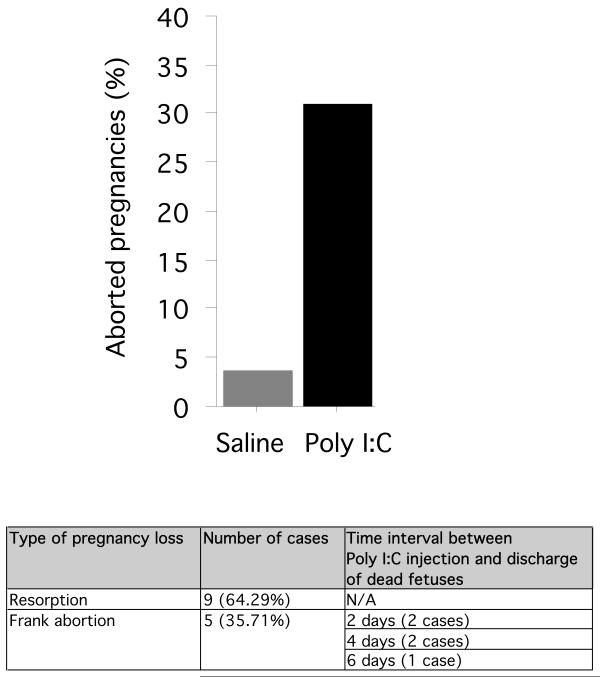
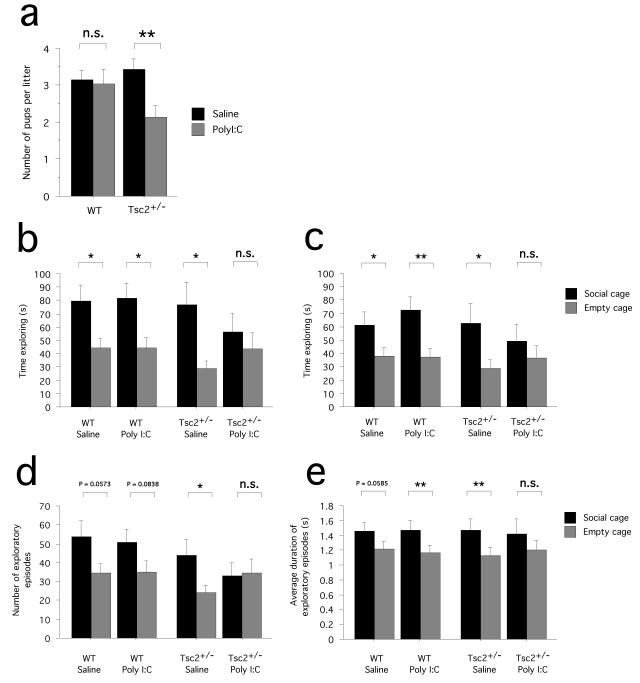
Approximately 40-50% of individuals affected by tuberous sclerosis (TSC) develop autism spectrum disorders (ASDs). One possible explanation for this partial penetrance is an interaction between TSC gene mutations and other risk factors such as gestational immune activation. In this study, we report the interactive effects of these two ASD risk factors in a mouse model of TSC. Combined, but not single, exposure had adverse effects on intrauterine survival. Additionally, provisional results suggest that these factors synergize to disrupt social approach behavior in adult mice. Moreover, studies in human populations are consistent with an interaction between high seasonal flu activity in late gestation and TSC mutations in ASD. Taken together, our studies raise the possibility of a gene × environment interaction between heterozygous TSC gene mutations and gestational immune activation in the pathogenesis of TSC-related ASD.
Figures
References
-
- Kelleher RJ, 3rd, Bear MF. The autistic neuron: troubled translation? Cell. 2008;135(3):401–406. - PubMed
-
- Ehninger D, Silva AJ. Genetics and neuropsychiatric disorders: treatment during adulthood. Nat Med. 2009;15(8):849–850. - PubMed
-
- Fombonne E. Epidemiological surveys of autism and other pervasive developmental disorders: an update. J Autism Dev Disord. 2003;33(4):365–382. - PubMed
-
- Smalley SL. Autism and tuberous sclerosis. J Autism Dev Disord. 1998;28(5):407–414. - PubMed
-
- Smalley SL, Tanguay PE, Smith M, Gutierrez G. Autism and tuberous sclerosis. J Autism Dev Disord. 1992;22(3):339–355. - PubMed
