


Localization of herpes simplex virus type 1 DNA in latently infected BALB/c mice neurons using in situ polymerase chain reaction
- PMID: 21079658
- PMCID: PMC3904058
Localization of herpes simplex virus type 1 DNA in latently infected BALB/c mice neurons using in situ polymerase chain reaction
Abstract
Background: Herpes simplex virus type-1 (HSV-1) establishes a lifelong latent infection in neurons following primary infection. The existence of latent HSV-1 DNA in the trigeminal ganglia of infected BALB/c mice was examined using a direct in situ PCR technique, based on Digoxigenin-11-dUTP detection system with anti-digoxigenin-peroxidase and 3,3'-diaminobenzidine (DAB) substrate.
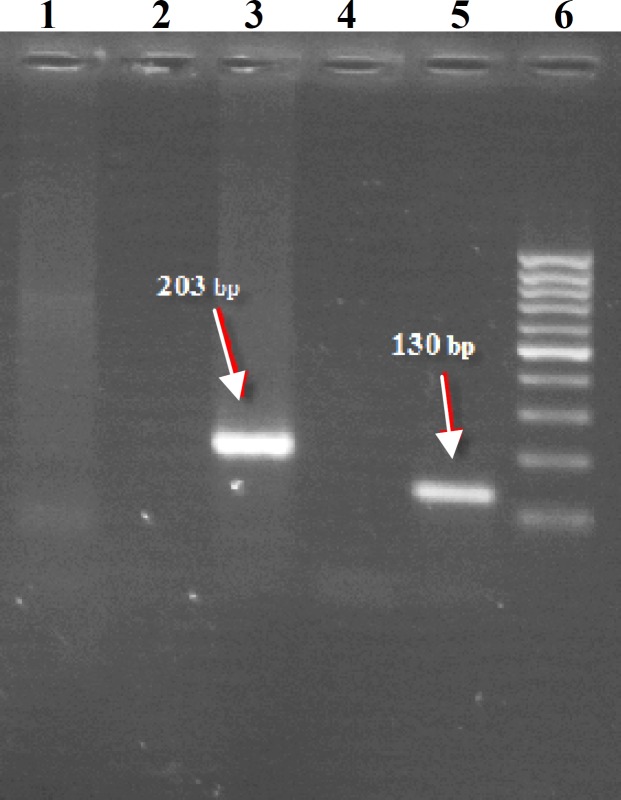
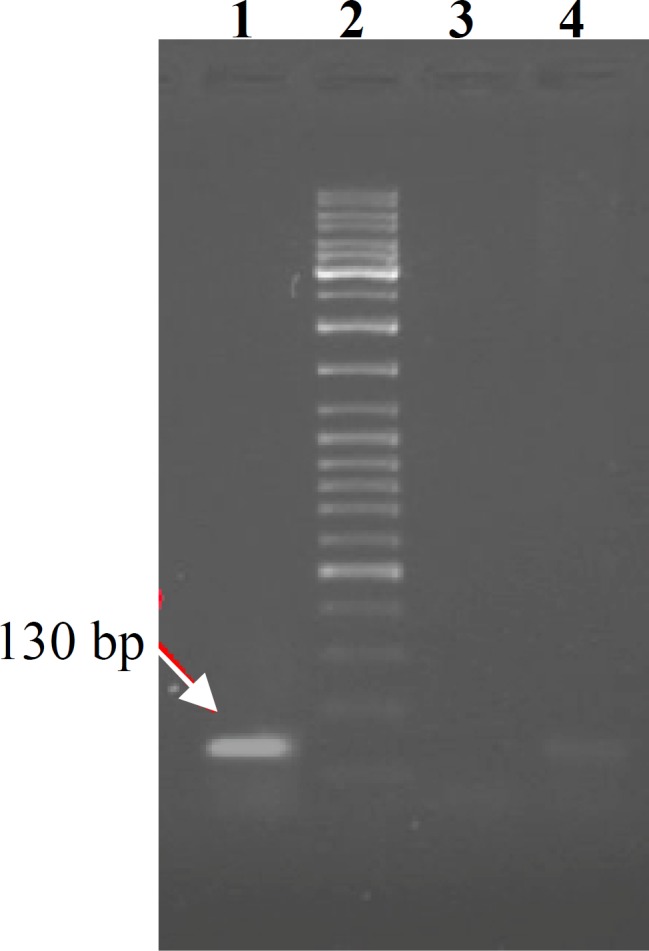
Methods: Eight-week-old male BALB/c mice were inoculated via the eye by 104 plaque forming unit of wild type Iranian isolates of HSV-1. After establishment of latency, trigeminal ganglia were removed and examined using in situ PCR to detect HSV-1 genome. Finally, the results of in situ PCR were verified by a two-round PCR method, using amplification cocktail of in situ reaction, as a template for a conventional gel base PCR.
Results and conclusion: The results suggest that a direct in situ PCR method using a peroxidase and DAB detection system is a useful means for detection of latent HSV-1 DNA in the latently infected ganglia.
Keywords: Herpes simplex virus-1; Latency; In situ PCR; two-round PCR; Trigeminal ganglia.

References
-
- Mellerick DM, Fraser NW. Physical state of the latent herpes simplex virus genome in a mouse model system: evidence suggesting an episomal state. Virology . 1987;158:265–275. - PubMed
-
- Roizman B, Knipe DM. Fields’ Virology. Vol 2. Philadelphia: Lippincott Williams & Wilkins; 2001. Herpes Simplex Viruses and Their Replication; pp. 2231–2295.
-
- McPherson MJ, Moller SG. PCR: The basics . New York USA: Taylor & Francis Group; 2006.
MeSH terms
Substances
LinkOut - more resources
Full Text Sources
Medical