


EvoPipes.net: Bioinformatic Tools for Ecological and Evolutionary Genomics
- PMID: 21079755
- PMCID: PMC2978936
- DOI: 10.4137/EBO.S5861
EvoPipes.net: Bioinformatic Tools for Ecological and Evolutionary Genomics
Abstract
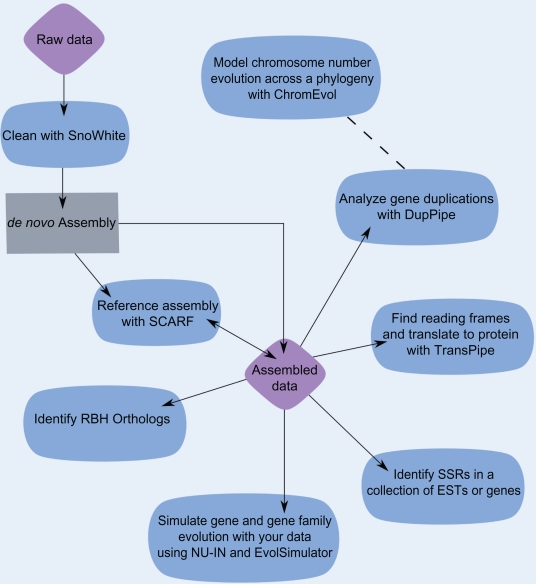
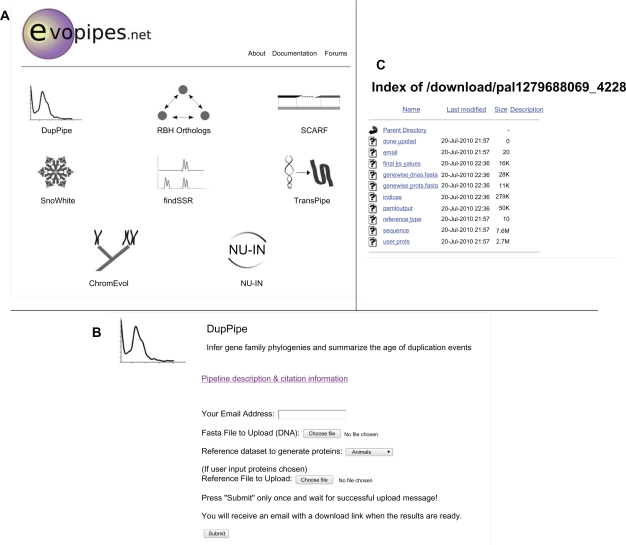
Recent increases in the production of genomic data are yielding new opportunities and challenges for biologists. Among the chief problems posed by next-generation sequencing are assembly and analyses of these large data sets. Here we present an online server, http://EvoPipes.net, that provides access to a wide range of tools for bioinformatic analyses of genomic data oriented for ecological and evolutionary biologists. The EvoPipes.net server includes a basic tool kit for analyses of genomic data including a next-generation sequence cleaning pipeline (SnoWhite), scaffolded assembly software (SCARF), a reciprocal best-blast hit ortholog pipeline (RBH Orthologs), a pipeline for reference protein-based translation and identification of reading frame in transcriptome and genomic DNA (TransPipe), a pipeline to identify gene families and summarize the history of gene duplications (DupPipe), and a tool for developing SSRs or microsatellites from a transcriptome or genomic coding sequence collection (findSSR). EvoPipes.net also provides links to other software developed for evolutionary and ecological genomics, including chromEvol and NU-IN, as well as a forum for discussions of issues relating to genomic analyses and interpretation of results. Overall, these applications provide a basic bioinformatic tool kit that will enable ecologists and evolutionary biologists with relatively little experience and computational resources to take advantage of the opportunities provided by next-generation sequencing in their systems.
Keywords: bioinformatics; ecological genomics; evolutionary genomics; genomic analyses; next-generation sequencing.
Figures
References
-
- Barker MS, Dlugosch KM, Reddy ACC, Amyotte SN, Rieseberg LH. SCARF: maximizing next-generation EST assemblies for evolutionary and population genomic analyses. Bioinformatics. 2009;25:535–6. - PubMed
LinkOut - more resources
Full Text Sources
Research Materials
