


Indications and results of hip resurfacing
- PMID: 21079954
- PMCID: PMC3032116
- DOI: 10.1007/s00264-010-1148-8
Indications and results of hip resurfacing
Abstract
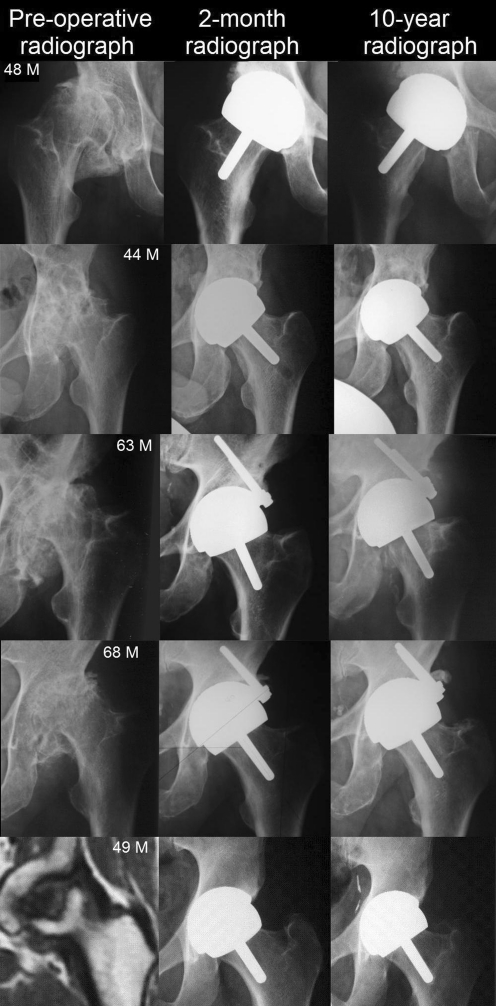
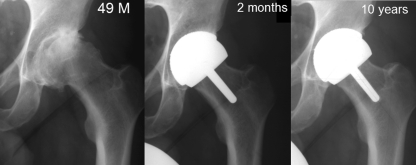
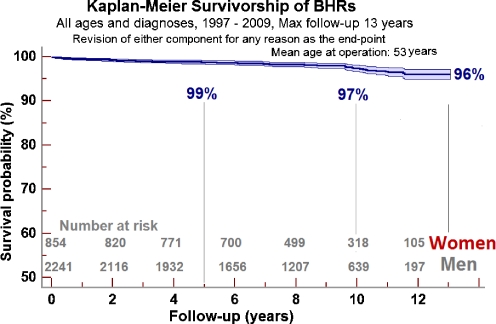
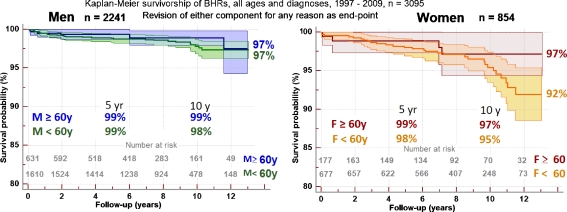
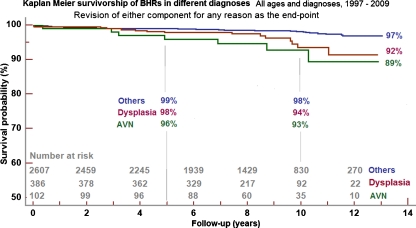
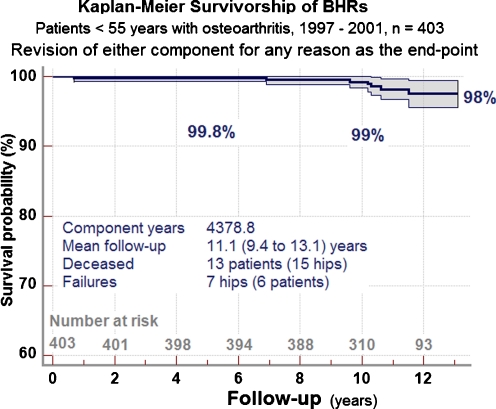
The best indication for hip resurfacing is a young active patient with severe hip arthritis, good hip morphology and reasonable bone quality. With revision of either component for any reason as the endpoint, there were 68 revisions in our series of 3,095 consecutive Birmingham Hip Resurfacings (BHR) (1997-2009), including all diagnoses in all ages. This equates to a revision rate of 2.2% and survivorships of 99, 97 and 96% at five, ten and 13 years, respectively. In patients under 55 years with osteoarthritis, the survivorship is 99 and 98% at ten and 13 years. These results provide medium-term evidence that BHR when performed well in properly selected patients offers excellent outcomes and implant survivorship. Small changes to implant materials and design can affect joint function and survivorship significantly as seen from the withdrawal of certain resurfacing devices recently from clinical use. The clinical history of one device cannot be extrapolated to other devices.
Figures
References
-
- Joshi AB, Porter ML, Trail IA, Hunt LP, Murphy JC, Hardinge K. Long-term results of Charnley low-friction arthroplasty in young patients. J Bone Joint Surg Br. 1993;75(4):616–623. - PubMed
-
- McMinn DJW. Development of metal/metal hip resurfacing. Hip Int. 2003;13:S41–S53. - PubMed
-
- Daniel J, Pradhan C, Ziaee H, McMinn DJ. A clinicoradiologic study of the Birmingham Mid-Head Resection device. Orthopedics. 2008;31(12 Suppl 2):124–128. - PubMed
MeSH terms
LinkOut - more resources
Full Text Sources
Medical
