


Two latent and two hyperstable polymeric forms of human neuroserpin
- PMID: 21081089
- PMCID: PMC2980742
- DOI: 10.1016/j.bpj.2010.09.021
Two latent and two hyperstable polymeric forms of human neuroserpin
Abstract
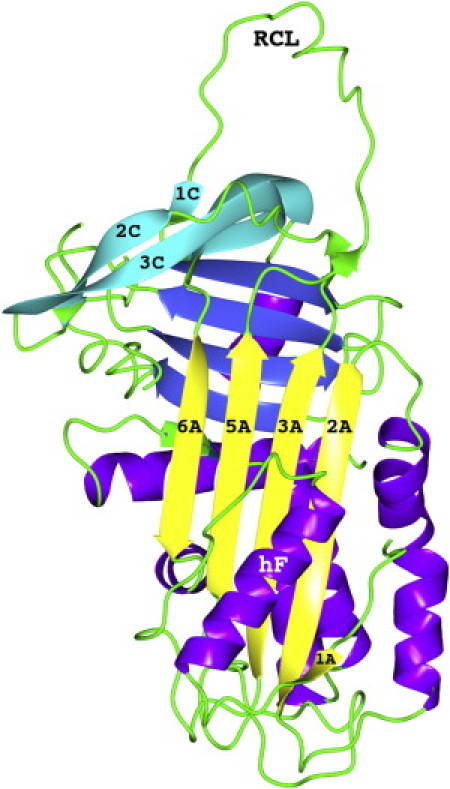
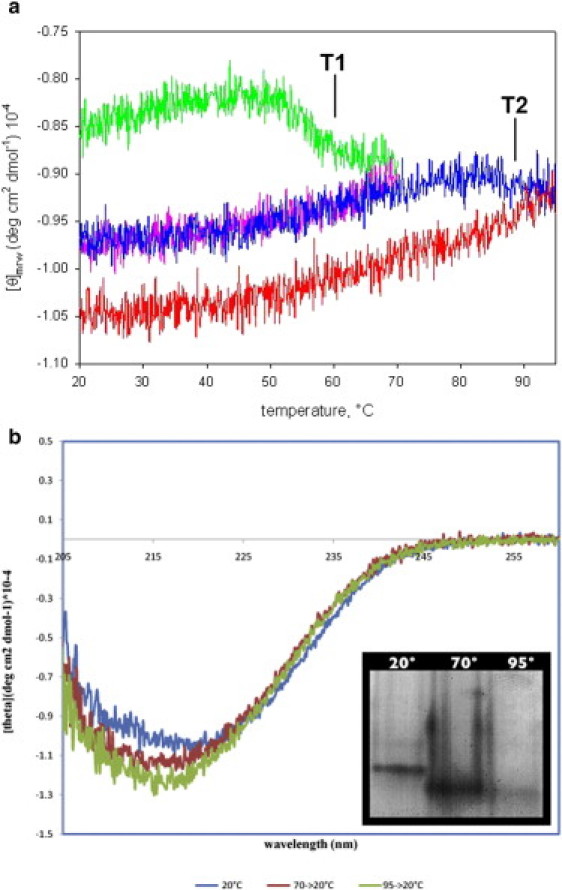
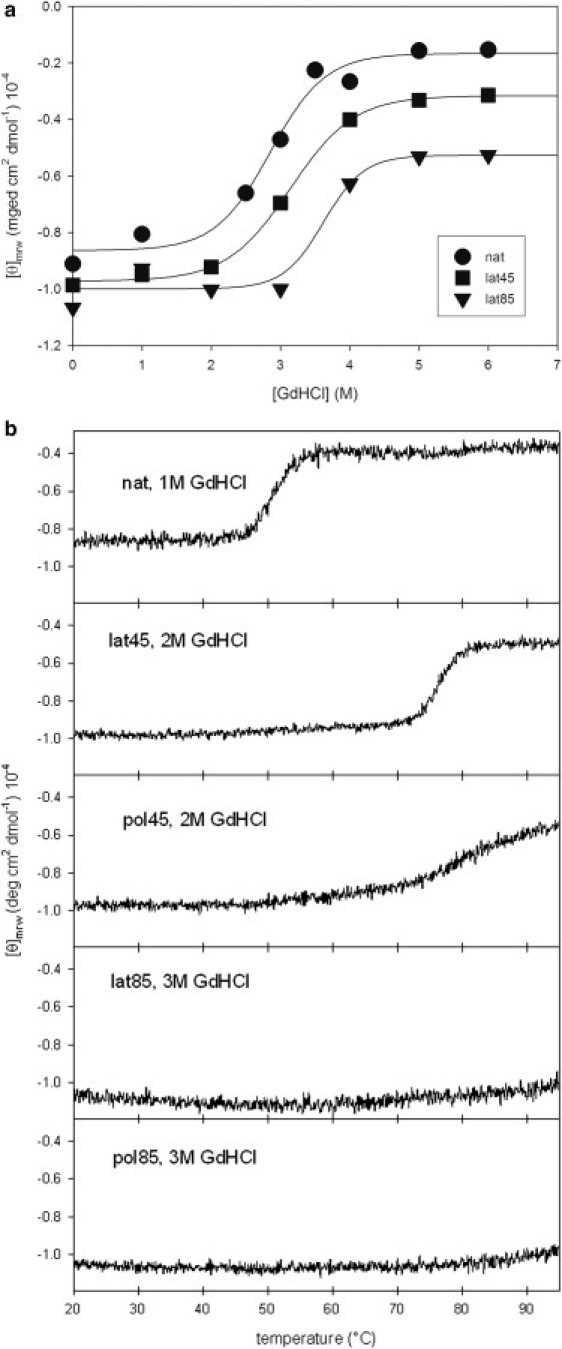
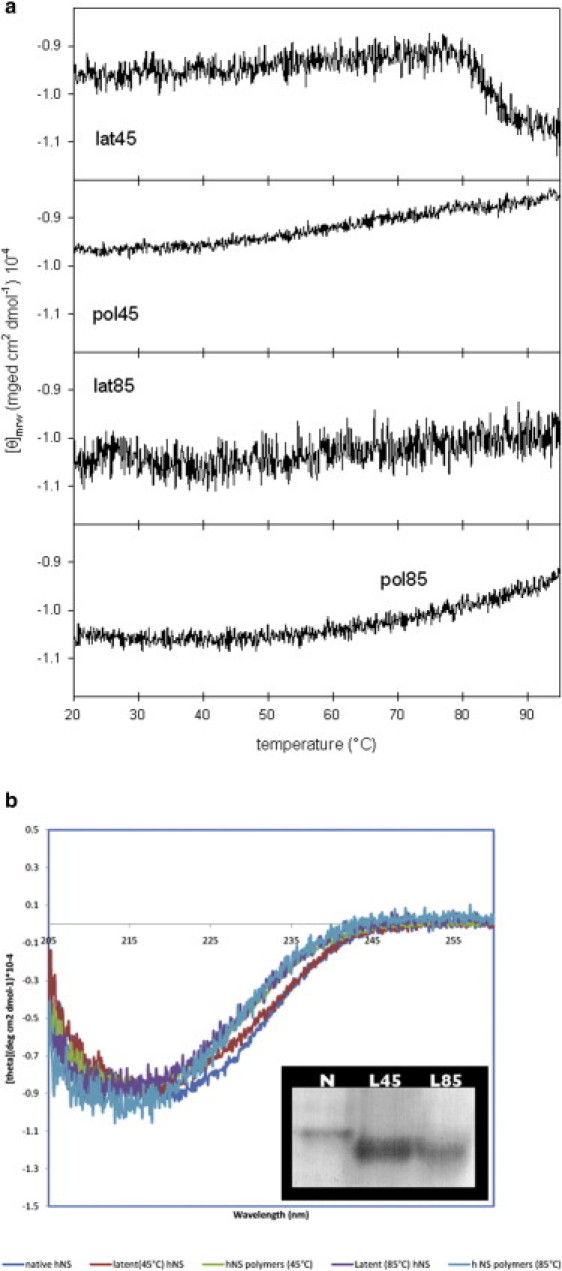
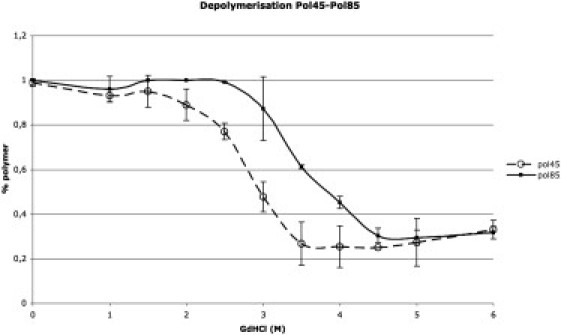
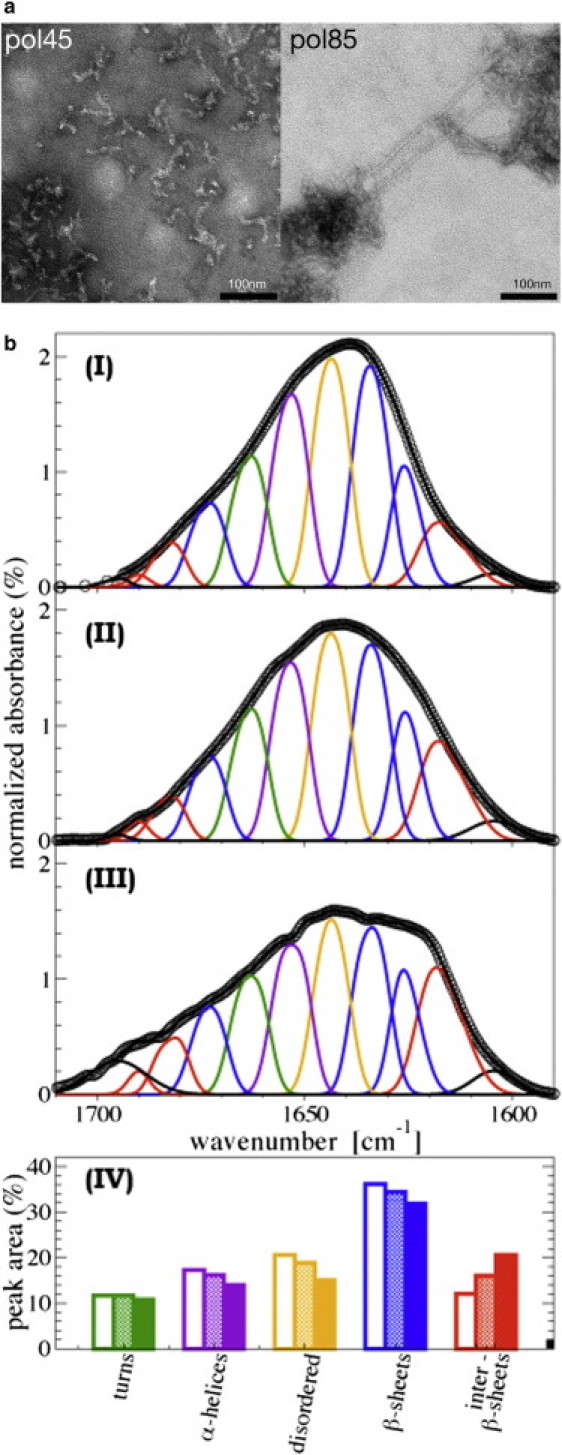
Human neuroserpin (hNS) is a serine protease inhibitor that belongs to the serpin superfamily and is expressed in nervous tissues. The serpin fold is generally characterized by a long exposed loop, termed the reactive center loop, that acts as bait for the target protease. Intramolecular insertion of the reactive center loop into the main serpin β-sheet leads to the serpin latent form. As with other known serpins, hNS pathological mutants have been shown to accumulate as polymers composed of quasi-native protein molecules. Although hNS polymerization has been intensely studied, a general agreement about serpin polymer organization is still lacking. Here we report a biophysical characterization of native hNS that is shown to undergo two distinct conformational transitions, at 55°C and 85°C, both leading to distinct latent and polymeric species. The latent and polymer hNS forms obtained at 45°C and 85°C differ in their chemical and thermal stabilities; furthermore, the hNS polymers also differ in size and morphology. Finally, the 85°C polymer shows a higher content of intermolecular β-sheet interactions than the 45°C polymer. Together, these results suggest a more complex conformational scenario than was previously envisioned, and, in a general context, may help reconcile the current contrasting views on serpin polymerization.
Copyright © 2010 Biophysical Society. Published by Elsevier Inc. All rights reserved.
Figures
References
-
- Whisstock J.C., Bottomley S.P. Molecular gymnastics: serpin structure, folding and misfolding. Curr. Opin. Struct. Biol. 2006;16:761–768. - PubMed
-
- Hastings G.A., Coleman T.A., Lawrence D.A. Neuroserpin, a brain-associated inhibitor of tissue plasminogen activator is localized primarily in neurons. Implications for the regulation of motor learning and neuronal survival. J. Biol. Chem. 1997;272:33062–33067. - PubMed
-
- Yepes M., Lawrence D.A. Tissue-type plasminogen activator and neuroserpin: a well-balanced act in the nervous system? Trends Cardiovasc. Med. 2004;14:173–180. - PubMed
-
- Coutelier M., Andries S., Godfraind C. Neuroserpin mutation causes electrical status epilepticus of slow-wave sleep. Neurology. 2008;71:64–66. - PubMed
Publication types
MeSH terms
Substances
LinkOut - more resources
Full Text Sources
Research Materials
