


LTBP2 and CYP1B1 mutations and associated ocular phenotypes in the Roma/Gypsy founder population
- PMID: 21081970
- PMCID: PMC3062003
- DOI: 10.1038/ejhg.2010.181
LTBP2 and CYP1B1 mutations and associated ocular phenotypes in the Roma/Gypsy founder population
Abstract
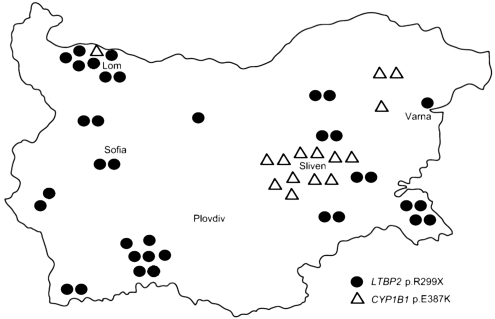
Primary congenital glaucoma (PCG) is a genetically heterogeneous autosomal recessive disorder, which is an important cause of blindness in childhood. The first known gene, CYP1B1, accounts for a variable proportion of cases in most populations. A second gene, LTBP2, was recently reported in association with a syndrome, in which glaucoma is secondary to lens dislocation. We report on the molecular and clinical profile of 34 families diagnosed as PCG, all originating from the Roma/Gypsy founder population. Comprehensive sequencing analysis revealed a level of heterogeneity unusual for this population, with five CYP1B1 and one ancestral LTBP2 mutation accounting for ∼70% of patients (25 out of 37) and the remainder still unexplained. Homozygosity for the founder LTBP2 p.R299X mutation resulted in a more severe clinical phenotype and poorer outcome despite a markedly higher number of surgical interventions. The genetically homogeneous group of p.R299X homozygotes showed variable phenotypes (presumably also underlying pathogenetic mechanisms), wherein PCG proper with primary dysgenesis of the trabecular meshwork, and Marfan syndrome-like zonular disease with ectopia lentis and later onset secondary glaucoma are two extremes. The spectrum manifestations may occur in different combinations and have a different evolution even within the same sibship or a single patient. Preliminary observations on compounds with mutations in both CYP1B1-LTBP2 suggest that the observed combinations are of no clinical significance and digenic inheritance is unlikely. We provide a population genetics perspective to explain the allelic heterogeneity, comparing the history and geographic distribution of the two major founder mutations--p.R299X/LTBP2 and p.E387K/CYP1B1.
© 2011 Macmillan Publishers Limited All rights reserved 1018-4813/11
Figures

References
-
- Sarfarazi M, Stoilov I, Schenkman JB. Genetics and biochemistry of primary congenital glaucoma. Ophthalmol Clin North Am. 2003;16:543–554. - PubMed
-
- MacKinnon JR, Giubilato A, Elder JE, Craig JE, Mackey DA. Primary infantile glaucoma in an Australian population. Clin Experiment Ophthalmol. 2004;32:14–18. - PubMed
-
- Gencik A, Gencikova A, Ferak V. Population genetical aspects of primary congenital glaucoma. I. Incidence, prevalence, gene frequency, and age of onset. Hum Genet. 1982;61:193–197. - PubMed
-
- deLuise VP, Anderson DR. Primary infantile glaucoma (congenital glaucoma) Surv Ophthalmol. 1983;28:1–19. - PubMed
-
- Ho CL, Walton DS. Primary congenital glaucoma: 2004 update. J Pediatr Ophthalmol Strabismus. 2004;41:271–288. - PubMed
Publication types
MeSH terms
Substances
LinkOut - more resources
Full Text Sources
Medical
Miscellaneous
