


Disturbed expression of splicing factors in renal cancer affects alternative splicing of apoptosis regulators, oncogenes, and tumor suppressors
- PMID: 21082031
- PMCID: PMC2972751
- DOI: 10.1371/journal.pone.0013690
Disturbed expression of splicing factors in renal cancer affects alternative splicing of apoptosis regulators, oncogenes, and tumor suppressors
Abstract
Background: Clear cell renal cell carcinoma (ccRCC) is the most common type of renal cancer. One of the processes disturbed in this cancer type is alternative splicing, although phenomena underlying these disturbances remain unknown. Alternative splicing consists of selective removal of introns and joining of residual exons of the primary transcript, to produce mRNA molecules of different sequence. Splicing aberrations may lead to tumoral transformation due to synthesis of impaired splice variants with oncogenic potential. In this paper we hypothesized that disturbed alternative splicing in ccRCC may result from improper expression of splicing factors, mediators of splicing reactions.
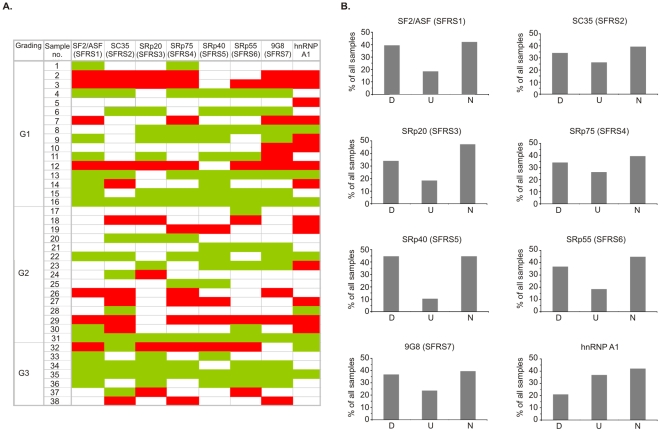
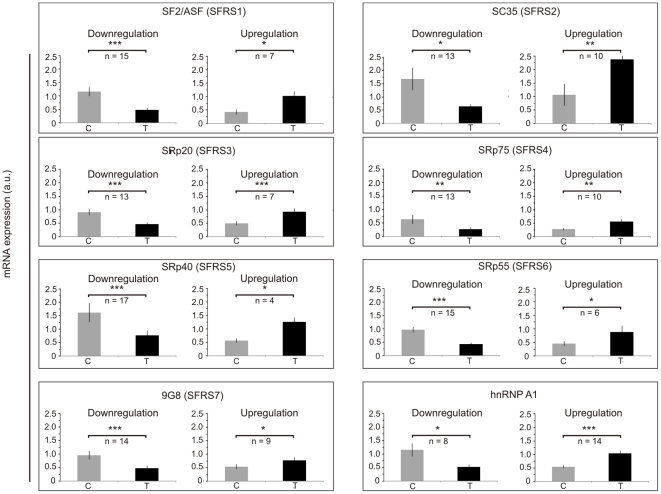
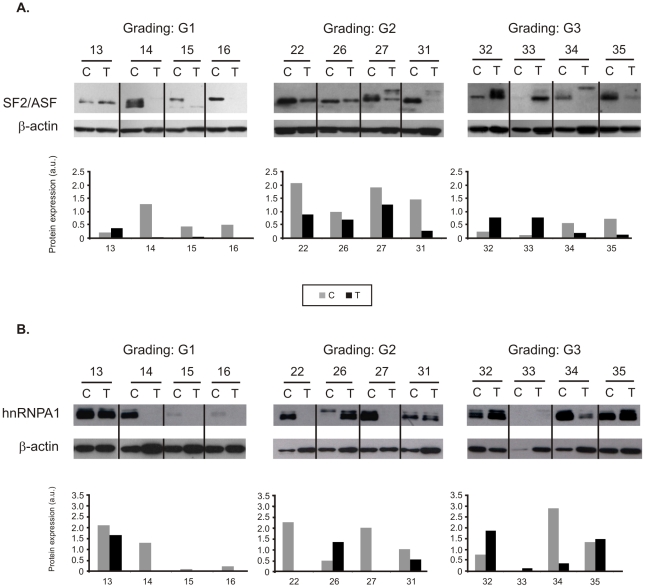
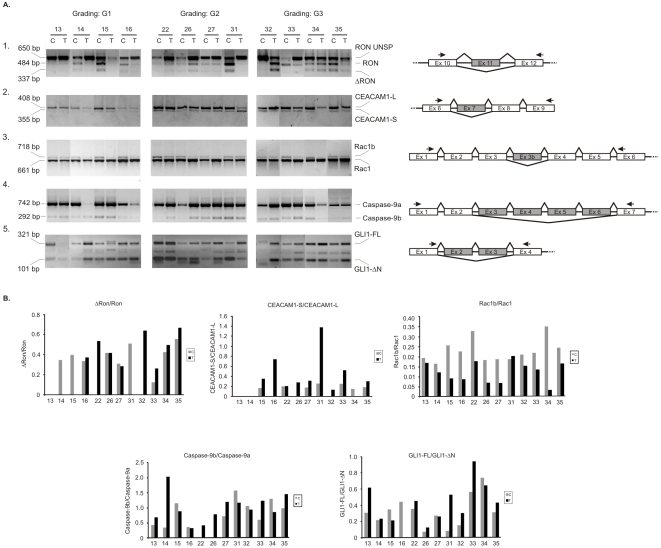
Methodology/principal findings: Using real-time PCR and Western-blot analysis we analyzed expression of seven splicing factors belonging to SR proteins family (SF2/ASF, SC35, SRp20, SRp75, SRp40, SRp55 and 9G8), and one non-SR factor, hnRNP A1 (heterogeneous nuclear ribonucleoprotein A1) in 38 pairs of tumor-control ccRCC samples. Moreover, we analyzed splicing patterns of five genes involved in carcinogenesis and partially regulated by analyzed splicing factors: RON, CEACAM1, Rac1, Caspase-9, and GLI1.
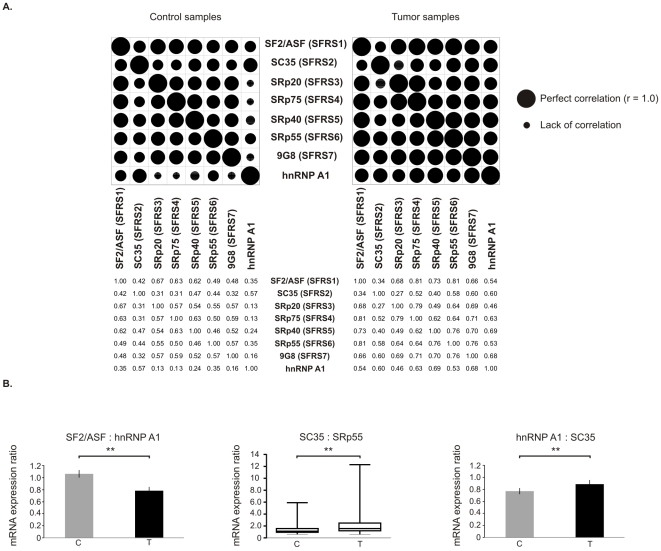
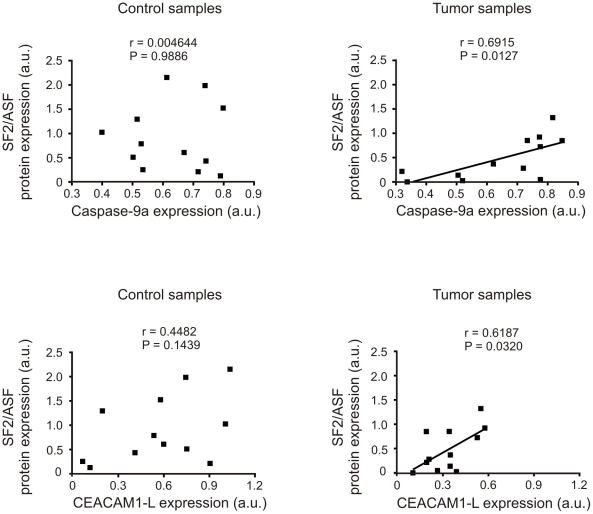
Conclusions/significance: We found that the mRNA expression of splicing factors was disturbed in tumors when compared to paired controls, similarly as levels of SF2/ASF and hnRNP A1 proteins. The correlation coefficients between expression levels of specific splicing factors were increased in tumor samples. Moreover, alternative splicing of five analyzed genes was also disturbed in ccRCC samples and splicing pattern of two of them, Caspase-9 and CEACAM1 correlated with expression of SF2/ASF in tumors. We conclude that disturbed expression of splicing factors in ccRCC may possibly lead to impaired alternative splicing of genes regulating tumor growth and this way contribute to the process of carcinogenesis.
Conflict of interest statement
Figures
References
-
- Schöffski P, Dumez H, Clement P, Hoeben A, Prenen H, et al. Emerging role of tyrosine kinase inhibitors in the treatment of advanced renal cell cancer: a review. Ann Oncol. 2006;17:1185–1196. - PubMed
-
- Ljungberg B, Hanbury DC, Kuczyk MA, Merseburger AS, Mulders PFA, et al. on behalf of the European Association of Urology (EAU) 2009. Guidelines on renal cell carcinoma. Available on the website of the European Association of Urology (accessed 2010) http://www.uroweb.org/fileadmin/tx_eauguidelines/2009/Full/RCC.pdf.
-
- Piekielko-Witkowska A, Master A, Wojcicka A, Boguslawska J, Brozda I, et al. Disturbed expression of type 1 iodothyronine deiodinase splice variants in human renal cancer. Thyroid. 2009;19:1105–1113. - PubMed
-
- Gereben B, Bianco AC. Covering the base-pairs in iodothyronine deiodinase-1 biology: holes remain in the lineup. Thyroid. 2009;19:1027–1029. - PubMed
Publication types
MeSH terms
LinkOut - more resources
Full Text Sources
Other Literature Sources
Medical
Research Materials
Miscellaneous
