doi: 10.1128/CVI.00357-10.
Epub 2010 Nov 17.
The inverse correlation between Staphylococcus aureus and Streptococcus pneumoniae colonization in infants is not explained by differences in serum antibody levels in the Generation R Study
Affiliations
- PMID: 21084460
- PMCID: PMC3019791
- DOI: 10.1128/CVI.00357-10
Item in Clipboard
The inverse correlation between Staphylococcus aureus and Streptococcus pneumoniae colonization in infants is not explained by differences in serum antibody levels in the Generation R Study
Clin Vaccine Immunol.
2011 Jan.
Abstract
Colonization rates of Streptococcus pneumoniae and Staphylococcus aureus are inversely correlated in infants. Several studies have searched for determinants of this negative association. We studied the association between antipneumococcal antibodies with Staphylococcus aureus colonization and the association between antistaphylococcal antibodies with pneumococcal colonization in healthy children in the pneumococcal vaccine era. In the first year of life, no association between maternal IgG levels and colonization was seen. In addition, no association between the IgG and IgA levels in the child versus colonization status was seen.
Figures
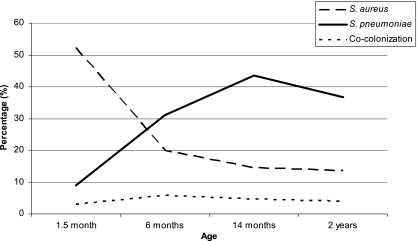
Mirror image graphs of S. pneumoniae and S. aureus colonization rates in 1,079 infants from the Generation R Focus Cohort over time. S. pneumoniae colonization rates increase in the first year of life from 8.9% to 43.5% of the children and decrease again after the first year of life to 38.8%, while S. aureus colonization rates decrease in the first year of life from 52.3% to 14.5% and decrease slightly the year after to 13.6%. Cocolonization with the two pathogens exists; however, the prevalence is very low (∼5%) and stable over time.
References
-
- Bisgaard, H., et al. 2007. Childhood asthma after bacterial colonization of the airway in neonates. N. Engl. J. Med. 357:1487-1495. - PubMed
-
- Bogaert, D., R. De Groot, and P. W. Hermans. 2004. Streptococcus pneumoniae colonization: the key to pneumococcal disease. Lancet Infect. Dis. 4:144-154. - PubMed
-
- Bogaert, D., et al. 2004. Colonization by Streptococcus pneumoniae and Staphylococcus aureus in healthy children. Lancet 363:1871-1872. - PubMed
-
- Borgers, H., et al. 2010. Laboratory diagnosis of specific antibody deficiency to pneumococcal capsular polysaccharide antigens by multiplexed bead assay. Clin. Immunol. 134:198-205. - PubMed
-
- Jaddoe, V. W., et al. 2008. The Generation R Study: design and cohort update until the age of 4 years. Eur. J. Epidemiol. 23:801-811. - PubMed
Publication types
MeSH terms
Substances
LinkOut - more resources
Full Text Sources
Other Literature Sources
Medical
Miscellaneous