


NMDA receptor hypofunction induces dysfunctions of energy metabolism and semaphorin signaling in rats: a synaptic proteome study
- PMID: 21084551
- PMCID: PMC3329985
- DOI: 10.1093/schbul/sbq132
NMDA receptor hypofunction induces dysfunctions of energy metabolism and semaphorin signaling in rats: a synaptic proteome study
Abstract
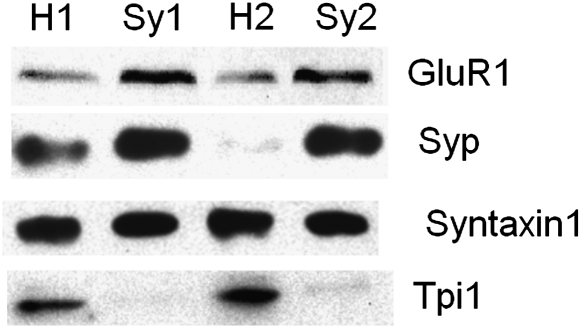
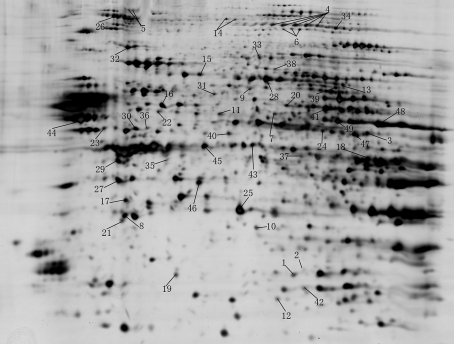
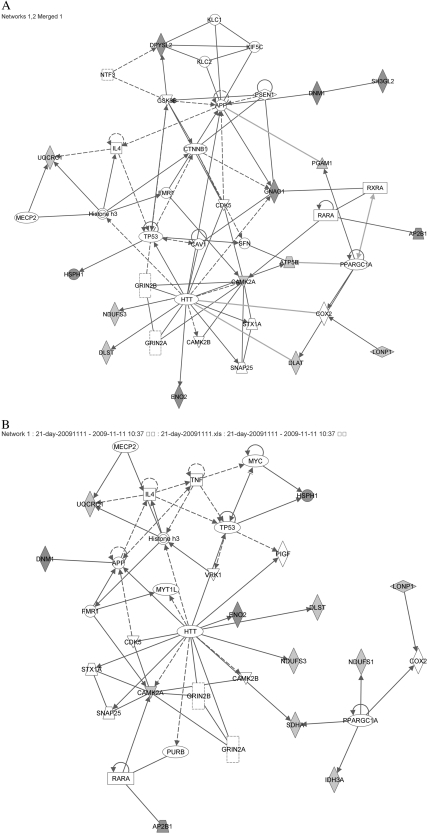
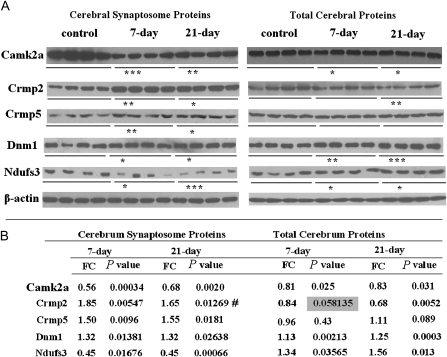
There is considerable evidence to suggest that aberrations of synapse connectivity contribute to the pathophysiology of schizophrenia and that N-methyl-D-aspartate (NMDA) receptor-mediated glutamate transmission is especially important. Administration of MK-801 ([+]-5-methyl-10, 11-dihydro-5H-dibenzo-[a, d]-cycloheptene-5, 10-iminehydrogenmaleate) induces hypofunction of NMDA receptors in rats, which are widely used as a model for schizophrenia. We investigated synaptosomal proteome expression profiling of the cerebral cortex of MK-801-treated Sprague-Dawley rats using the 2-dimensional difference gel electrophoresis method, and 49 differentially expression proteins were successfully identified using Matrix-Assisted Laser Desorption/Ionization Time-of-Flight/Time-of-Flight mass spectrometry. We carried out a literature search for further confirmation of subsynaptic locations and to explore the relevance to the diseases of differentially expressed proteins. Ingenuity Pathways Analysis (IPA) was used to further examine the underlying relationship between the changed proteins. The network encompassing "cell morphology, cell-to-cell signaling and interaction, nervous system development and function" was found to be significantly altered in the MK-801-treated rats. "Energy metabolism" and "semaphorin signaling in neurons" are the most significant IPA canonical pathways to be affected by MK-801 treatment. Using western blots, we confirmed the differential expression of Camk2a, Crmp2, Crmp5, Dnm1, and Ndufs3 in both synaptosome proteins and total proteins in the cerebral cortex of the rats. Our study identified the change and/or response of the central nervous transmission system under the stress of NMDA hypofunction, underlining the importance of the synaptic function in schizophrenia.
Figures

References
-
- Mirnics K, Middleton FA, Lewis DA, Levitt P. Analysis of complex brain disorders with gene expression microarrays: schizophrenia as a disease of the synapse. Trends Neurosci. 2001;24:479–486. - PubMed
-
- Frankle WG, Lerma J, Laruelle M. The synaptic hypothesis of schizophrenia. Neuron. 2003;39:205–216. - PubMed
-
- Khvotchev M. Schizophrenia and synapse: emerging role of presynaptic fusion machinery. Biol Psychiatry. 2010;67:197–198. - PubMed
-
- Harrison PJ, Weinberger DR. Schizophrenia genes, gene expression, and neuropathology: on the matter of their convergence. Mol Psychiatry. 2005;10:40–68. image 45. - PubMed
Publication types
MeSH terms
Substances
LinkOut - more resources
Full Text Sources
Miscellaneous
