


Portrait of a pathogen: the Mycobacterium tuberculosis proteome in vivo
- PMID: 21085642
- PMCID: PMC2978697
- DOI: 10.1371/journal.pone.0013938
Portrait of a pathogen: the Mycobacterium tuberculosis proteome in vivo
Abstract
Background: Mycobacterium tuberculosis (Mtb), the causative agent of tuberculosis (TB), is a facultative intracellular pathogen that can persist within the host. The bacteria are thought to be in a state of reduced replication and metabolism as part of the chronic lung infection. Many in vitro studies have dissected the hypothesized environment within the infected lung, defining the bacterial response to pH, starvation and hypoxia. While these experiments have afforded great insight, the picture remains incomplete. The only way to study the combined effects of these environmental factors and the mycobacterial response is to study the bacterial response in vivo.
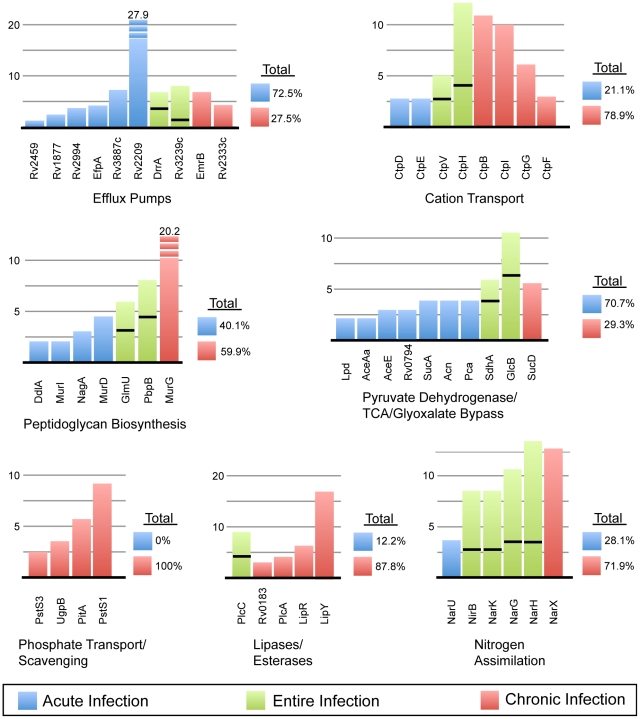
Methodology/principal findings: We used the guinea pig model of tuberculosis to examine the bacterial proteome during the early and chronic stages of disease. Lungs were harvested thirty and ninety days after aerosol challenge with Mtb, and analyzed by liquid chromatography-mass spectrometry. To date, in vivo proteomics of the tubercle bacillus has not been described and this work has generated the first large-scale shotgun proteomic data set, comprising over 500 unique protein identifications. Cell wall and cell wall processes, and intermediary metabolism and respiration were the two major functional classes of proteins represented in the infected lung. These classes of proteins displayed the greatest heterogeneity indicating important biological processes for establishment of a productive bacterial infection and its persistence. Proteins necessary for adaptation throughout infection, such as nitrate/nitrite reduction were found at both time points. The PE-PPE protein class, while not well characterized, represented the third most abundant category and showed the most consistent expression during the infection.
Conclusions/significance: Cumulatively, the results of this work may provide the basis for rational drug design - identifying numerous Mtb proteins, from essential kinases to products involved in metal regulation and cell wall remodeling, all present throughout the course of infection.
Conflict of interest statement
Figures
References
-
- McMurray DN. Hematogenous reseeding of the lung in low-dose, aerosol-infected guinea pigs: unique features of the host-pathogen interface in secondary tubercles. Tuberculosis (Edinb) 2003;83:131–134. - PubMed
-
- Smith DW, Balasubramanian V, Wiegeshaus E. A guinea pig model of experimental airborne tuberculosis for evaluation of the response to chemotherapy: the effect on bacilli in the initial phase of treatment. Tubercle. 1991;72:223–231. - PubMed
-
- Mattow J, Siejak F, Hagens K, Becher D, Albrecht D, et al. Proteins unique to intraphagosomally grown Mycobacterium tuberculosis. Proteomics. 2006;6:2485–2494. - PubMed
Publication types
MeSH terms
Substances
Grants and funding
LinkOut - more resources
Full Text Sources
Other Literature Sources
