


NKT cell costimulation: experimental progress and therapeutic promise
- PMID: 21087900
- PMCID: PMC3616392
- DOI: 10.1016/j.molmed.2010.10.007
NKT cell costimulation: experimental progress and therapeutic promise
Abstract
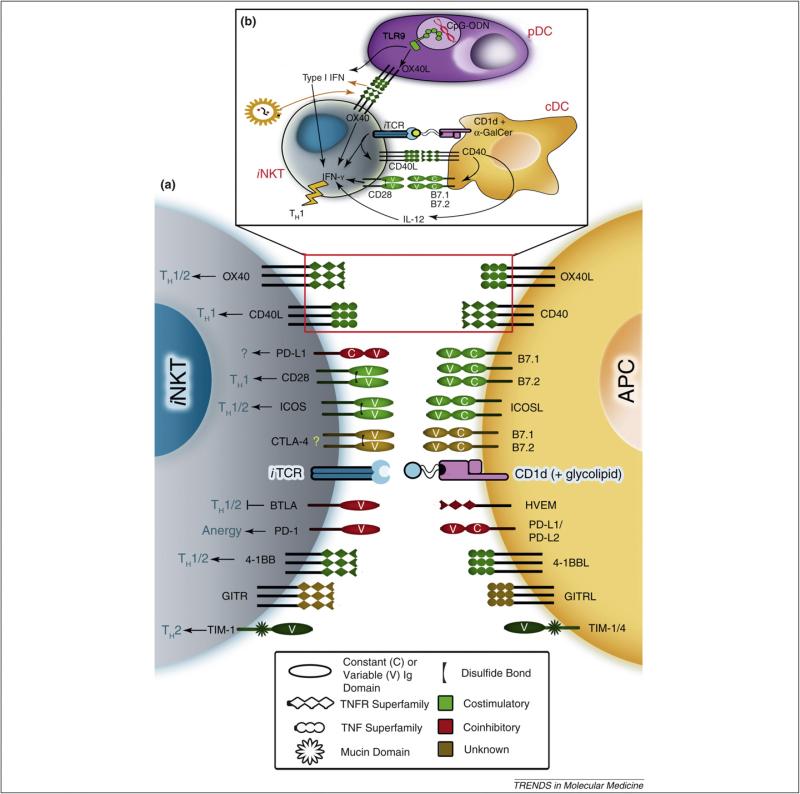
Invariant natural killer T (iNKT) cells are innate lymphocytes with unique specificity for glycolipid antigens and remarkable immunomodulatory properties. The role of costimulatory interactions in iNKT cell responses has recently come under scrutiny. Although iNKT cells and their prototype glycolipid agonist α-galactosylceramide (α-GalCer) have shown promise in several clinical trials conducted in patients with cancer or viral diseases, current iNKT cell-based therapies are far from effective. The concomitant targeting of T cell receptors (TCRs) and costimulatory molecules on iNKT cells represents an exciting new opportunity to optimize such therapeutic approaches. Here, we review recent advances in our understanding of iNKT cell costimulation and discuss potential treatment modalities based on the responsiveness of iNKT cells to disease-tailored glycolipids and select costimulatory ligands.
Copyright © 2010 Elsevier Ltd. All rights reserved.
Figures
References
-
- Bendelac A, et al. The biology of NKT cells. Annu. Rev. Immunol. 2007;25:297–336. - PubMed
-
- Godfrey DI, et al. Raising the NKT cell family. Nat. Immunol. 2010;11:197–206. - PubMed
-
- Assarsson E, et al. CD8+ T cells rapidly acquire NK1.1 and NK cell-associated molecules upon stimulation in vitro and in vivo. J. Immunol. 2000;165:3673–3679. - PubMed
-
- McNab FW, et al. Peripheral NK1.1 NKT cells are mature and functionally distinct from their thymic counterparts. J. Immunol. 2007;179:6630–6637. - PubMed
Publication types
MeSH terms
Substances
Grants and funding
LinkOut - more resources
Full Text Sources
Other Literature Sources
