


Diesel particulate matter induces receptor for advanced glycation end-products (RAGE) expression in pulmonary epithelial cells, and RAGE signaling influences NF-κB-mediated inflammation
- PMID: 21087909
- PMCID: PMC3059995
- DOI: 10.1289/ehp.1002520
Diesel particulate matter induces receptor for advanced glycation end-products (RAGE) expression in pulmonary epithelial cells, and RAGE signaling influences NF-κB-mediated inflammation
Abstract
Background: Receptors for advanced glycation end-products (RAGE) are cell-surface receptors expressed by alveolar type I (ATI) epithelial cells and are implicated in mechanisms of alveolar development and sustained pulmonary inflammation.
Objectives: In the present study, we tested the hypothesis that diesel particulate matter (DPM) up-regulates RAGE in rat ATI-like R3/1 cells and human primary small airway epithelial cells (SAECs), leading to an inflammatory response.
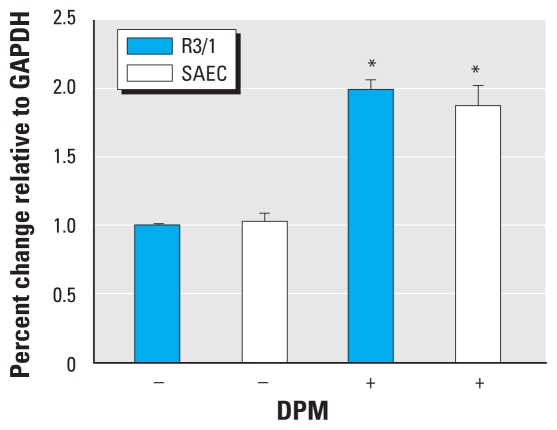
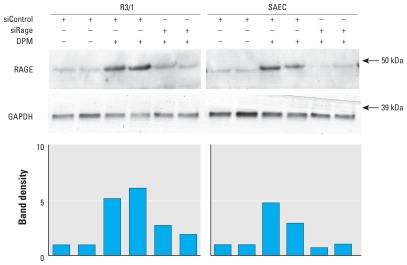
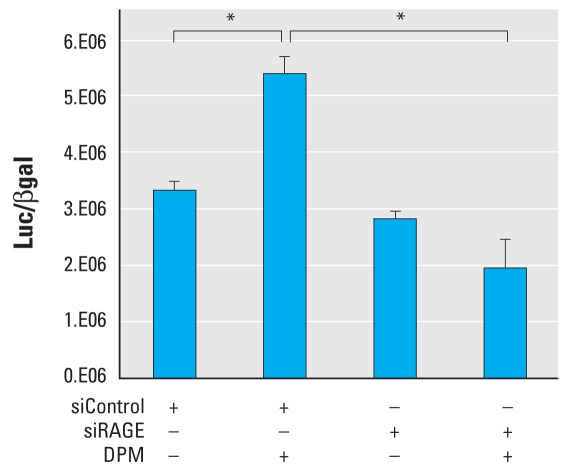
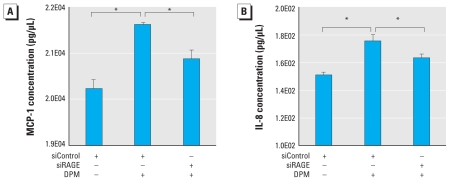
Methods and results: Using real-time reverse transcriptase polymerase chain reaction and immunoblotting, we found that RAGE mRNA and protein are up-regulated in cells exposed to DPM for 2 hr. Use of a luciferase reporter containing nuclear factor-κB (NF-κB) response elements revealed decreased NF-κB activation in cells transfected with small interfering RNA (siRNA) for RAGE (siRAGE) before DPM exposure compared with cells transfected with scrambled control siRNA (siControl). In addition, immunostaining revealed diminished nuclear translocation of NF-κB in DPM-exposed cells transfected with siRAGE compared with cells transfected with siControl before DPM stimulation. Enzyme-linked immunosorbent assay demonstrated that in R3/1 cells DPM induced secretion of monocyte chemoattractant protein-1 (MCP-1) and interleukin-8 (IL-8), two cytokines induced by NF-κB and associated with leukocyte chemotaxis during an inflammatory response. Incorporating siRAGE was sufficient to significantly decrease DPM-induced MCP-1 and IL-8 secretion compared with cells transfected with siControl.
Conclusions: These data offer novel insights into potential mechanisms whereby RAGE influences pulmonary inflammation exacerbated by DPM exposure. Further research may demonstrate that molecules involved in RAGE signaling are potential targets in lessening the degree of particulate matter-induced exacerbations of inflammatory lung disease.
Figures
Comment in
-
Road RAGE? The role of diesel particulate matter in lung inflammation.Environ Health Perspect. 2011 Mar;119(3):a132. doi: 10.1289/ehp.119-a132a. Environ Health Perspect. 2011. PMID: 21356633 Free PMC article. No abstract available.
References
-
- Aggarwal BB. Nuclear factor-kappaB: the enemy within. Cancer Cell. 2004;6:203–208. - PubMed
-
- Baggiolini M, Clark-Lewis I. Interleukin-8, a chemotactic and inflammatory cytokine. FEBS Lett. 1992;307:97–101. - PubMed
-
- Bayram H, Ito K, Issa R, Ito M, Sukkar M, Churg KF. Regulation of human lung epithelial cell numbers by diesel exhaust particles. Eur Resp J. 2006;27:705–713. - PubMed
-
- Beckmann AM, Wilce PA. Egr transcription factors in the nervous system. Neurochem Int. 1997;31:477–510. - PubMed
Publication types
MeSH terms
Substances
LinkOut - more resources
Full Text Sources
Medical
Research Materials
Miscellaneous