


Selective breeding for magnitude of methamphetamine-induced sensitization alters methamphetamine consumption
- PMID: 21088960
- PMCID: PMC3320759
- DOI: 10.1007/s00213-010-2086-2
Selective breeding for magnitude of methamphetamine-induced sensitization alters methamphetamine consumption
Abstract
Rationale: Genetically determined differences in susceptibility to drug-induced sensitization could be related to risk for drug consumption.
Objectives: Studies were performed to determine whether selective breeding could be used to create lines of mice with different magnitudes of locomotor sensitization to methamphetamine (MA). MA sensitization (MASENS) lines were also examined for genetically correlated responses to MA.
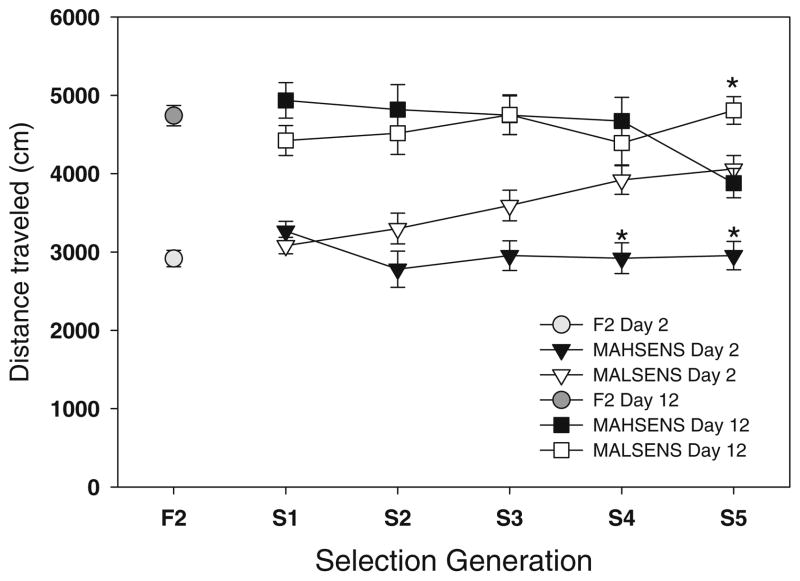
Methods: Beginning with the F2 cross of C57BL/6J and DBA/2J strains, mice were tested for locomotor sensitization to repeated injections of 1 mg/kg MA and bred based on magnitude of sensitization. Five selected offspring generations were tested. All generations were also tested for MA consumption, and some were tested for dose-dependent locomotor-stimulant responses to MA, consumption of saccharin, quinine, and potassium chloride as a measure of taste sensitivity, and MA clearance after acute and repeated MA.
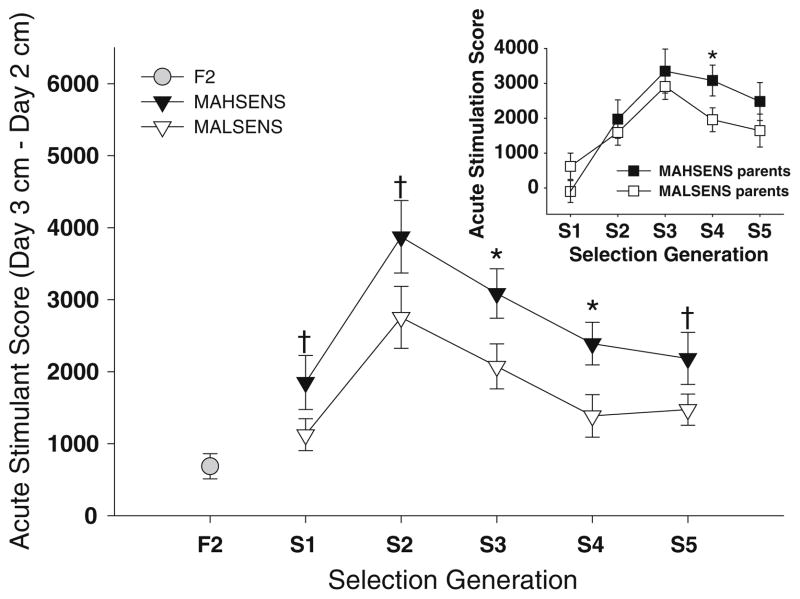
Results: Selective breeding resulted in creation of two lines [MA high sensitization (MAHSENS) and MA low sensitization (MALSENS)] that differed in magnitude of MA-induced sensitization. Initially, greater MA consumption in MAHSENS mice reversed over the course of selection so that MALSENS mice consumed more MA. MAHSENS mice exhibited greater sensitivity to the acute stimulant effects of MA, but there were no significant differences between the lines in MA clearance from blood.
Conclusions: Genetic factors influence magnitude of MA-induced locomotor sensitization and some of the genes involved in magnitude of this response also influence MA sensitivity and consumption. Genetic factors leading to greater MA-induced sensitization may serve a protective role against high levels of MA consumption.
Conflict of interest statement
Figures



References
-
- Atkins AL, Helms ML, O’Toole LA, Belknap JK. Stereotypic behaviors in mice selectively bred for high and low methamphetamine-induced stereotypic chewing. Psychopharmacology (Berl) 2001;157:96–104. - PubMed
-
- Belknap JK, Richards SP, O’Toole LA, Helms ML, Phillips TJ. Short-term selective breeding as a tool for QTL mapping: ethanol preference drinking in mice. Behav Genet. 1997;27:55–66. - PubMed
-
- Boileau I, Dagher A, Leyton M, Gunn RN, Baker GB, Diksic M, Benkelfat C. Modeling sensitization to stimulants in humans: an [11C]raclopride/positron emission tomography study in healthy men. Arch Gen Psychiatry. 2006;63:1386–1395. - PubMed
Publication types
MeSH terms
Substances
Grants and funding
LinkOut - more resources
Full Text Sources
Medical
Miscellaneous
