


Anxiety sensitivity and illicit sedative use among opiate-dependent women and men
- PMID: 21090958
- PMCID: PMC4643056
- DOI: 10.3109/00952990.2010.535581
Anxiety sensitivity and illicit sedative use among opiate-dependent women and men
Erratum in
- Am J Drug Alcohol Abuse. 2011 Jan;37(1):47
Abstract
Objectives: Research has suggested that individuals with elevated anxiety sensitivity (AS) (the fear of benign bodily sensations associated with anxiety) are more likely to use substances to cope with distress, particularly substances with arousal-dampening effects such as benzodiazepines and other sedatives. Such coping motives may also vary as a function of gender, with women more likely to use substances for coping (self-medicating) purposes. Given these findings, we hypothesized that AS would be associated with illicit sedative use in an opioid-dependent sample and that gender would moderate this relationship, with a greater association among women.
Method: Participants were 68 opioid-dependent patients recruited from a methadone maintenance clinic. A logistic regression was used to determine whether AS was associated with presence or absence of a history of illicit sedative use.
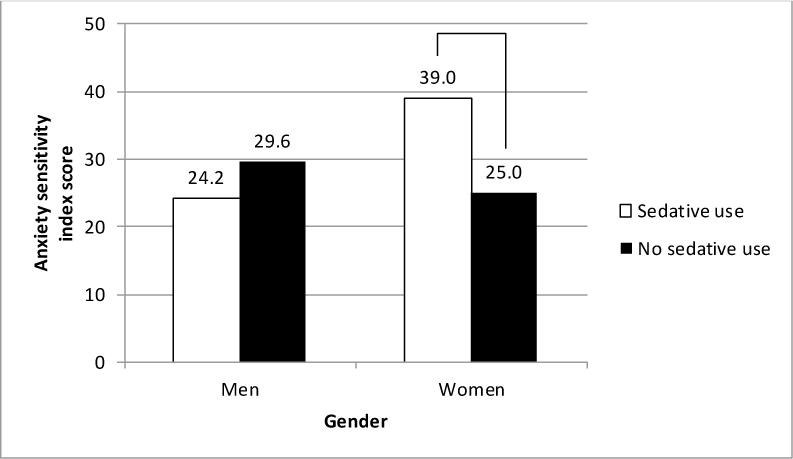
Results: AS was significantly associated with sedative use and this relationship was moderated by gender; elevated AS was associated with greater sedative use only in women.
Conclusion: The presence of elevated AS is related to greater illicit use of sedatives in women but not in men. Women may be more susceptible to seek sedatives as a means of coping with unpleasant, anxious sensations.
Figures
References
-
- Cooper ML, et al. Drinking to regulate positive and negative emotions: A motivational model of alcohol use. Journal of Personality and Social Psychology. 1995;69:990–1005. - PubMed
-
- Peterson RA, Reiss S. Anxiety Sensitivity Index Revised Test Manual. Palos Heights: International Diagnostic Systems; 1992.
-
- DeHaas R, et al. Anxiety sensitivity and drug or alcohol use in individuals with anxiety and substance use disorders. Addictive Behaviors. 2001;26(6):787–801. - PubMed
-
- Kushner MG, et al. Anxiety mediates the association between anxiety sensitivity and coping-related drinking motives in alcoholism treatment patients. Addictive Behaviors. 2001;26(6):869–885. - PubMed
-
- Stewart SH, Zeitlin SB. Anxiety sensitivity and alcohol use motives. Journal of Anxiety Disorders. 1995;9(3):229–240.
Publication types
MeSH terms
Substances
Grants and funding
LinkOut - more resources
Full Text Sources
Medical
Research Materials
