


Dietary fatty acids and the aging brain
- PMID: 21091943
- PMCID: PMC4019000
- DOI: 10.1111/j.1753-4887.2010.00345.x
Dietary fatty acids and the aging brain
Abstract
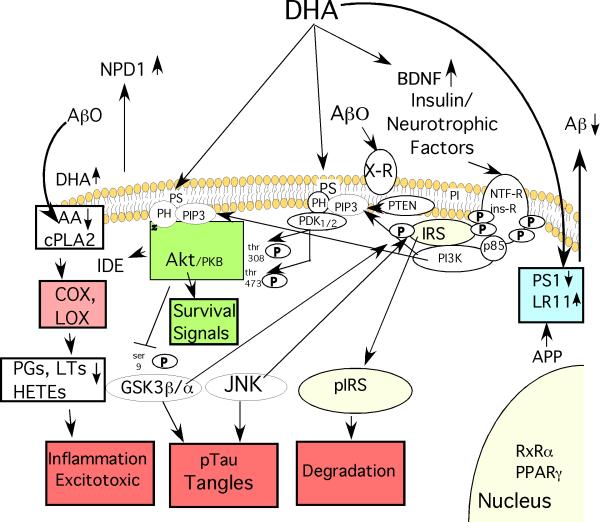
Aging contributes to physiological decline and vulnerability to disease. In the brain, even with minimal neuronal loss, aging increases oxidative damage, inflammation, demyelination, impaired processing, and metabolic deficits, particularly during pathological brain aging. In this review, the possible role of docosahexaenoic acid (DHA) in the prevention of age-related disruption of brain function is discussed. High-fat diabetogenic diets, cholesterol, and the omega-6 fatty acid arachidonate and its prostaglandin metabolites have all been implicated in promoting the pathogenesis of Alzheimer's disease. Evidence presented here shows DHA acts to oppose this, exerting a plethora of pleiotropic activities to protect against the pathogenesis of Alzheimer's disease.
© 2010 International Life Sciences Institute.
Figures
References
-
- Cole GM, Frautschy SA. The role of insulin and neurotrophic factor signaling in brain aging and Alzheimer's Disease. Exp Gerontol. 2007;42:10–21. - PubMed
-
- Lee CK, Weindruch R, Prolla TA. Gene-expression profile of the ageing brain in mice. Nat Genet. 2000;25:294–297. - PubMed
-
- Bartzokis G, Tishler TA, Lu PH, Villablanca P, et al. Brain ferritin iron may influence age- and gender-related risks of neurodegeneration. Neurobiol Aging. 2007;28:414–423. - PubMed
-
- Cummings JL, Cole G. Alzheimer disease. JAMA. 2002;287:2335–2338. - PubMed
-
- Rosendorff C, Beeri MS, Silverman JM. Cardiovascular risk factors for Alzheimer's disease. Am J Geriatr Cardiol. 2007;16:143–149. - PubMed
Publication types
MeSH terms
Substances
Grants and funding
LinkOut - more resources
Full Text Sources
Medical
