


Role of oxidative stress on diesel-enhanced influenza infection in mice
- PMID: 21092162
- PMCID: PMC3001415
- DOI: 10.1186/1743-8977-7-34
Role of oxidative stress on diesel-enhanced influenza infection in mice
Abstract
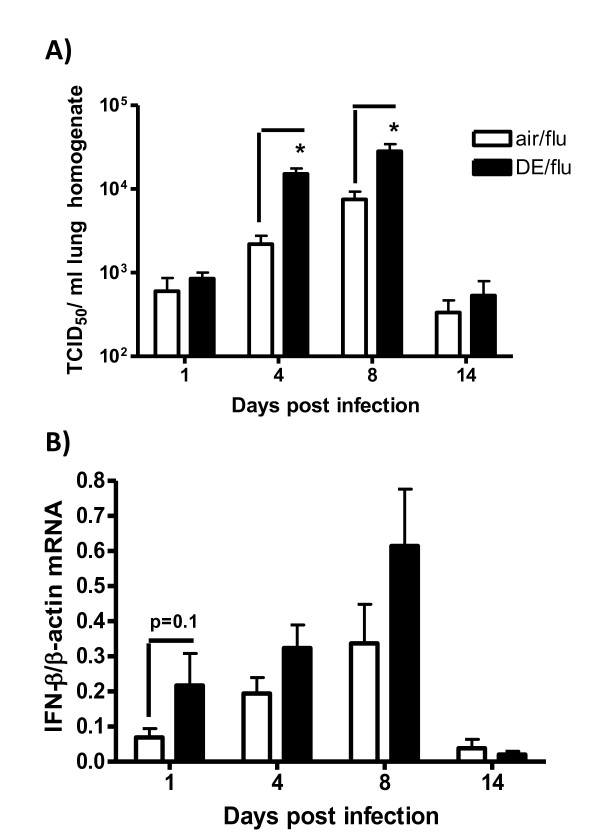
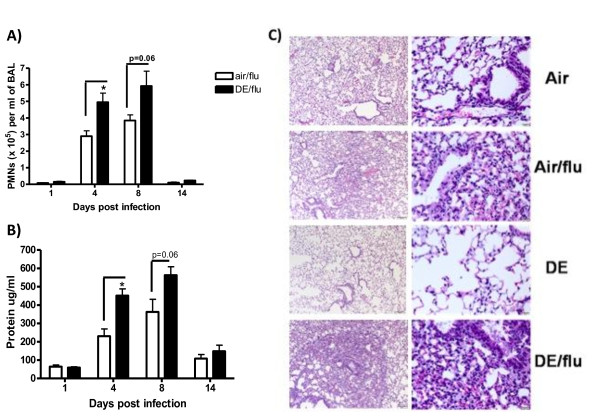
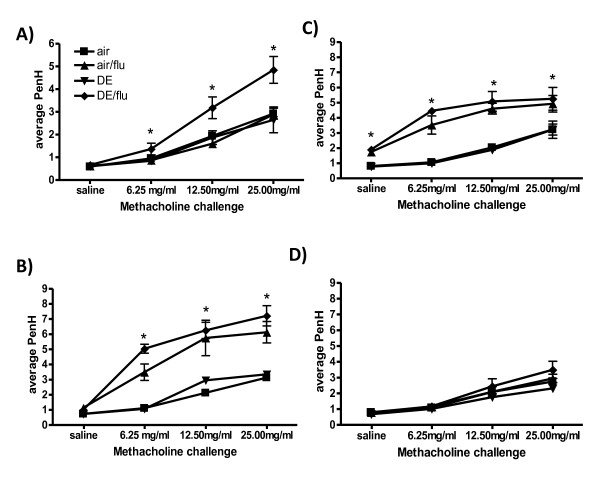
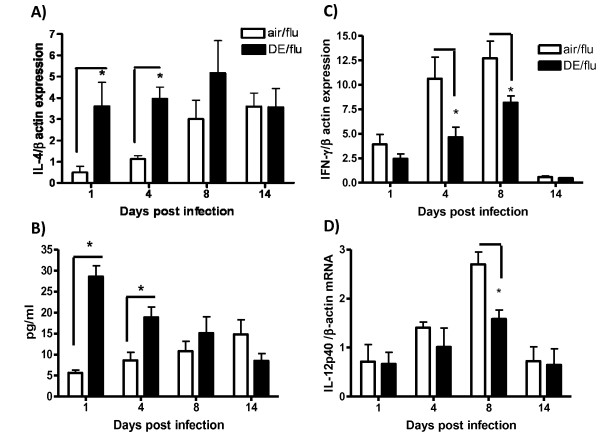
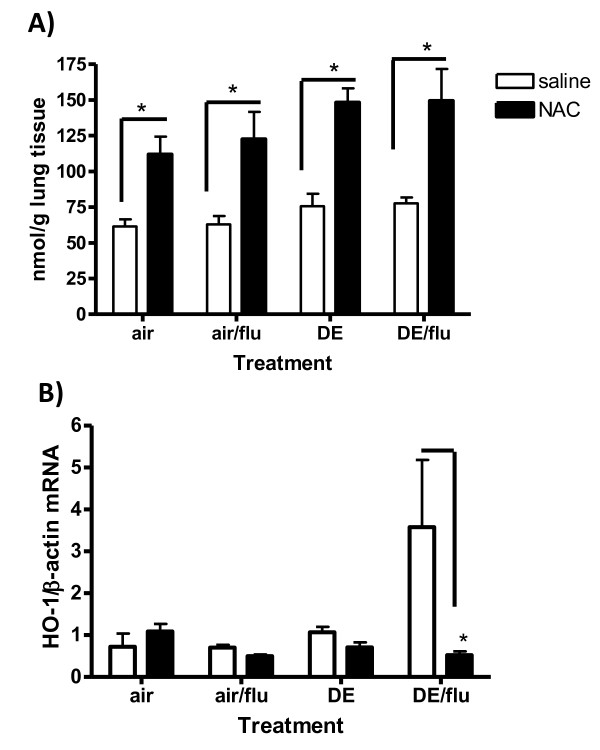
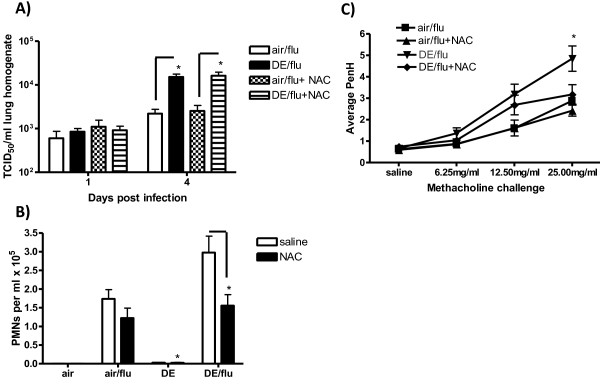
Numerous studies have shown that air pollutants, including diesel exhaust (DE), reduce host defenses, resulting in decreased resistance to respiratory infections. This study sought to determine if DE exposure could affect the severity of an ongoing influenza infection in mice, and examine if this could be modulated with antioxidants. BALB/c mice were treated by oropharyngeal aspiration with 50 plaque forming units of influenza A/HongKong/8/68 and immediately exposed to air or 0.5 mg/m3 DE (4 hrs/day, 14 days). Mice were necropsied on days 1, 4, 8 and 14 post-infection and lungs were assessed for virus titers, lung inflammation, immune cytokine expression and pulmonary responsiveness (PR) to inhaled methacholine. Exposure to DE during the course of infection caused an increase in viral titers at days 4 and 8 post-infection, which was associated with increased neutrophils and protein in the BAL, and an early increase in PR. Increased virus load was not caused by decreased interferon levels, since IFN-β levels were enhanced in these mice. Expression and production of IL-4 was significantly increased on day 1 and 4 p.i. while expression of the Th1 cytokines, IFN-γ and IL-12p40 was decreased. Treatment with the antioxidant N-acetylcysteine did not affect diesel-enhanced virus titers but blocked the DE-induced changes in cytokine profiles and lung inflammation. We conclude that exposure to DE during an influenza infection polarizes the local immune responses to an IL-4 dominated profile in association with increased viral disease, and some aspects of this effect can be reversed with antioxidants.
Figures

References
-
- Pope CA, Burnett RT, Thurston GD, Thun MJ, Calle EE, Krewski D, Godleski JJ. Cardiovascular mortality and long-term exposure to particulate air pollution: epidemiological evidence of general pathophysiological pathways of disease. Circulation. 2004;109:71–77. doi: 10.1161/01.CIR.0000108927.80044.7F. - DOI - PubMed
-
- Pope CA, Dockery DW. Acute health effects of PM10 pollution on symptomatic and asymptomatic children. Am Rev Respir Dis. 1992;145:1123–1128. - PubMed
Publication types
MeSH terms
Substances
Grants and funding
LinkOut - more resources
Full Text Sources
Research Materials
