


The provision of non-needle/syringe drug injecting paraphernalia in the primary prevention of HCV among IDU: a systematic review
- PMID: 21092300
- PMCID: PMC3001732
- DOI: 10.1186/1471-2458-10-721
The provision of non-needle/syringe drug injecting paraphernalia in the primary prevention of HCV among IDU: a systematic review
Abstract
Background: Sharing drug injecting paraphernalia other than needles and syringes (N/S) has been implicated in the transmission of Hepatitis C virus (HCV) among injecting drug users (IDU). We aimed to determine whether the provision of sterile non-N/S injecting paraphernalia reduces injecting risk behaviours or HCV transmission among IDU.
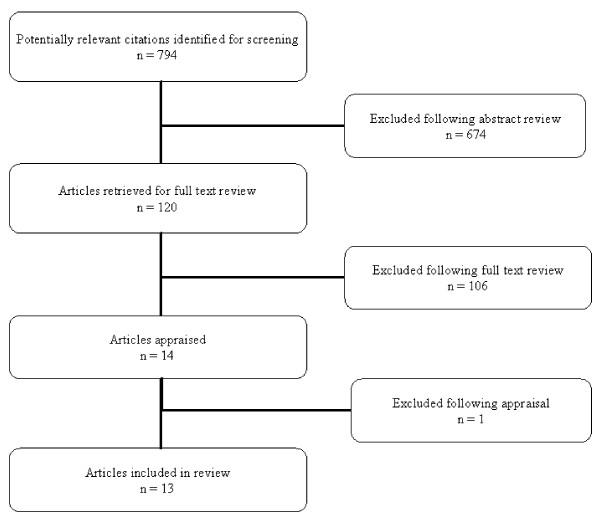
Methods: A systematic search of seven databases and the grey literature for articles published January 1989-February 2010 was undertaken. Thirteen studies (twelve observational and one non-randomized uncontrolled pilot intervention) were identified and appraised for study design and quality by two investigators.
Results: No studies examined the association between the provision of non-N/S injecting paraphernalia and incident HCV infection. One cross-sectional study found that individuals who frequently, compared to those who infrequently, used sterile cookers and water, were less likely to report prevalent HCV infection. Another found no association between the uptake of sterile non-N/S injecting paraphernalia and self-reported sharing of this paraphernalia. The remaining observational studies used attendance at needle and syringe exchange programmes (NSP) or safer injection facilities (SIF) that provided non-N/S injecting paraphernalia as a proxy measure. Eight studies presented adjusted odds ratios, ranging from 0.3 to 0.9, suggesting a reduced likelihood of self-reported sharing of non-N/S injecting paraphernalia associated with use of NSP or SIF. There was substantial uncertainty associated with these estimates however. Three unadjusted studies reported a reduction in the prevalence of sharing of non-N/S injecting paraphernalia over time among NSP users. Only one study reported an adjusted temporal trend in the prevalence of sharing non-N/S injecting paraphernalia, finding higher rates among non-NSP users than NSP users at each time point, and a greater reduction in sharing among non-NSP than NSP users over time. Study limitations included the use of convenience samples, self-reported exposure and outcome measures, flawed classification of the exposed and unexposed groups, and inadequate adjustment for potential confounding variables.
Conclusions: The evidence to demonstrate that the provision of sterile non-N/S injecting paraphernalia reduces HCV transmission or modifies injecting risk behaviours is currently limited by an insufficient volume and quality of studies. Further research is required to inform practice and policy in this area.
Figures
References
Publication types
MeSH terms
LinkOut - more resources
Full Text Sources
Medical
Miscellaneous
