


The effects of hedonically acceptable red pepper doses on thermogenesis and appetite
- PMID: 21093467
- PMCID: PMC3022968
- DOI: 10.1016/j.physbeh.2010.11.018
The effects of hedonically acceptable red pepper doses on thermogenesis and appetite
Abstract
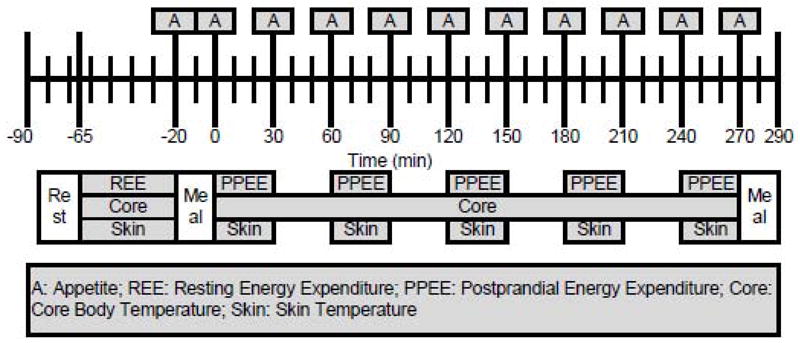
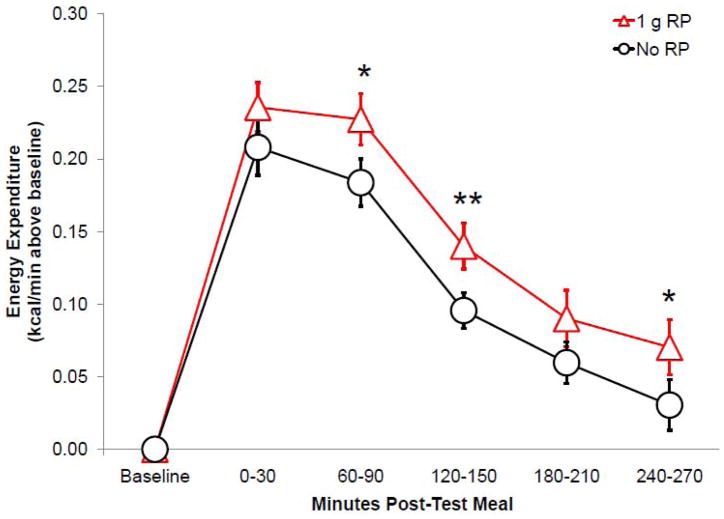
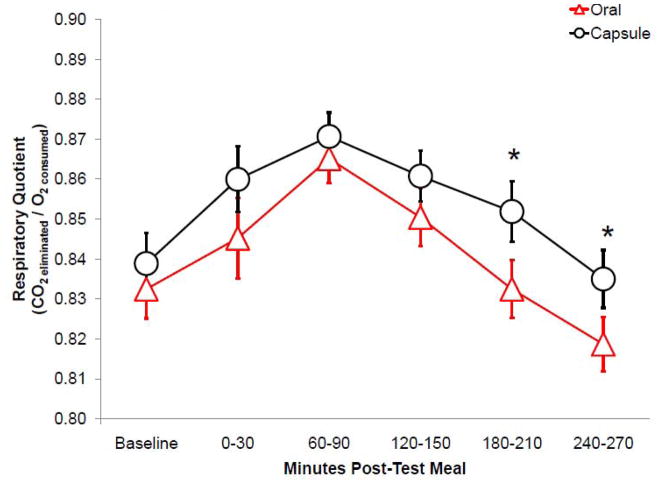
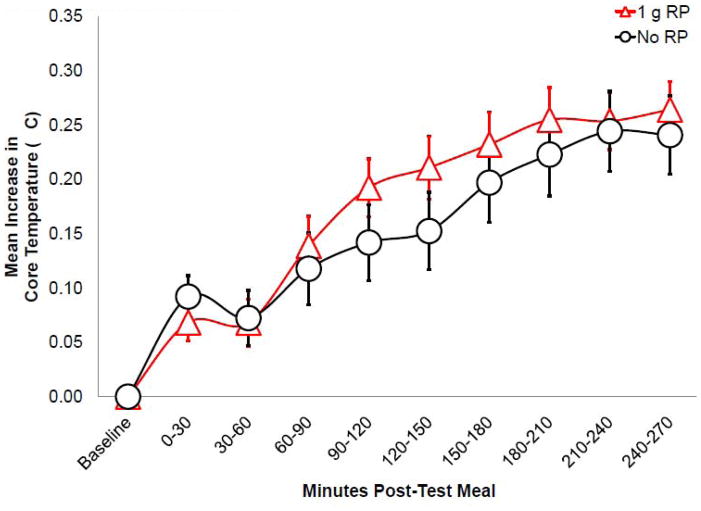
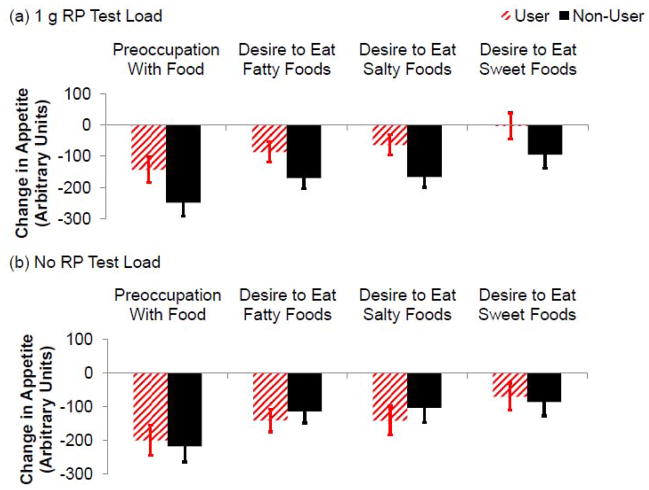
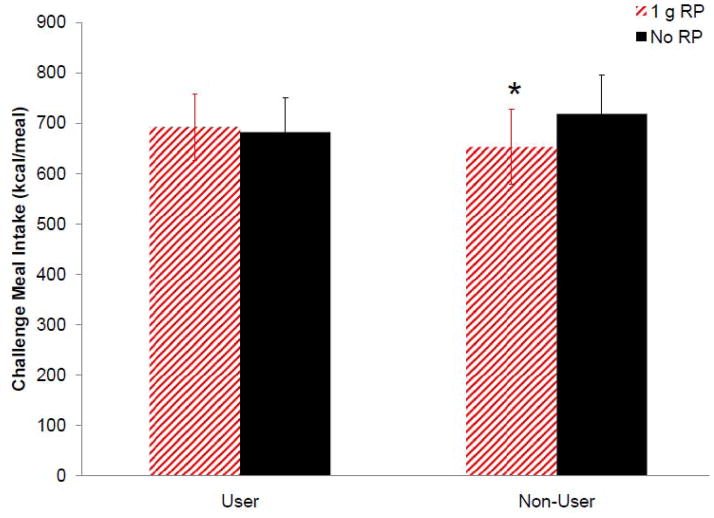
Previous studies suggest consumption of red pepper (RP) promotes negative energy balance. However, the RP dose provided in these studies (up to 10 g/meal) usually exceeded the amount preferred by the general population in the United States (mean=~1 g/meal). The objective of this study was to evaluate the effects of hedonically acceptable RP doses served at a single meal in healthy, lean individuals on thermogenesis and appetite. Twenty-five men and women (aged 23.0 ± 0.5 years, BMI 22.6 ± 0.3 kg/m(2), 13 spicy food users and 12 non-users) participated in a randomized crossover trial during which they consumed a standardized quantity (1 g); their preferred quantity (regular spicy food users 1.8 ± 0.3 g/meal, non-users 0.3 ± 0.1 g/meal); or no RP. Energy expenditure, core body and skin temperature, and appetite were measured. Postprandial energy expenditure and core body temperature were greater, and skin temperature was lower, after test loads with 1 g RP than no RP. Respiratory quotient was lower after the preferred RP dose was ingested orally, compared to in capsule form. These findings suggest that RP's effects on energy balance stem from a combination of metabolic and sensory inputs, and that oral exposure is necessary to achieve RP's maximum benefits. Energy intake was lower after test loads with 1 g RP than no RP in non-users, but not in users. Preoccupation with food, and the desire to consume fatty, salty, and sweet foods were decreased more (or tended to be decreased more) in non-users than users after a 1 g RP test load, but did not vary after a test load with no RP. This suggests that individuals may become desensitized to the effects of RP with long-term spicy food intake.
2010 Elsevier Inc. All rights reserved.
Figures
References
-
- Flegal KM, Carroll MD, Ogden CL, Curtin LR. Prevalence and trends in obesity among US adults, 1999–2008. J Am Med Assoc. 2010;303:235–41. - PubMed
-
- Mattes RD. Dietary approaches to exploit energy balance utilities for body weight control. In: Coulston A, Boushey C, editors. Nutrition in the prevention and treatment of disease. 2. Burlington, MA: Elsevier Academic Press; 2008. pp. 457–68.
-
- Matsumoto T, Miyawaki C, Ue H, Yuasa T, Miyatsuji A, Moritani T. Effects of capsaicin-containing yellow curry sauce on sympathetic nervous system activity and diet-induced thermogenesis in lean and obese young women. J Nutr Sci Vitaminol. 2000;46:309–15. - PubMed
-
- Westerterp-Plantenga MS, Smeets A, Lejeune MPG. Sensory and gastrointestinal satiety effects of capsaicin on food intake. Int J Obesity. 2005;29:682–8. - PubMed
-
- Yoshioka M, Imanaga M, Ueyama H, Yamane M, Kubo Y, Boivin A, et al. Maximum tolerable dose of red pepper decreases fat intake independently of spicy sensation in the mouth. Brit J Nutr. 2004;91:991–5. - PubMed
Publication types
MeSH terms
Substances
Grants and funding
LinkOut - more resources
Full Text Sources
Other Literature Sources
