


A standardized grading system for scleritis
- PMID: 21093921
- PMCID: PMC3070789
- DOI: 10.1016/j.ophtha.2010.08.027
A standardized grading system for scleritis
Abstract
Objective: This study evaluated the performance of a standardized grading system for scleritis using standard digital photographs.
Design: Cross-sectional interobserver agreement study.
Participants: Photo archives from the National Eye Institute.
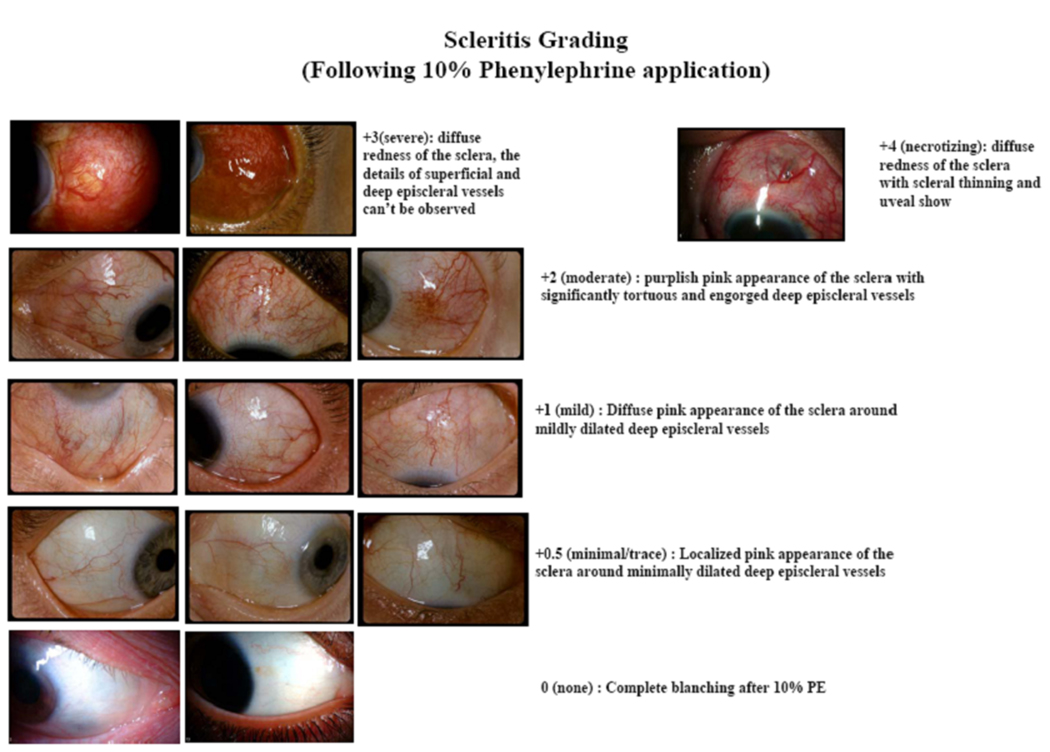
Methods: Three uveitis specialists from 3 different centers graded 79 randomly arranged images of the sclera with various degrees of inflammation. Grading was done using standard screen resolution (1024×768 pixels) on a 0 to 4+ scale in 2 sessions: (1) without using reference photographs and (2) with reference to a set of standard photographs (proposed grading system). The graders were masked to the order of images, and the order of images was randomized. Interobserver agreement in grading the severity of inflammation with and without the use of grading system was evaluated.
Main outcome measures: Interobserver agreement.
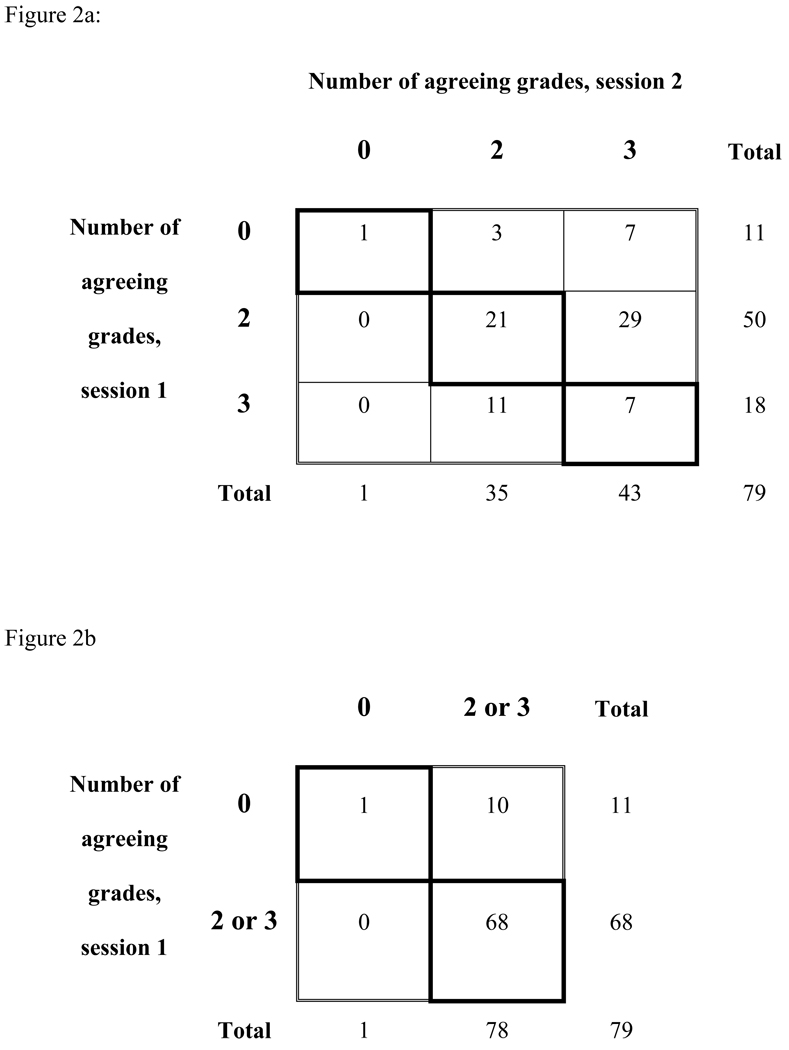
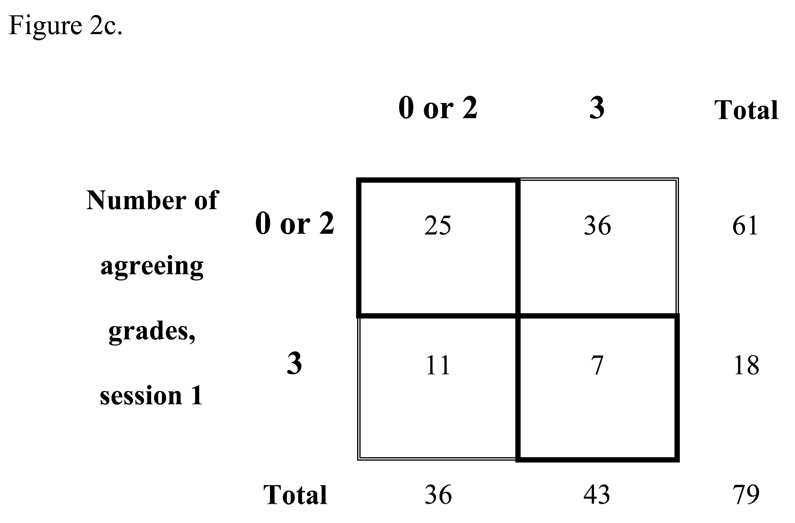
Results: The proposed grading system for assessing activity in scleritis demonstrated a good interobserver agreement. Interobserver agreement (pooled κ) was poor (0.289) without photographic guidance and improved substantially when the "grading system" with standardized photographs was used (κ = 0.603).
Conclusions: This system of standardized images for scleritis grading provides significantly more consistent grading of scleral inflammation in this study and has clear applications in clinical settings and clinical research.
Copyright © 2011 American Academy of Ophthalmology. Published by Elsevier Inc. All rights reserved.
Conflict of interest statement
No authors have any financial/conflicting interests to disclose except Dr Eric Suhler who receives financial support from Celgene, Abbott, Genentech, Novartis, the Department of Veterans' Affairs, and institutional support from Research to Prevent Blindness.
Figures
References
-
- Watson PG. Doyne Memorial Lecture, 1982. The nature and the treatment of scleral inflammation. Trans Ophthalmol Soc U K. 1982;102:257–281. - PubMed
-
- Landis JR, Koch GG. The measurement of observer agreement for categorical data. Biometrics. 1977;33:159–174. - PubMed
-
- McCluskey PJ, Wakefield D. Scleritis and episcleritis. In: Pepose JS, Holland GN, Wilhelmus KR, editors. Ocular Infection and Immunity. St. Louis, MO: Mosby; 1996. pp. 642–662.
-
- McCluskey PJ, Wakefield D. Prediction of response to treatment in patients with scleritis using a standardized scoring system. Aust N Z J Ophthalmology. 1991;19:211–215. - PubMed
Publication types
MeSH terms
Grants and funding
LinkOut - more resources
Full Text Sources
Other Literature Sources
Medical
