


A possible role for a paralemniscal auditory pathway in the coding of slow temporal information
- PMID: 21094680
- PMCID: PMC3039065
- DOI: 10.1016/j.heares.2010.10.009
A possible role for a paralemniscal auditory pathway in the coding of slow temporal information
Abstract
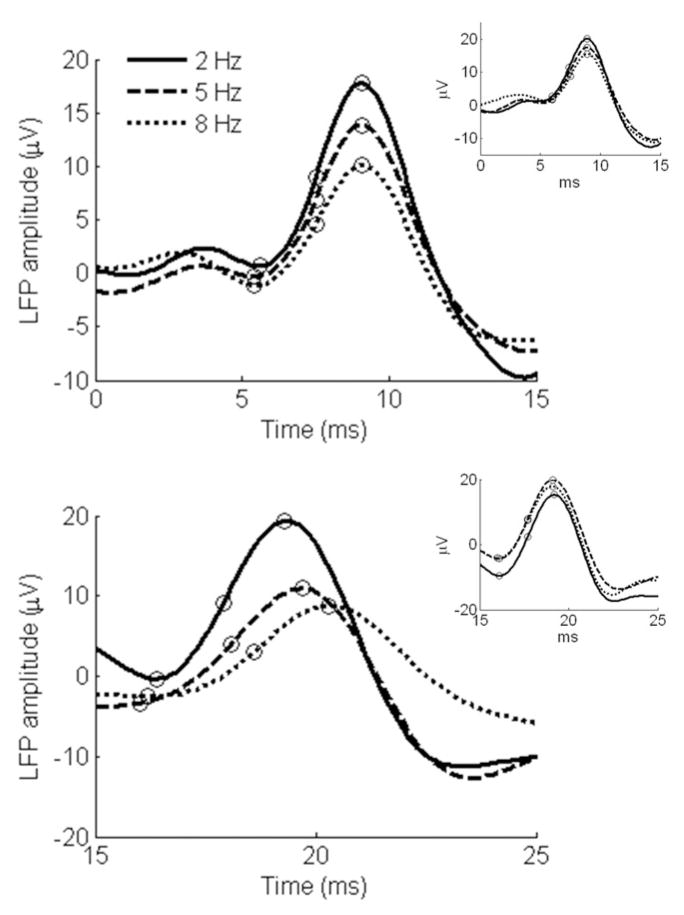
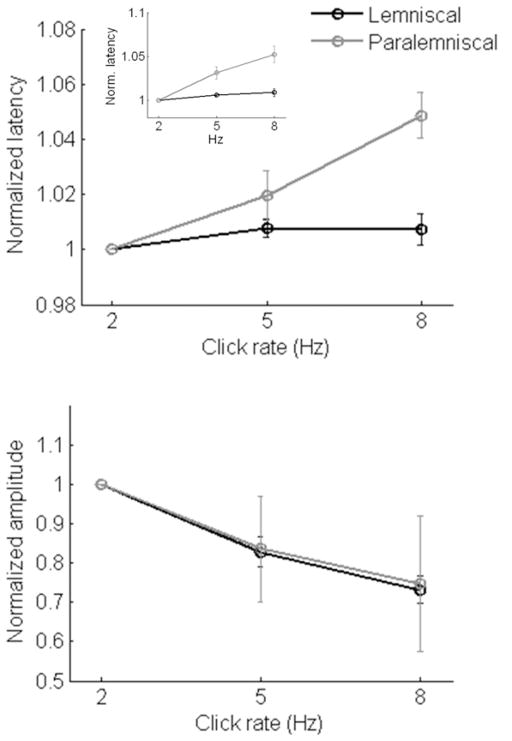
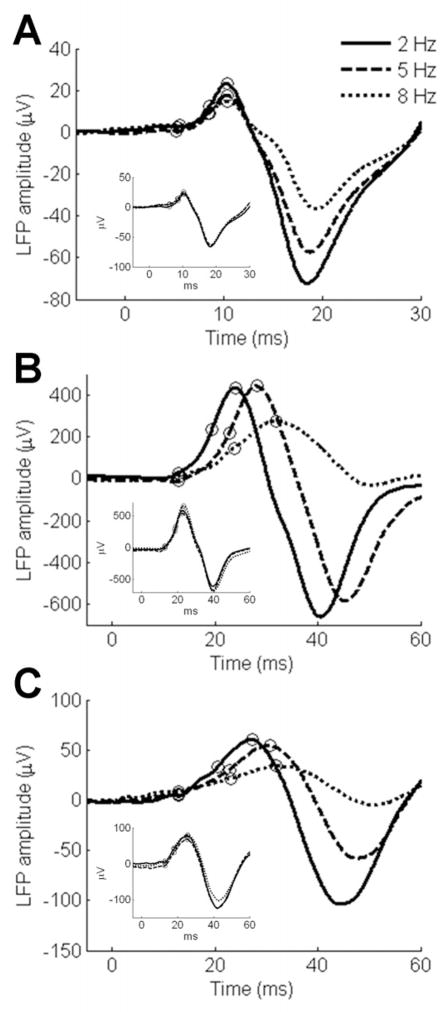
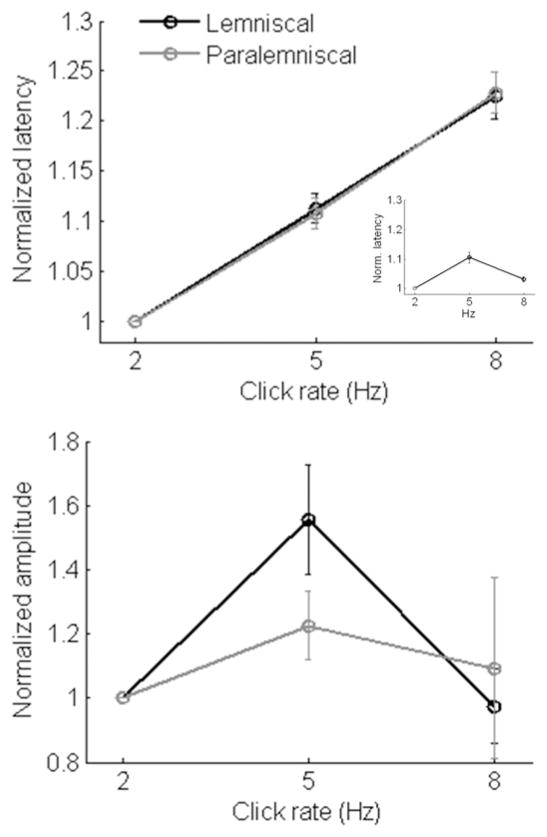
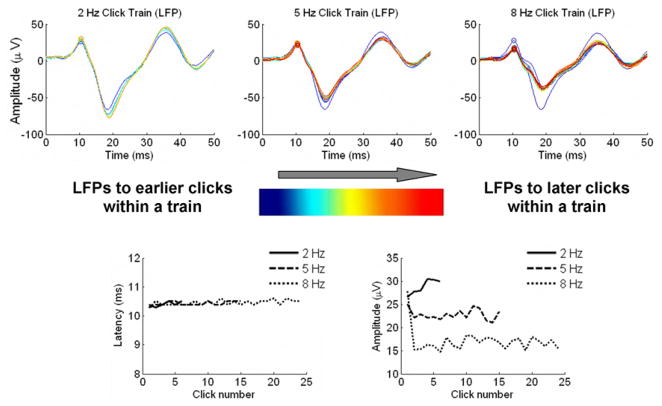
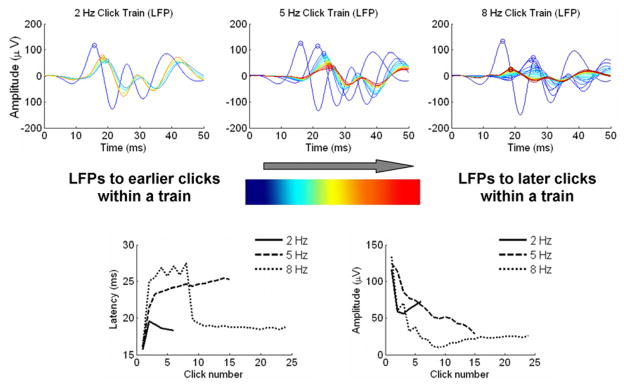
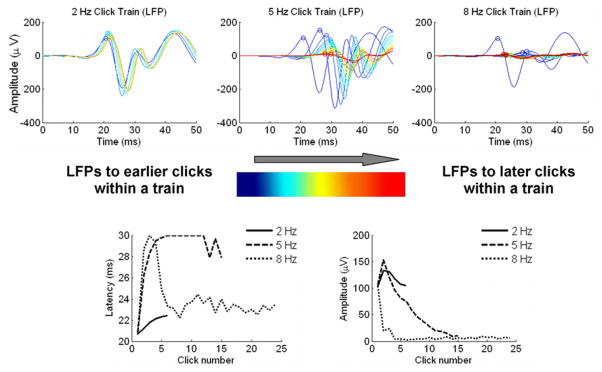
Low-frequency temporal information present in speech is critical for normal perception, however the neural mechanism underlying the differentiation of slow rates in acoustic signals is not known. Data from the rat trigeminal system suggest that the paralemniscal pathway may be specifically tuned to code low-frequency temporal information. We tested whether this phenomenon occurs in the auditory system by measuring the representation of temporal rate in lemniscal and paralemniscal auditory thalamus and cortex in guinea pig. Similar to the trigeminal system, responses measured in auditory thalamus indicate that slow rates are differentially represented in a paralemniscal pathway. In cortex, both lemniscal and paralemniscal neurons indicated sensitivity to slow rates. We speculate that a paralemniscal pathway in the auditory system may be specifically tuned to code low-frequency temporal information present in acoustic signals. These data suggest that somatosensory and auditory modalities have parallel sub-cortical pathways that separately process slow rates and the spatial representation of the sensory periphery.
Copyright © 2010 Elsevier B.V. All rights reserved.
Figures
References
-
- Ahissar E, Zacksenhouse M. Temporal and spatial coding in the rat vibrissal system. Prog Brain Res. 2001;130:75–87. - PubMed
-
- Ahissar E, Sosnik R, Haidarliu S. Transformation from temporal to rate coding in a somatosensory thalamocortical pathway. Nature. 2000;406:302–6. - PubMed
-
- Anderson SE, Kilgard MP, Sloan AM, Rennaker RL. Response to broadband repetitive stimuli in auditory cortex of the unanesthetized rat. Hear Res. 2006;213:107–17. - PubMed
Publication types
MeSH terms
Grants and funding
LinkOut - more resources
Full Text Sources
