


Habenula volume in bipolar disorder and major depressive disorder: a high-resolution magnetic resonance imaging study
- PMID: 21094939
- PMCID: PMC3030670
- DOI: 10.1016/j.biopsych.2010.09.027
Habenula volume in bipolar disorder and major depressive disorder: a high-resolution magnetic resonance imaging study
Abstract
Background: Increased activity of the habenula has been implicated in the etiology of major depressive disorder (MDD), in which reductions in habenula volume are present after death. We conducted the first magnetic resonance imaging analysis of habenula volume in MDD and bipolar disorder (BD).
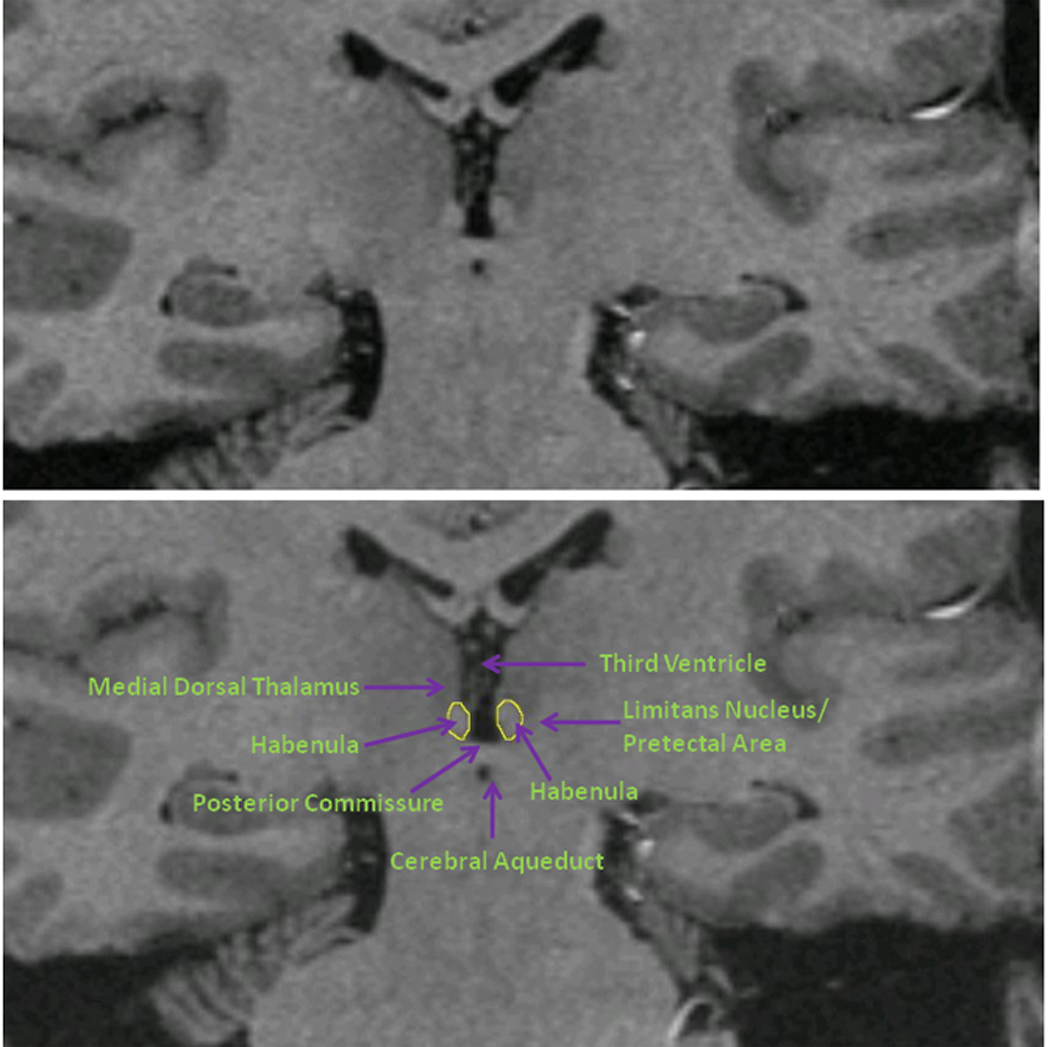
Methods: High-resolution images (resolution approximately .4 mm(3)) were acquired with a 3T scanner, and a pulse sequence was optimized for tissue contrast resolution. The habenula was manually segmented by one rater blind to diagnosis. Seventy-four healthy control subjects (HC) were compared with both medicated (lithium/divalproex, n = 15) and unmedicated, depressed BD (n = 22) patients; unmedicated, depressed MDD patients (n = 28); and unmedicated MDD patients in remission (n = 32).
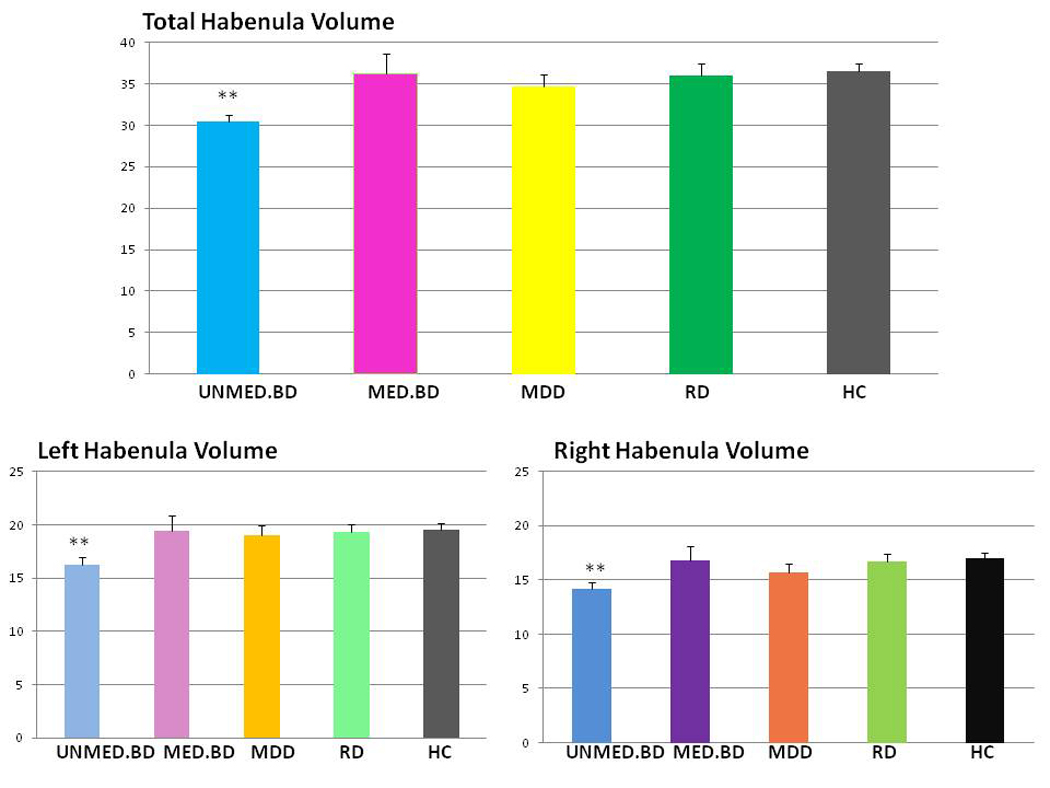
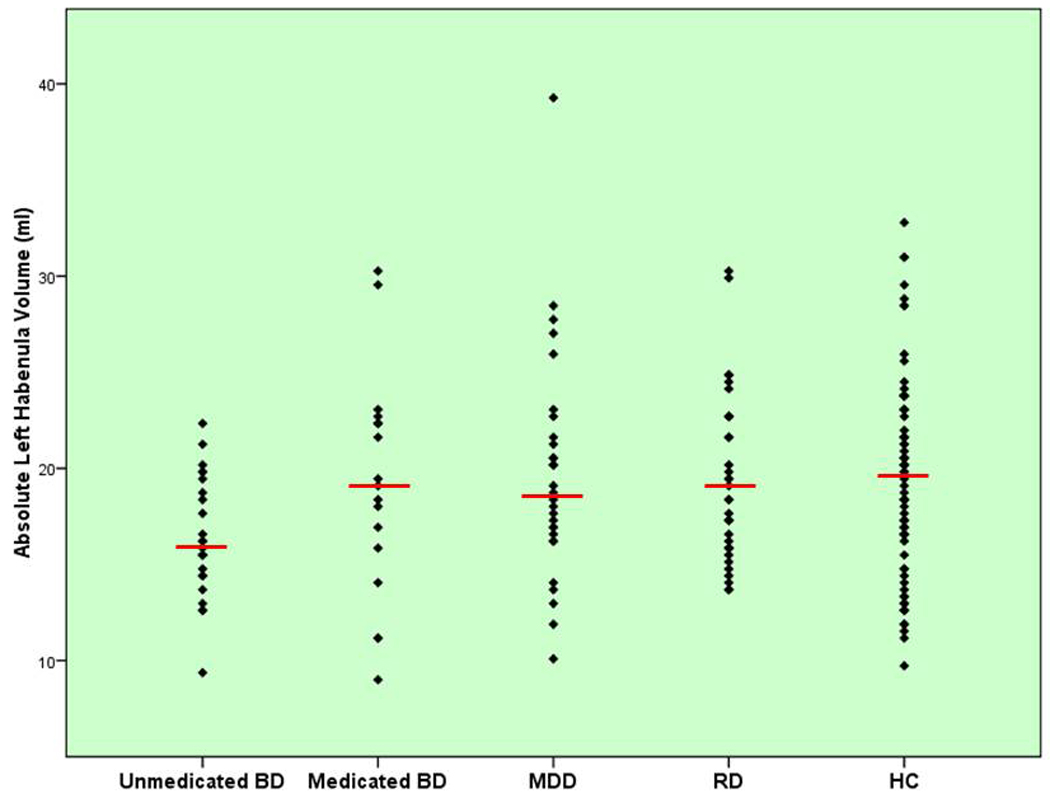
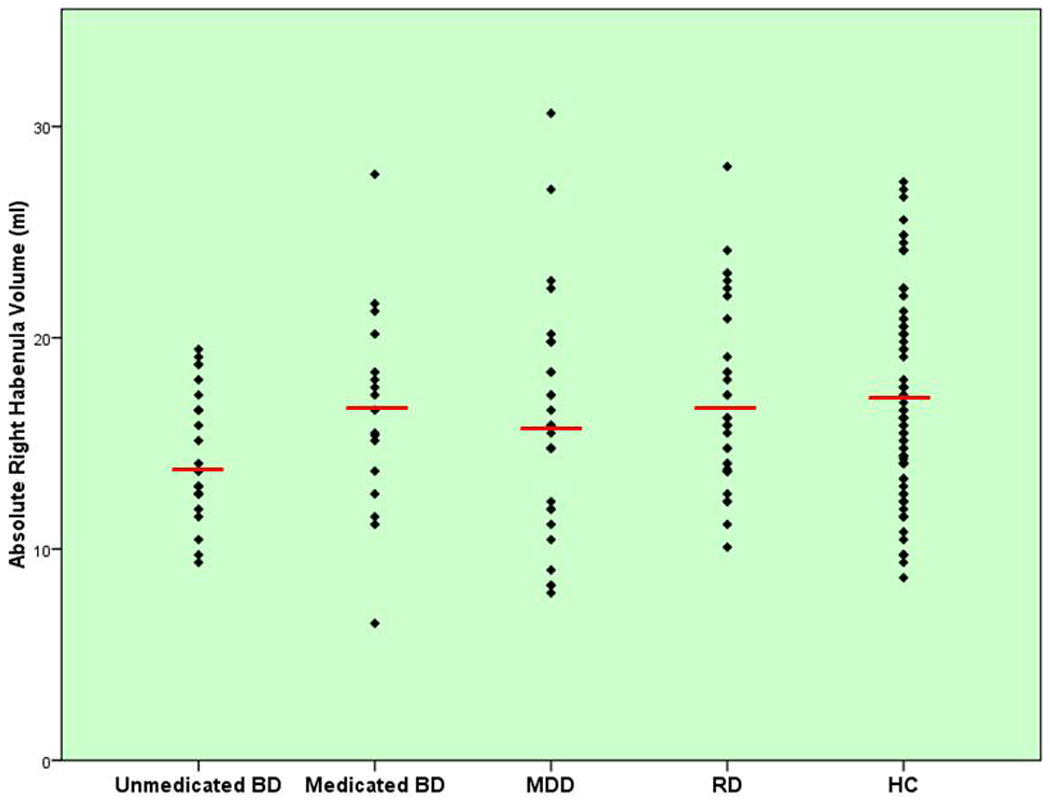
Results: The unmedicated BD patients displayed significantly smaller absolute (p < .01) and normalized (p < .05) habenula volumes than the HC subjects. In post hoc assessments analyzing men and women separately, the currently-depressed women with MDD had smaller absolute (p < .05) habenula volumes than the HC women. None of the other psychiatric groups differed significantly from the HC group.
Conclusions: We provide further evidence for the involvement of the habenula in affective illness but suggest that a reduction in volume might be more pronounced in unmedicated, depressed BD subjects and female currently depressed MDD subjects. The habenula plays major roles in the long-term modification of monoamine transmission and behavioral responses to stress and in the suppression of dopamine cell activity after the absence of an expected reward. A reduction in habenula volume might thus have functional consequences that contribute to the risk for developing affective disease.
Copyright © 2011 Society of Biological Psychiatry. Published by Elsevier Inc. All rights reserved.
Conflict of interest statement
Earl Bain, MD is currently an employee of Abbott Laboratories. Husseini Manji, MD is currently an employee of Johnson and Johnson, Inc. In 2006 and 2007, Dennis Charney, MD consulted for Astra Zeneca, Bristol Myers Squibb Company, Cyberonics, Neurogen, Neuroscience Education Institute, Novartis Pharmaceuticals Corporation, Orexin, and Unilever UK Central Resources Limited. Dr. Charney has a patent pending for the use of ketamine in the treatment of depression. Wayne Drevets, MD consulted for Pfizer Pharmaceuticals. Dr. Zarate is listed as co-inventor on a patent for the use of ketamine in major depression. Dr. Zarate has assigned his patent rights on ketamine to the U.S. government. All other authors report no biomedical financial interests or potential conflicts of interest.
Figures
References
-
- Geisler S, Trimble M. The lateral habenula: no longer neglected. CNS Spectr. 2008 Jun;13(6):484–489. - PubMed
