


Hypothermic circulatory arrest increases permeability of the blood brain barrier in watershed areas
- PMID: 21095352
- PMCID: PMC3043641
- DOI: 10.1016/j.athoracsur.2010.06.118
Hypothermic circulatory arrest increases permeability of the blood brain barrier in watershed areas
Abstract
Background: The integrity of the blood brain barrier (BBB) after cardiopulmonary bypass (CPB) with hypothermic circulatory arrest (HCA) is controversial in children. We tested the hypothesis that the BBB is disrupted by HCA.
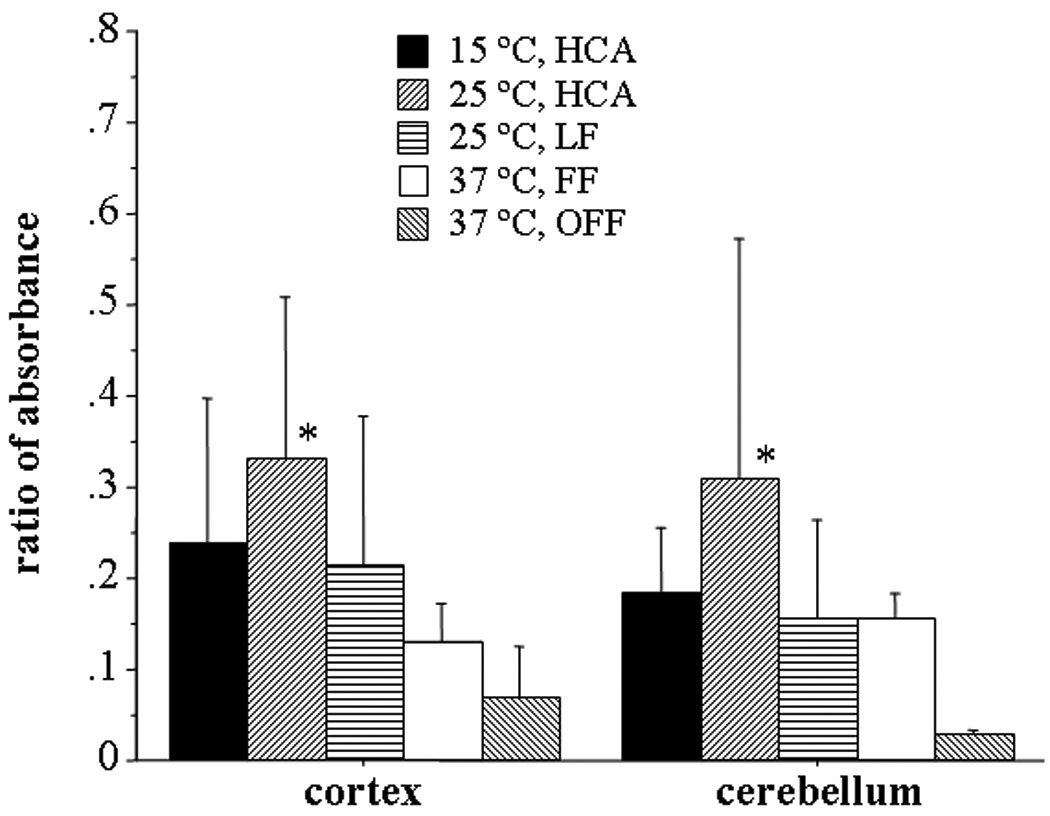
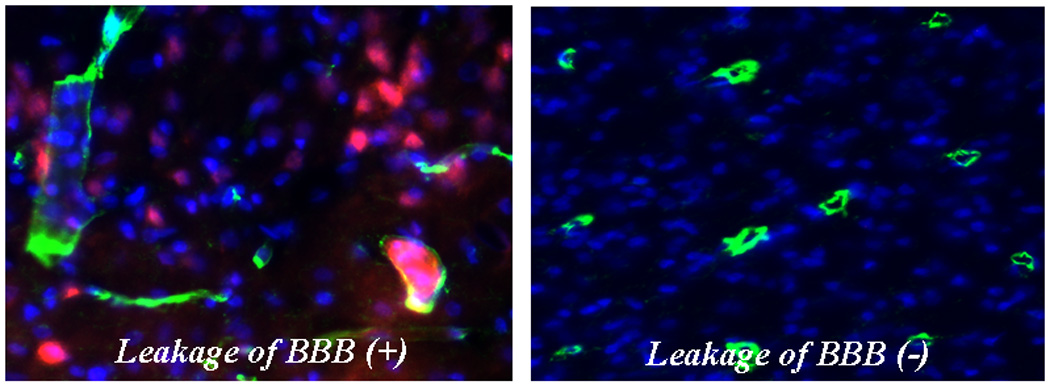
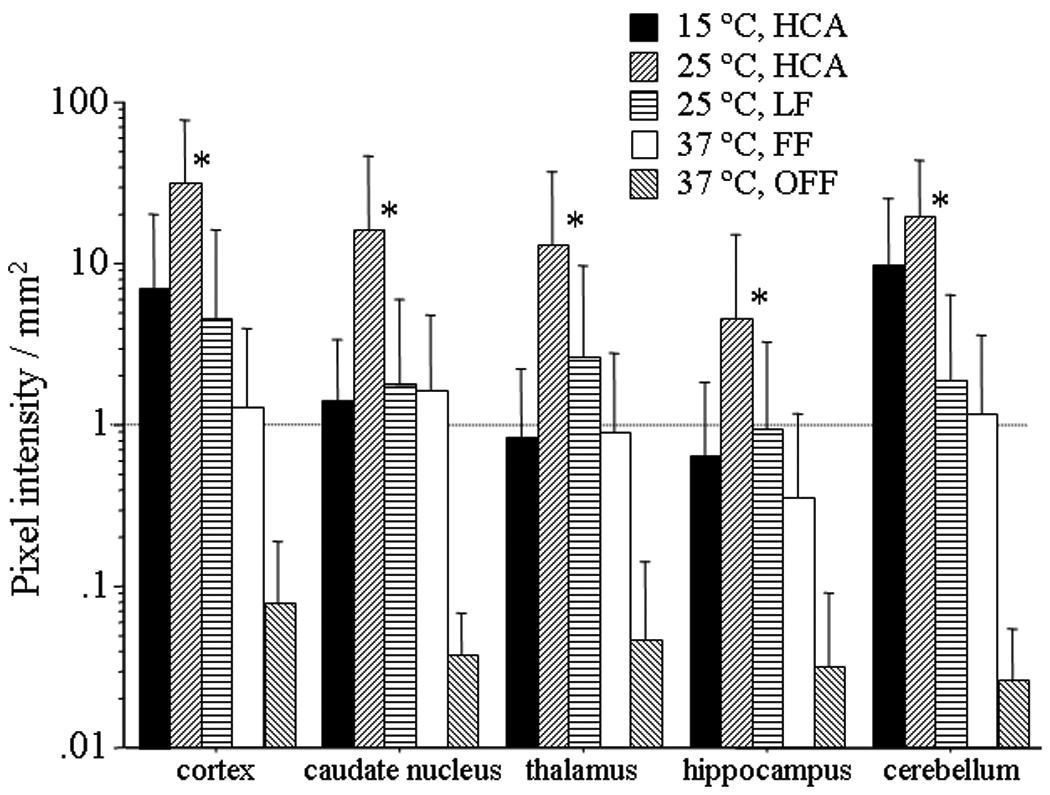
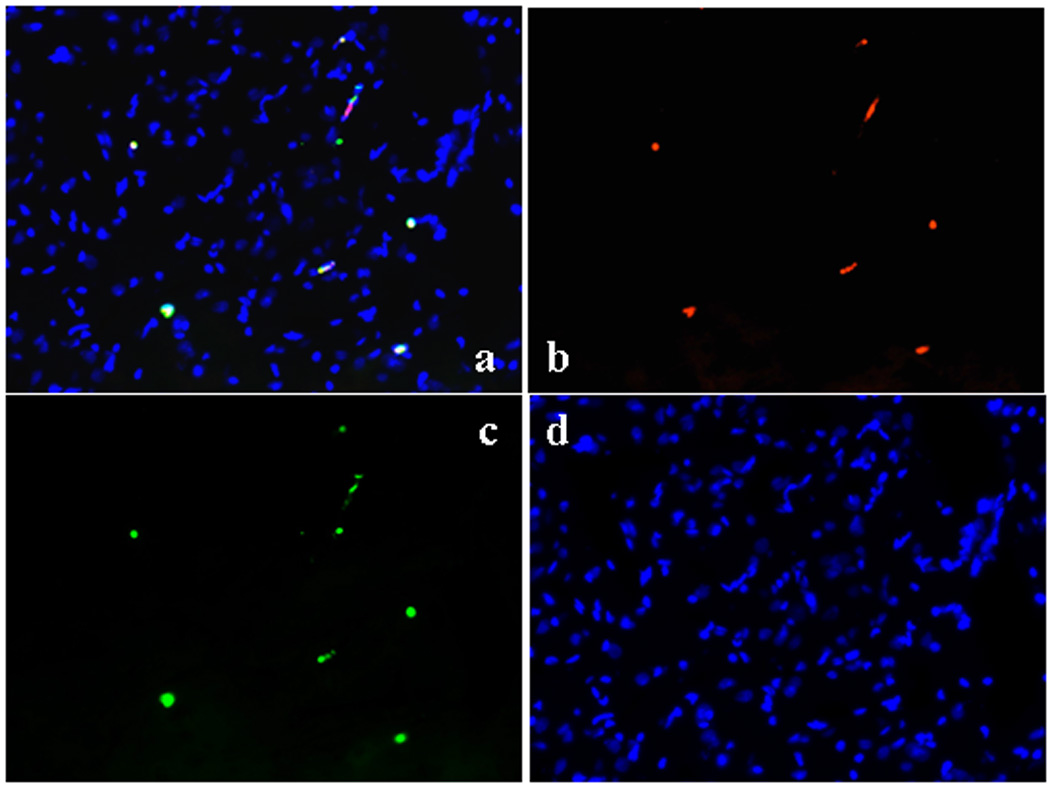
Methods: Forty-one piglets (mean weight 11 kg) were randomly allocated to acute and survival experiments. Five groups (25 piglets, 5 per group) underwent acute studies: anesthesia alone (control); CPB at 37°C with full-flow (FF); CPB at 25°C with very low flow (LF); HCA at 15°C, and HCA at 25°C. Two groups (16 piglets, 8 per group) underwent survival studies: CPB at 25°C with LF and HCA. In the acute studies, Evans blue dye (EBD) extravasation through the BBB into the brain was measured using two methods: EBD absorbance of homogenized brain, and immunohistochemical localization of EBD-linked albumin for cortex, caudate nucleus, thalamus, hippocampus, and cerebellum. In the survival studies, cerebral histology was assessed with hematoxylin-eosin stain after sacrifice at 4 days after surgery.
Results: The BBB disruption was clearly observed around watershed areas for 25°C HCA compared with other conditions. Microscopic data showed that leakage of EBD in 25°C HCA was more severe than control in all brain areas (p < 0.05), and EBD and albumin were colocalizing. Histologic damage scores were significantly higher in watershed areas with 25°C HCA.
Conclusions: The BBB was impaired around watershed areas by 25°C HCA for 1 hour according to both macroscopic and microscopic data. An increase in permeability of the BBB may be both a sign and a mechanism of brain damage.
Copyright © 2010 The Society of Thoracic Surgeons. Published by Elsevier Inc. All rights reserved.
Figures

Comment in
-
Invited commentary.Ann Thorac Surg. 2010 Dec;90(6):2008. doi: 10.1016/j.athoracsur.2010.07.025. Ann Thorac Surg. 2010. PMID: 21095353 No abstract available.
References
-
- Davson H, Segal MB. Physiology of the CSF and Blood-Brain Barriers. Boca Raton, FL: CRC Press; 1996. pp. 46–87.
-
- Moody D. The blood-brain barrier and blood-cerebral spinal fluid barrier. Semin Cardiothorac Vasc Anesth. 2006;10:128–131. - PubMed
-
- Westaby S, Johnsson P, Parry A, Blomqvist S, Solem J, Alling C, et al. Serum S100 protein: a potential marker for cerebral events during cardiopulmonary bypass. Ann Thorac Surg. 1996;61:88–92. - PubMed
-
- Gillinov AM, Davis EA, Curtis WE, et al. Cardiopulmonary bypass and the blood-brain barrier. An experimental study. J Thorac Cardiovasc Surg. 1992;104:1110–1115. - PubMed
-
- Cavaglia M, Seshadri SG, Marchand JE, Ochocki CL, Mee RB, Bokesch PM. Increased transcription factor expression and permeability of the blood brain barrier associated with cardiopulmonary bypass in lambs. Ann Thorac Surg. 2004;78:1418–1425. - PubMed
Publication types
MeSH terms
Substances
Grants and funding
LinkOut - more resources
Full Text Sources
Medical
