


A rapid, high-throughput viability assay for Blastocystis spp. reveals metronidazole resistance and extensive subtype-dependent variations in drug susceptibilities
- PMID: 21098237
- PMCID: PMC3028762
- DOI: 10.1128/AAC.00900-10
A rapid, high-throughput viability assay for Blastocystis spp. reveals metronidazole resistance and extensive subtype-dependent variations in drug susceptibilities
Abstract
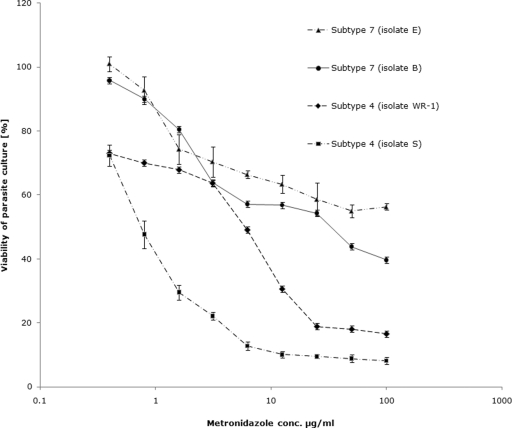
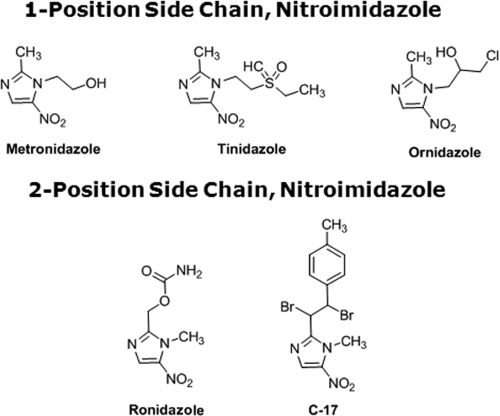
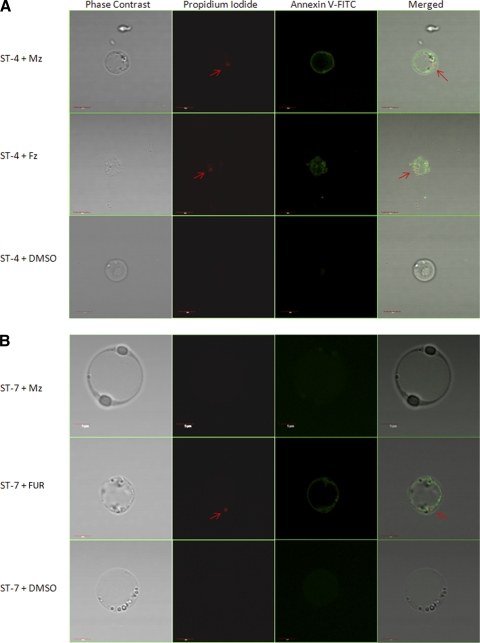
Blastocystis is an emerging protistan parasite of controversial pathogenesis. Although metronidazole (Mz) is standard therapy for Blastocystis infections, there have been accumulating reports of treatment failure, suggesting the existence of drug-resistant isolates. Furthermore, very little is known about Blastocystis susceptibility to standard antimicrobials. In the present study, we established resazurin and XTT viability microassays for Blastocystis spp. belonging to subtypes 4 and 7, both of which have been suggested to represent pathogenic zoonotic subtypes. The optimized resazurin assay was used to screen a total of 19 compounds against both subtypes. Interestingly, subtype 7 parasites were resistant to Mz, a 1-position-substituted 5-nitroimidazole (5-NI), while subtype 4 parasites were sensitive. Some cross-resistance was observed to tinidazole, another 1-position 5-NI. Conversely, subtype 4 parasites were resistant to emetine, while subtype 7 parasites were sensitive. Position 2 5-NIs were effective against both subtypes, as were ornidazole, nitazoxanide, furazolidone, mefloquine, quinicrine, quinine, cotrimoxazole (trimethoprim-sulfamethoxazole), and iodoacetamide. Both subtypes were resistant to chloroquine, doxycycline, paromomycin, ampicillin, and pyrimethamine. This is the first study to report extensive variations in drug sensitivities among two clinically important subtypes. Our study highlights the need to reevaluate established treatment regimens for Blastocystis infections and offers clear new treatment options for Mz treatment failures.
Figures
References
-
- Adagu, I. S., D. Nolder, D. C. Warhurst, and J. F. Rossignol. 2002. In vitro activity of nitazoxanide and related compounds against isolates of Giardia intestinalis, Entamoeba histolytica and Trichomonas vaginalis. J. Antimicrob. Chemother. 49:103-111. - PubMed
-
- Armentia, A., et al. 1993. Urticaria by Blastocystis hominis. Successful treatment with paromomycin. Allergol. Immunopathol. 21:149-151. - PubMed
-
- Bassily, S., Z. Farid, N. A. el-Masry, and E. M. Mikhail. 1987. Treatment of intestinal E. histolytica and G. lamblia with metronidazole, tinidazole and ornidazole: a comparative study. J. Trop. Med. Hyg. 90:9-12. - PubMed
-
- Bénéré, E., R. A. da Luz, M. Vermeersch, P. Cos, and L. Maes. 2007. A new quantitative in vitro microculture method for Giardia duodenalis trophozoites. J. Microbiol. Methods 71:101-106. - PubMed
Publication types
MeSH terms
Substances
Grants and funding
LinkOut - more resources
Full Text Sources
Miscellaneous
