


Modulating endogenous electric currents in human corneal wounds--a novel approach of bioelectric stimulation without electrodes
- PMID: 21099404
- PMCID: PMC3061552
- DOI: 10.1097/ICO.0b013e3181f7f2de
Modulating endogenous electric currents in human corneal wounds--a novel approach of bioelectric stimulation without electrodes
Abstract
Purpose: To measure electric current in human corneal wounds and test the feasibility of pharmacologically enhancing the current to promote corneal wound healing.
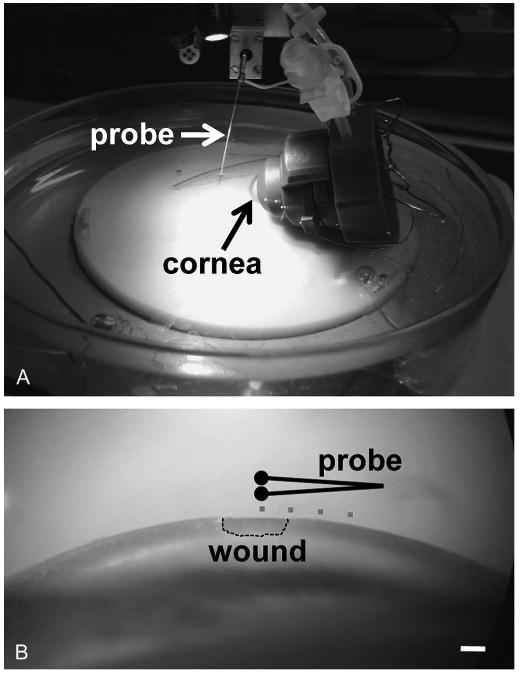
Methods: Using a noninvasive vibrating probe, corneal electric current was measured before and after wounding of the epithelium of donated postmortem human corneas. The effects of drug aminophylline and chloride-free solution on wound current were also tested.
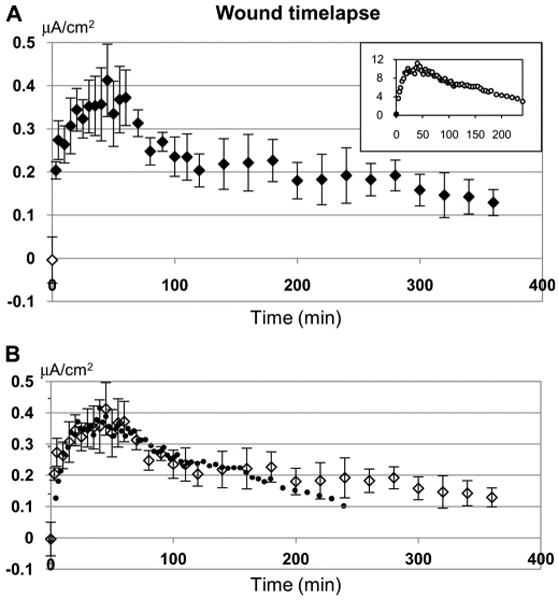
Results: Unwounded cornea had small outward currents (0.07 μA/cm²). Wounding increased the current more than 5 fold (0.41 μA/cm²). Monitoring the wound current over time showed that it seemed to be actively regulated and maintained above normal unwounded levels for at least 6 hours. The time course was similar to that previously measured in rat cornea. Drug treatment or chloride-free solution more than doubled the size of wound currents.
Conclusions: Electric current at human corneal wounds can be significantly increased with aminophylline or chloride-free solution. Because corneal wound current directly correlates with wound healing rate, our results suggest a role for chloride-free and/or aminophylline eyedrops to enhance healing of damaged cornea in patients with reduced wound healing such as the elderly or diabetic patient. This novel approach offers bioelectric stimulation without electrodes and can be readily tested in patients.
Figures


References
-
- Bjarnsholt T, Kirketerp-Moller K, Jensen PO, et al. Why chronic wounds will not heal: a novel hypothesis. Wound Repair Regen. 2008;16:2–10. - PubMed
-
- Broughton G, Janis JE, Attinger CE. Wound healing: an overview. Plast Reconstr Surg. 2006;117:1e-S–32e-S. - PubMed
-
- Dinh TL, Veves A. Treatment of diabetic ulcers. Dermatol Ther. 2006;19:348–355. - PubMed
-
- Gurtner GC, Werner S, Barrandon Y, et al. Wound repair and regeneration. Nature. 2008;453:314–321. - PubMed
-
- McCaig CD, Rajnicek AM, Song B, et al. Controlling cell behavior electrically: current views and future potential. Physiol Rev. 2005;85:943–978. - PubMed
Publication types
MeSH terms
Substances
Grants and funding
LinkOut - more resources
Full Text Sources
Medical
