


Evaluation of enteral formulas for nutrition, health, and quality of life among stroke patients
- PMID: 21103085
- PMCID: PMC2981722
- DOI: 10.4162/nrp.2010.4.5.393
Evaluation of enteral formulas for nutrition, health, and quality of life among stroke patients
Abstract
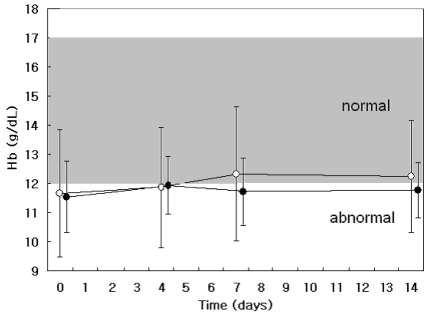
Enteral nutritional support has been used via tube feeding for dysphagic stroke patients. We performed long and short term trials to evaluate the effects of commercial enteral nutritional supports on nutrition and health in stroke patients (mRS = 3~5) and quality of life in their caregivers. For a long term study, we recruited chronic (≥ 1 yrs) stroke patients (n = 6) and administered them 6 cans/day (1,200 kcal) of the commercial enteral formula N for 6 months according to IRB-approved protocol. We collected peripheral blood at 0, 2, 4 and 6 months. For a short term study, we recruited acute (≤ 3 months) stroke patients (n = 12) and randomly administered them two different commercial enteral formulas, N or J, for 2 weeks. We collected their blood at 0, 4, 7 and 14 day of the administration. Blood samples were analyzed to quantify 19 health and nutritional biomarkers and an oxidative stress biomarker, malondialdehyde (MDA). In order to evaluate quality of life, we also obtained the sense of competence questionnaire (SCQ) from all caregivers at 'before' and 'after trials'. As results, the enteral formula, N, improved hemoglobin and hematocrit levels in the long term trial and maintained most of biomarkers within normal ranges. The SCQ levels of caregivers were improved in the long term treatment (P < 0.05). In a case of the short term study, both of enteral formulas were helpful to maintain nutritional status of the patients. In addition, MDA levels were decreased in the acute patients following formula consumption (0.05 < P < 0.1). Most of health and nutrition outcomes were not different, even though there is a big difference in price of the two products. Thus, we evaluate the formula N has equal nutritional efficacy compared to the formula J. In addition, long term use of enteral formula N can be useful to health and nutrition of stroke patients, and the quality of life for their caregivers.
Keywords: Stroke; biomarkers; enteral nutrition; malondialdehyde; sense of competence questionnaire.
Figures
References
-
- Elmståhl S, Bülow M, Ekberg O, Petersson M, Tegner H. Treatment of dysphagia improves nutritional conditions in stroke patients. Dysphagia. 1999;14:61–66. - PubMed
-
- Foley NC, Martin RE, Salter KL, Teasell RW. A review of the relationship between dysphagia and malnutrition following stroke. J Rehabil Med. 2009;41:707–713. - PubMed
-
- Kim HJ, Kang EH, Lee JH, Kim OY. A study of nutritional improvement in the patients with neurologic disorders by changing enteral feeding methods. Journal of the Korean Dietetic Association. 2004;10:442–451.
-
- Unosson M, Ek AC, Bjurulf P, von Schenck H, Larsson J. Feeding dependence and nutritional status after acute stroke. Stroke. 1994;25:366–371. - PubMed
-
- FOOD Trial Collaboration. Poor nutritional status on admission predicts poor outcomes after stroke: observational data from the FOOD trial. Stroke. 2003;34:1450–1456. - PubMed
LinkOut - more resources
Full Text Sources
Research Materials
