


Clinical translation of neuroimaging research in mood disorders
- PMID: 21103155
- PMCID: PMC2990553
Clinical translation of neuroimaging research in mood disorders
Abstract
Background: Practitioners are increasingly presented with data procured from studies employing advanced neuroimaging techniques. The central role that neuroimaging occupies in contemporary psychiatric research highlights the need for practitioner familiarity with the neuroimaging technology and its clinical translation.
Methods: We conducted a PubMed search of all English-language articles published between January 1964 - October 2005. The search words were major depressive disorder, bipolar disorder, functional magnetic resonance imaging (fMRI), single-photon-emission computed tomography (SPECT), positron emission tomography (PET), voxel-based morphometry (VBM), region of interest (ROI), blood-oxygen-level-dependent (BOLD), glucose metabolism, blood flow, statistical parametric mapping (SPM), magnetic resonance spectroscopy (MRS), and diffusion-tensor imaging (DTI). The search was supplemented with a manual review of relevant references. The authors organize the review by addressing frequently asked questions on the topic of neuroimaging by mental healthcare providers.
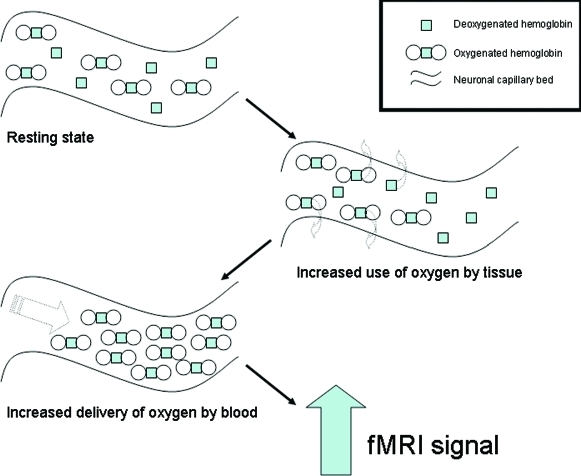
Results: The localization of regional brain volumetric abnormalities with CT is enhanced with MRI techniques that allow for a separate assay of white and gray matter pathology (segmentation), cellular metabolism (MRS), and neurocircuitry (DTI). Positron emission tomography permits the quantification of brain glucose metabolism, regional blood flow, and receptor/transporter localization and function. Rapid changes in regional oxygen consumption may also be quantified with fMRI.
Conclusions: Neuroimaging technology has helped refine pathophysiological models of disease activity in mood disorders and illuminate mechanisms of drug activity. A priority research vista in mood disorders is the integration of neuroimaging investigations with other research methods (e.g., genetics, endocrinology, etc.).
Keywords: bipolar disorder; blood-oxygen level dependent; diffusion tensor imaging; magnetic resonance imaging; magnetic resonance spectroscopy; major depressive disorder; neuroimaging; positron-emission tomography; region of interest; single-photon emission-computed tomography; statistical parametric mapping; voxel-based morphometry.
Figures
References
-
- Von Korff M, Katon W, Unutzer J, et al. Improving depression care: Barriers, solutions, and research needs. J Fam Pract. 2001;50(6):E1. - PubMed
-
- Glassman AH, Shapiro PA. Depression and the course of coronary artery disease. Am J Psychiatry. 1998;155(1):4–11. - PubMed
-
- Wells KB, Stewart A, Hays RD, et al. The functioning and well-being of depressed patients. Results from the Medical Outcomes Study. JAMA. 1989;262(7):914–9. - PubMed
-
- Demyttenaere K, Bruffaerts R, Posada-Villa J, et al. Prevalence, severity, and unmet need for treatment of mental disorders in the World Health Organization World Mental Health Surveys. JAMA. 2004;291(21):2581–90. - PubMed
-
- Drevets WC. Neuroimaging studies of mood disorders. Biol Psychiatry. 2000;48(8):813–29. - PubMed
LinkOut - more resources
Full Text Sources
Research Materials