


Socioeconomic disparities in self-reported cardiovascular disease for Indigenous and non-Indigenous Australian adults: analysis of national survey data
- PMID: 21106103
- PMCID: PMC3006359
- DOI: 10.1186/1478-7954-8-31
Socioeconomic disparities in self-reported cardiovascular disease for Indigenous and non-Indigenous Australian adults: analysis of national survey data
Abstract
Background: Little is known about the relationship between socioeconomic status (SES) and cardiovascular disease (CVD) among Indigenous Australians, or whether any such relationship is similar to that in non-Indigenous Australians.
Methods: Weighted data on self-reported CVD and several SES measures were analyzed for 5,417 Indigenous and 15,432 non-Indigenous adults aged 18-64 years from two nationally representative surveys conducted in parallel by the Australian Bureau of Statistics in 2004-05.
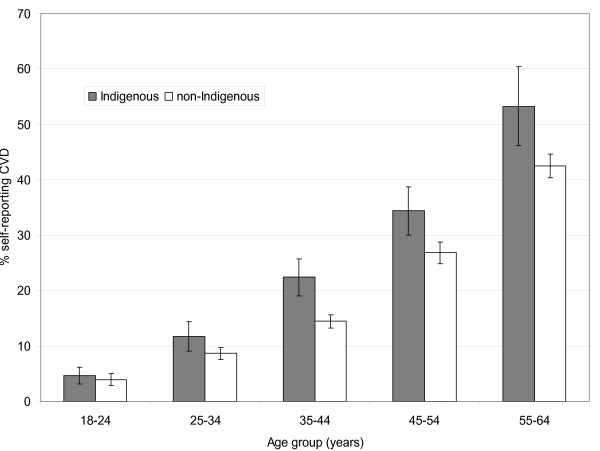
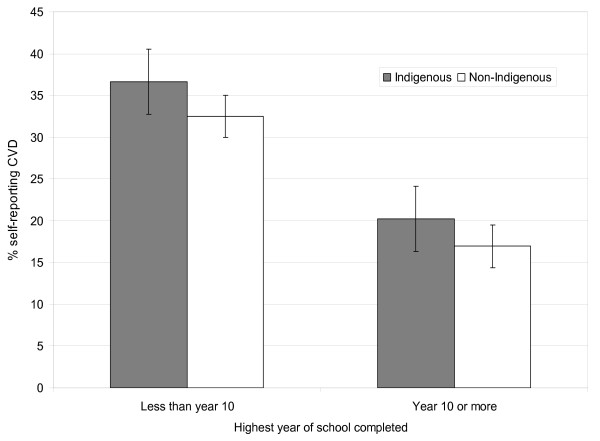
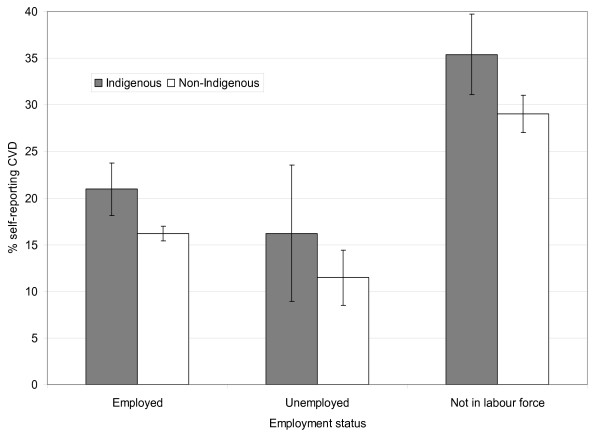
Results: After adjusting for age and sex, self-reported CVD prevalence was generally higher among those of lower SES in both the Indigenous and non-Indigenous populations. The relative odds of self-reported CVD were generally similar in the two populations. For example, the relative odds of self-reported CVD for those who did not complete Year 10 (versus those who did) was 1.4 (95% confidence interval [CI]: 1.1-1.8) among Indigenous people and 1.3 (95% CI: 1.2-1.5) among non-Indigenous people. However, Indigenous people generally had higher self-reported CVD levels than non-Indigenous people of the same age and SES group. Although smoking history varied by SES, smoking did not explain the observed relationships between SES and self-reported CVD.
Conclusions: Socioeconomic disparities in self-reported CVD among Indigenous Australians appear similar in relative terms to those seen in non-Indigenous Australians, but absolute differences remain. As with other population groups, the socioeconomic heterogeneity of the Indigenous population must be considered in developing and implementing programs to promote health and prevent illness. In addition, factors that operate across the SES spectrum, such as racism, stress, dispossession, and grief, must also be addressed to reduce the burden of CVD.
Figures
References
-
- World Health Organization. The Global Burden of Disease: 2004 Update. Geneva: WHO Press; 2008.
-
- Australian Institute of Health and Welfare. Cardiovascular disease and its associated risk factors in Aboriginal and Torres Strait Islander peoples 2004-05. Cardiovascular disease series no. 29. Cat. no. CVD 41. Canberra: AIHW; 2008.
-
- Australian Bureau of Statistics & Australian Institute of Health and Welfare. The Health and Welfare of Australia's Aboriginal and Torres Strait Islander Peoples. Canberra: Australian Bureau of Statistics & Australian Institute of Health and Welfare; 2008.
-
- Australian Institute of Health and Welfare. Rheumatic heart disease: all but forgotten except among Aboriginal and Torres Strait Islander peoples. Bulletin no. 16. AIHW Cat. No. AUS 48. Canberra: AIHW; 2004.
LinkOut - more resources
Full Text Sources
Research Materials
