


Hemodynamic-morphologic discriminants for intracranial aneurysm rupture
- PMID: 21106956
- PMCID: PMC3021316
- DOI: 10.1161/STROKEAHA.110.592923
Hemodynamic-morphologic discriminants for intracranial aneurysm rupture
Abstract
Background and purpose: the purpose of this study was to identify significant morphological and hemodynamic parameters that discriminate intracranial aneurysm rupture status using 3-dimensional angiography and computational fluid dynamics.
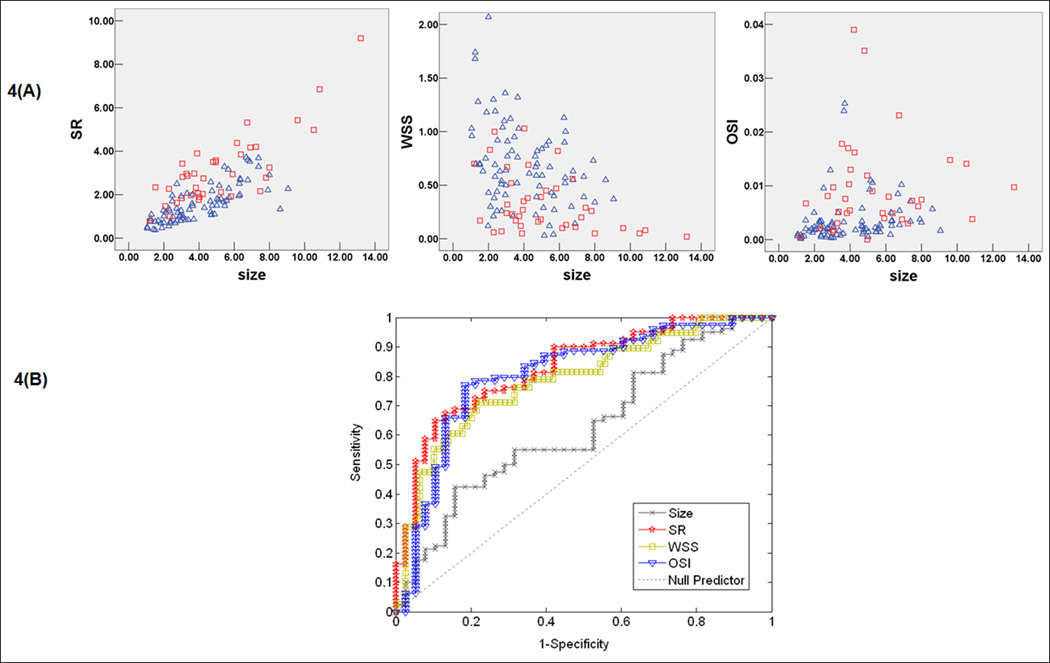
Methods: one hundred nineteen intracranial aneurysms (38 ruptured, 81 unruptured) were analyzed from 3-dimensional angiographic images and computational fluid dynamics. Six morphological and 7 hemodynamic parameters were evaluated for significance with respect to rupture. Receiver operating characteristic analysis identified area under the curve (AUC) and optimal thresholds separating ruptured from unruptured aneurysms for each parameter. Significant parameters were examined by multivariate logistic regression analysis in 3 predictive models-morphology only, hemodynamics only, and combined-to identify independent discriminants, and the AUC receiver operating characteristic of the predicted probability of rupture status was compared among these models.
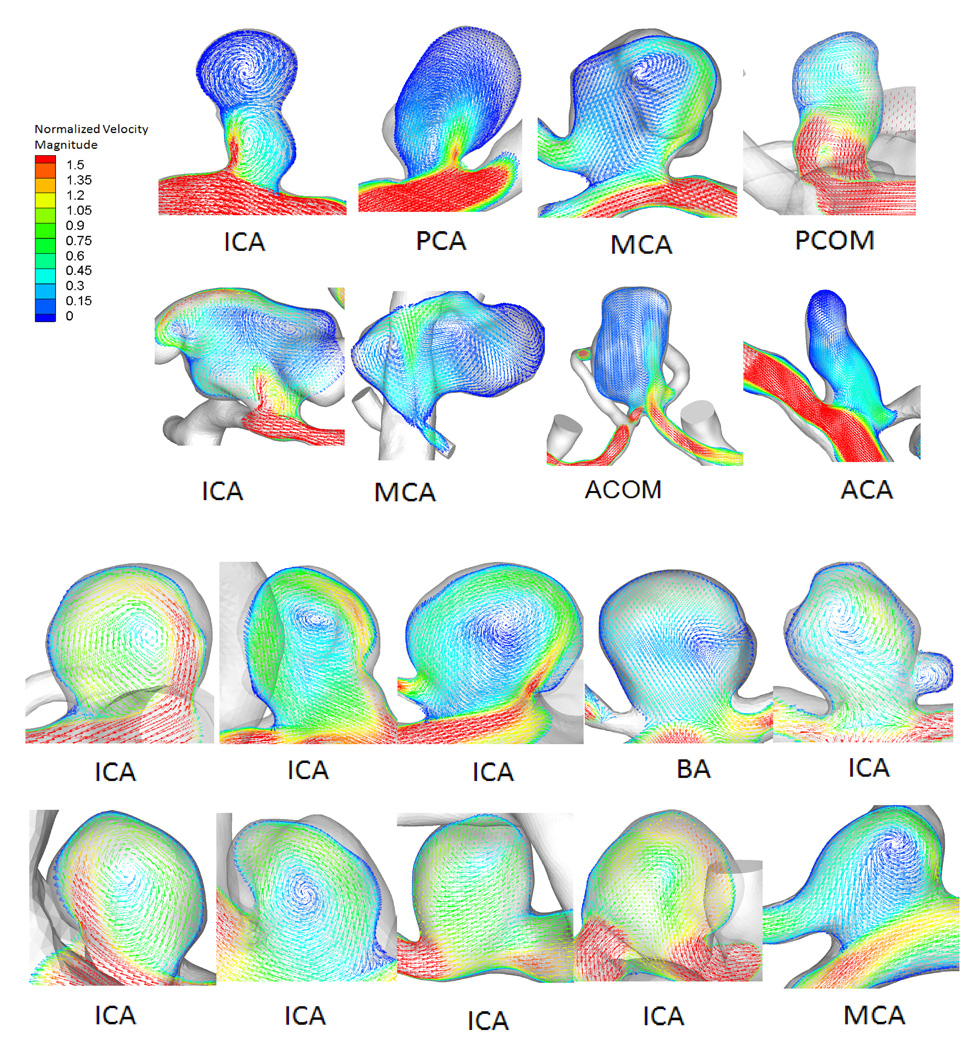
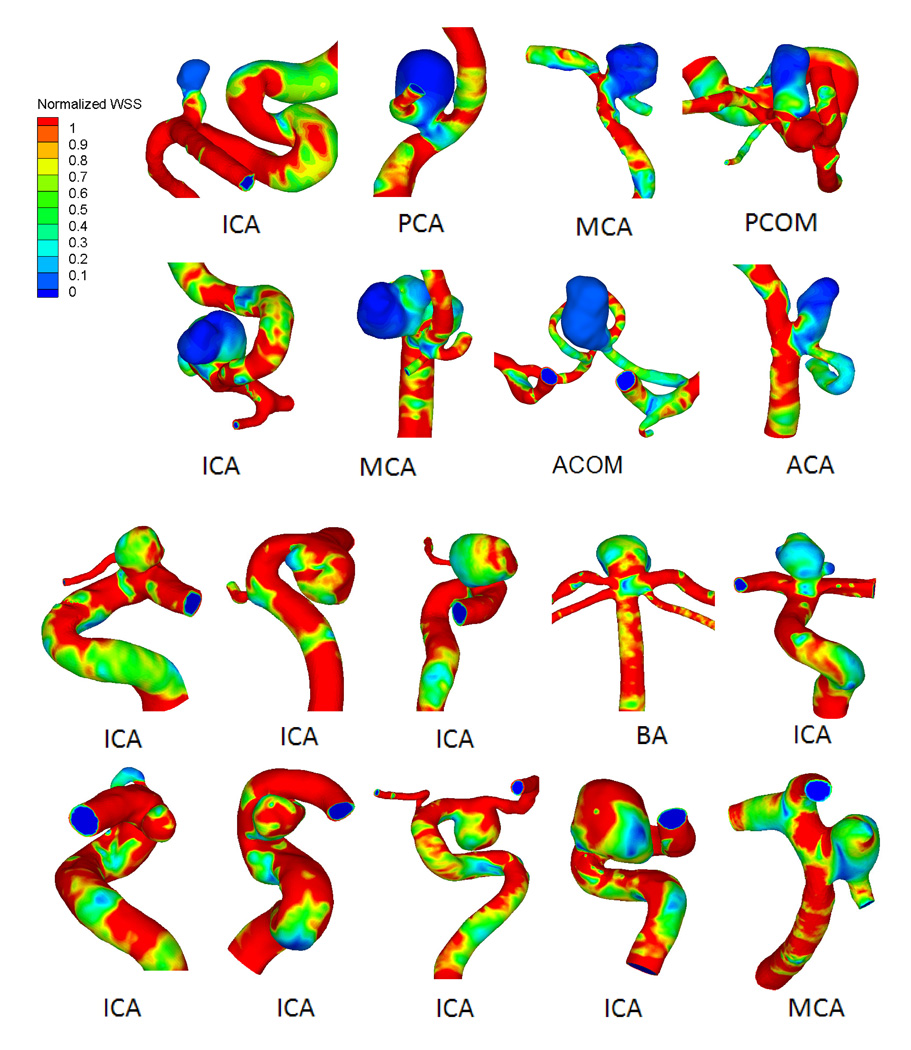
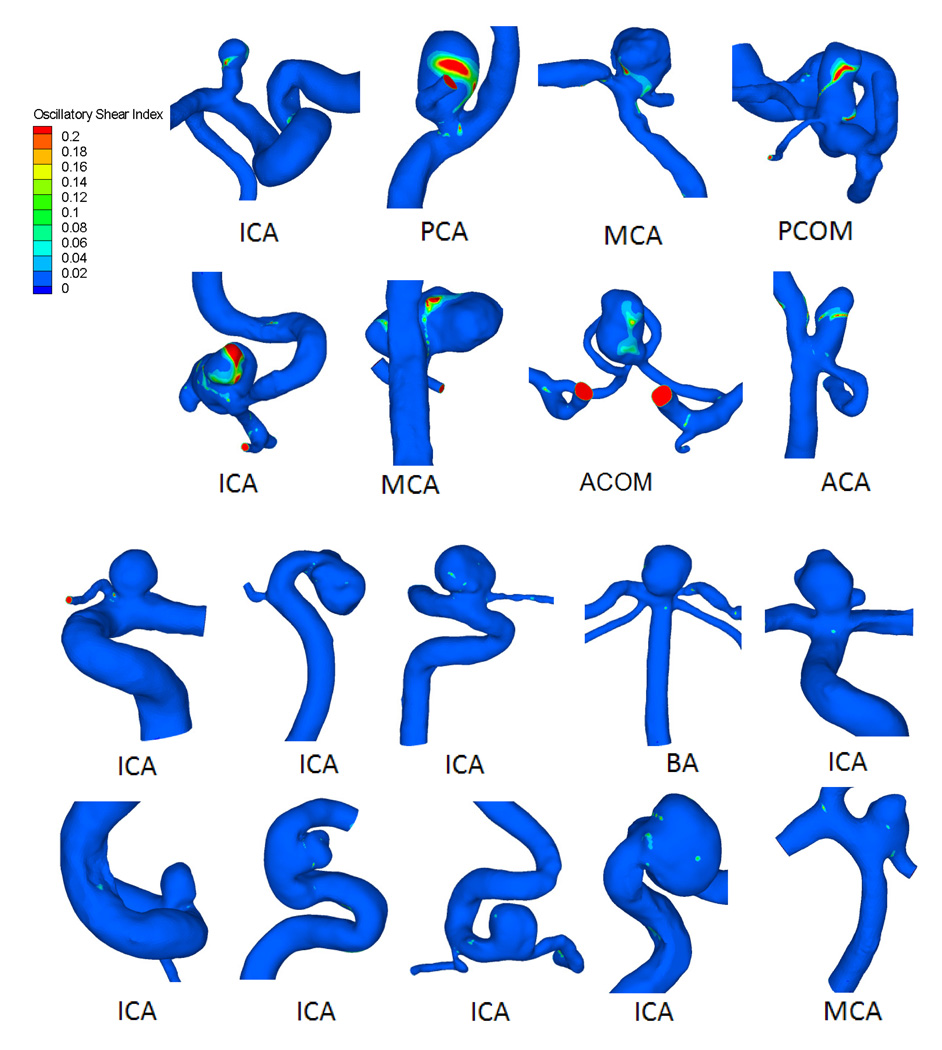
Results: morphological parameters (size ratio, undulation index, ellipticity index, and nonsphericity index) and hemodynamic parameters (average wall shear stress [WSS], maximum intra-aneurysmal WSS, low WSS area, average oscillatory shear index, number of vortices, and relative resident time) achieved statistical significance (P<0.01). Multivariate logistic regression analysis demonstrated size ratio to be the only independently significant factor in the morphology model (AUC, 0.83; 95% CI, 0.75 to 0.91), whereas WSS and oscillatory shear index were the only independently significant variables in the hemodynamics model (AUC, 0.85; 95% CI, 0.78 to 0.93). The combined model retained all 3 variables, size ratio, WSS, and oscillatory shear index (AUC, 0.89; 95% CI, 0.82 to 0.96).
Conclusions: all 3 models-morphological (based on size ratio), hemodynamic (based on WSS and oscillatory shear index), and combined-discriminate intracranial aneurysm rupture status with high AUC values. Hemodynamics is as important as morphology in discriminating aneurysm rupture status.
Figures
References
-
- Raghavan ML, Ma B, Harbaugh RE. Quantified aneurysm shape and rupture risk. J Neurosurg. 2005;102:355–362. - PubMed
-
- Forget TR, Jr, Benitez R, Veznedaroglu E, Sharan A, Mitchell W, Silva M, Rosenwasser RH. A review of size and location of ruptured intracranial aneurysms. Neurosurgery. 2001;49:1322–1326. - PubMed
-
- Ujiie H, Tamano Y, Sasaki K, Hori T. Is the aspect ratio a reliable index for predicting the rupture of a saccular aneurysm? Neurosurgery. 2001;48:495–503. - PubMed
-
- Shojima M, Oshima M, Takagi K, Torii R, Hayakawa M, Katada K, Morita A, Kirino T. Magnitude and role of wall shear stress on cerebral aneurysm: computational fluid dynamic study of 20 middle cerebral artery aneurysms. Stroke. 2004;35:2500–2505. - PubMed
Publication types
MeSH terms
Grants and funding
LinkOut - more resources
Full Text Sources
Medical
Research Materials
