


Genome wide transcriptome profiling of a murine acute melioidosis model reveals new insights into how Burkholderia pseudomallei overcomes host innate immunity
- PMID: 21110886
- PMCID: PMC3017868
- DOI: 10.1186/1471-2164-11-672
Genome wide transcriptome profiling of a murine acute melioidosis model reveals new insights into how Burkholderia pseudomallei overcomes host innate immunity
Abstract
Background: At present, very little is known about how Burkholderia pseudomallei (B. pseudomallei) interacts with its host to elicit melioidosis symptoms. We established a murine acute-phase melioidosis model and used DNA microarray technology to investigate the global host/pathogen interaction. We compared the transcriptome of infected liver and spleen with uninfected tissues over an infection period of 42 hr to identify genes whose expression is altered in response to an acute infection.
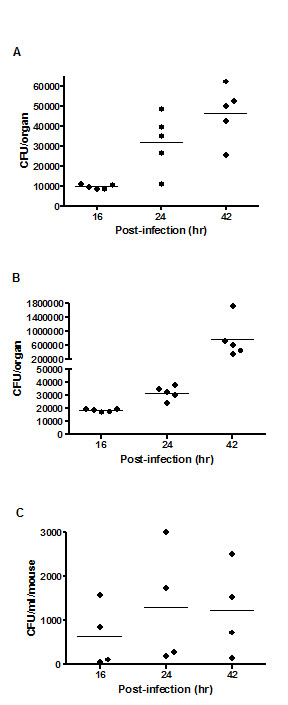
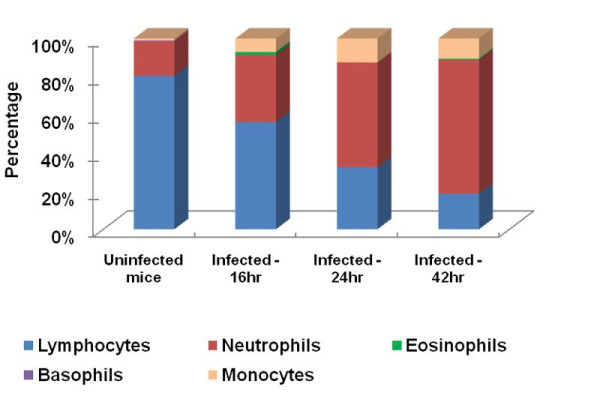
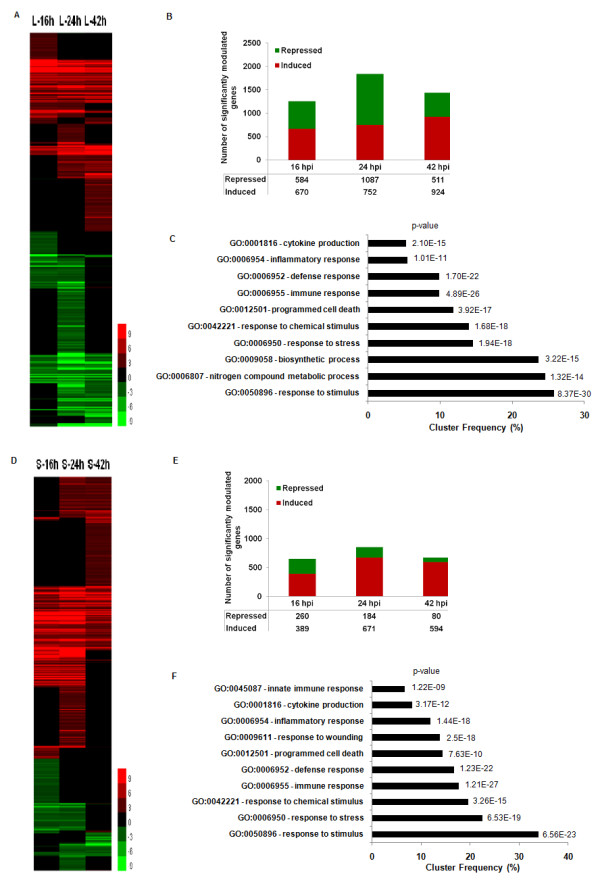
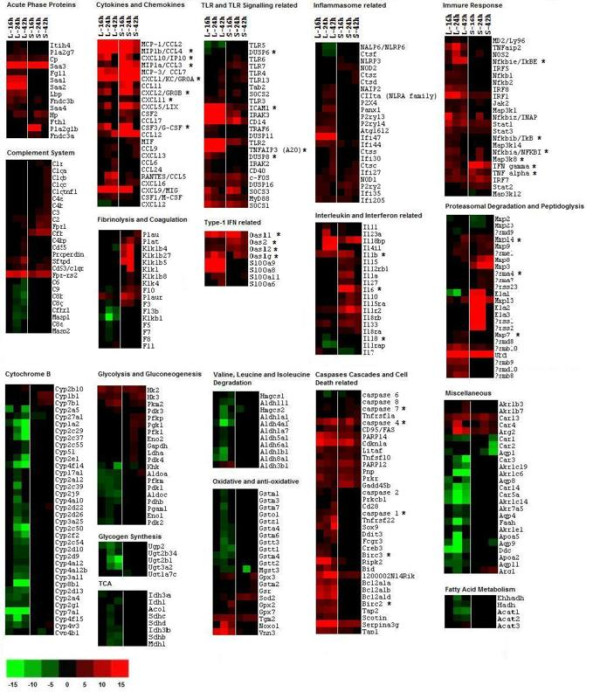
Results: Viable B. pseudomallei cells were consistently detected in the blood, liver and spleen during the 42 hr course of infection. Microarray analysis of the liver and spleen over this time course demonstrated that genes involved in immune response, stress response, cell cycle regulation, proteasomal degradation, cellular metabolism and signal transduction pathways were differentially regulated. Up regulation of toll-like receptor 2 (TLR2) gene expression suggested that a TLR2-mediated signalling pathway is responsible for recognition and initiation of an inflammatory response to the acute B. pseudomallei infection. Most of the highly elevated inflammatory genes are a cohort of "core host immune response" genes commonly seen in general inflammation infections. Concomitant to this initial inflammatory response, we observed an increase in transcripts associated with cell-death, caspase activation and peptidoglysis that ultimately promote tissue injury in the host. The complement system responsible for restoring host cellular homeostasis and eliminating intracellular bacteria was activated only after 24 hr post-infection. However, at this time point, diverse host nutrient metabolic and cellular pathways including glycolysis, fatty acid metabolism and tricarboxylic acid (TCA) cycle were repressed.
Conclusions: This detailed picture of the host transcriptional response during acute melioidosis highlights a broad range of innate immune mechanisms that are activated in the host within 24 hrs, including the core immune response commonly seen in general inflammatory infections. Nevertheless, this activation is suppressed at 42 hr post-infection and in addition, suboptimal activation and function of the downstream complement system promotes uncontrolled spread of the bacteria.
Figures
References
-
- Atkins T, Prior RG, Mack K, Russell P, Nelson M, Oyston PC, Dougan G, Titball RW. A mutant of Burkholderia pseudomallei, auxotrophic in the branched chain amino acid biosynthetic pathway, is attenuated and protective in a murine model of melioidosis. Infect Immun. 2002;70(9):5290–5294. doi: 10.1128/IAI.70.9.5290-5294.2002. - DOI - PMC - PubMed
-
- Chodimella U, Hoppes WL, Whalen S, Ognibene AJ, Rutecki GW. Septicemia and suppuration in a Vietnam veteran. Hosp Pract (Minneap) 1997;32(5):219–221. - PubMed
Publication types
MeSH terms
Substances
LinkOut - more resources
Full Text Sources
Other Literature Sources
Molecular Biology Databases
