


Antioxidant capacities and total phenolic contents of 56 wild fruits from South China
- PMID: 21116229
- PMCID: PMC6259166
- DOI: 10.3390/molecules15128602
Antioxidant capacities and total phenolic contents of 56 wild fruits from South China
Abstract
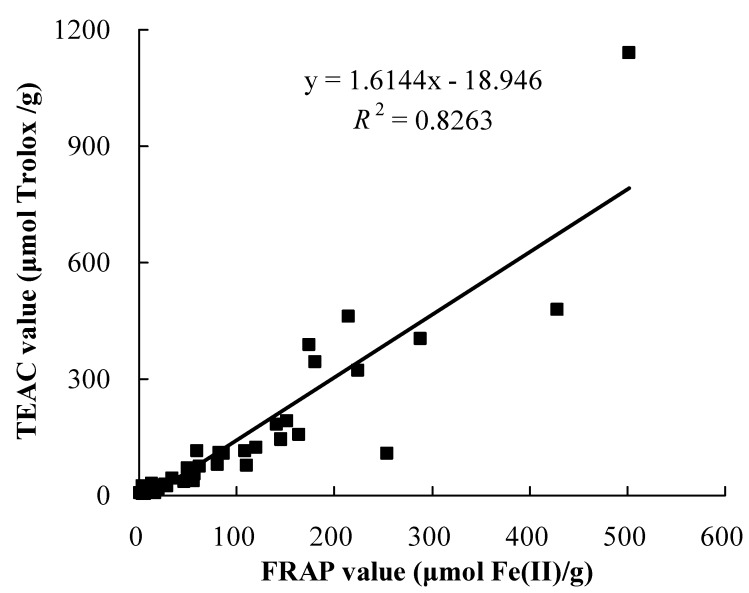
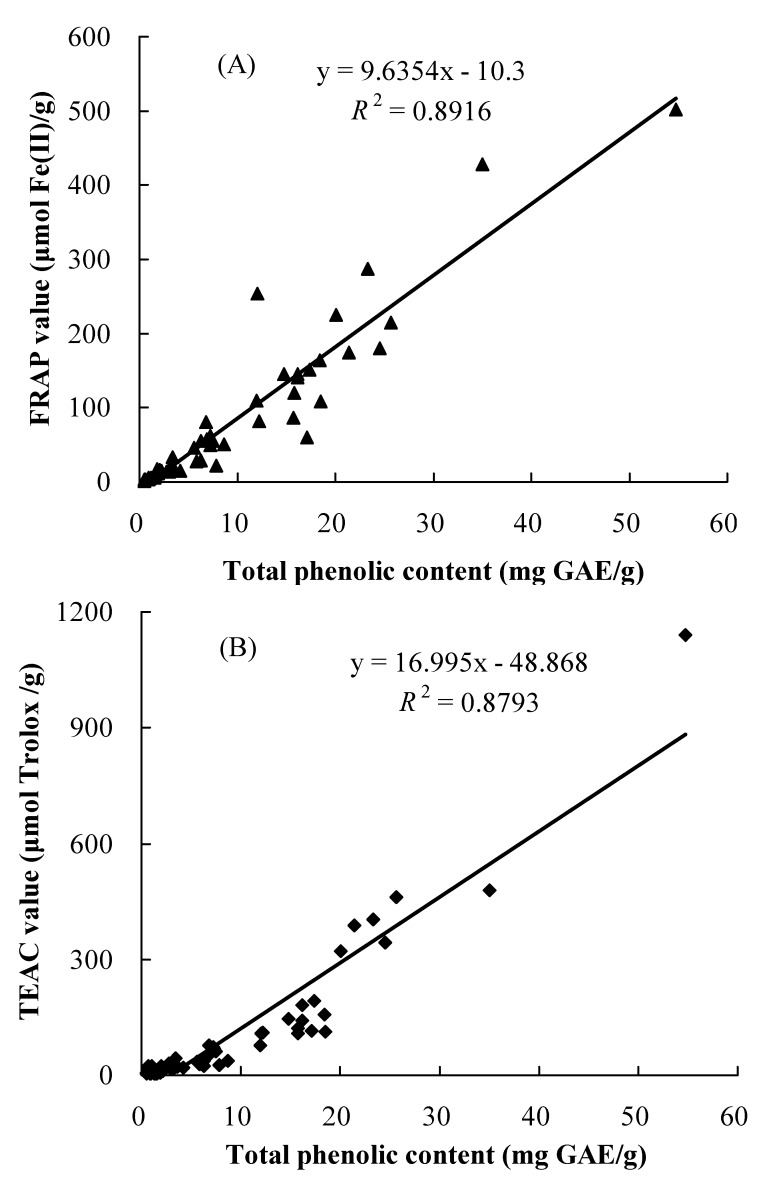
In order to identify wild fruits possessing high nutraceutical potential, the antioxidant activities of 56 wild fruits from South China were systematically evaluated. The fat-soluble components were extracted with tetrahydrofuran, and the water-soluble ones were extracted with a 50:3.7:46.3 (v/v) methanol-acetic acid-water mixture. The antioxidant capacities of the extracts were evaluated using the ferric reducing antioxidant power (FRAP) and Trolox equivalent antioxidant capacity (TEAC) assays, and their total phenolic contents were measured by the Folin-Ciocalteu method. Most of these wild fruits were analyzed for the first time for their antioxidant activities. Generally, these fruits had high antioxidant capacities and total phenolic contents. A significant correlation between the FRAP value and the TEAC value suggested that antioxidant components in these wild fruits were capable of reducing oxidants and scavenging free radicals. A high correlation between antioxidant capacity and total phenolic content indicated that phenolic compounds could be the main contributors to the measured antioxidant activity. The results showed that fruits of Eucalyptus robusta, Eurya nitida, Melastoma sanguineum, Melaleuca leucadendron, Lagerstroemia indica, Caryota mitis, Lagerstroemia speciosa and Gordonia axillaris possessed the highest antioxidant capacities and total phenolic contents among those tested, and could be potential rich sources of natural antioxidants and functional foods. The results obtained are very helpful for the full utilization of these wild fruits.
Figures
References
-
- Hu F.B. Plant-based foods and prevention of cardiovascular disease: An overview. Am. J. Clin. Nutr. 2003;78:544–551. - PubMed
-
- Riboli E., Norat T. Epidemiologic evidence of the protective effect of fruit and vegetables on cancer risk. Am. J. Clin. Nutr. 2003;78:559–569. - PubMed
-
- Botterweck A.A.M., Verhagen H., Goldbohm R.A., Kleinjans J., Van den Brandt P.A. Intake of butylated hydroxyanisole and butylated hydroxytoluene and stomach cancer risk: Results from analyses in the Netherlands cohort study. Food Chem. Toxicol. 2000;38:599–605. doi: 10.1016/S0278-6915(00)00042-9. - DOI - PubMed
Publication types
MeSH terms
Substances
LinkOut - more resources
Full Text Sources
Medical
Miscellaneous
