


Effect of eszopiclone on sleep, fatigue, and pain in patients with mucositis associated with hematologic malignancies
- PMID: 21116652
- PMCID: PMC3204044
- DOI: 10.1007/s00520-010-1052-1
Effect of eszopiclone on sleep, fatigue, and pain in patients with mucositis associated with hematologic malignancies
Abstract
Purpose: Patients with malignancy sometimes develop painful mucositis and require patient-controlled analgesia (PCA) to treat their pain. Pain disrupts sleep and there is some evidence that analgesic medications also disrupt sleep. This study examined whether treatment with the sedative hypnotic eszopiclone could improve self-reports of sleep, fatigue, and pain as well as decrease opioid self-administered via PCA.
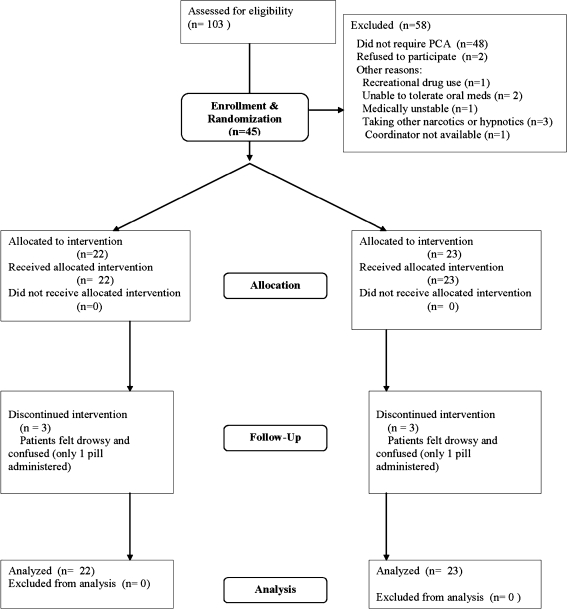
Methods: Inpatients who developed mucositis severe enough to require PCA treatment were randomized double-blind to a 2-day trial on eszopiclone or placebo-administered at bedtime. Patients completed questionnaires which assessed sleep, pain, and fatigue. PCA medication was calculated in terms of morphine equivalents. Data were analyzed with unpaired t tests and repeated measures analysis of variance.
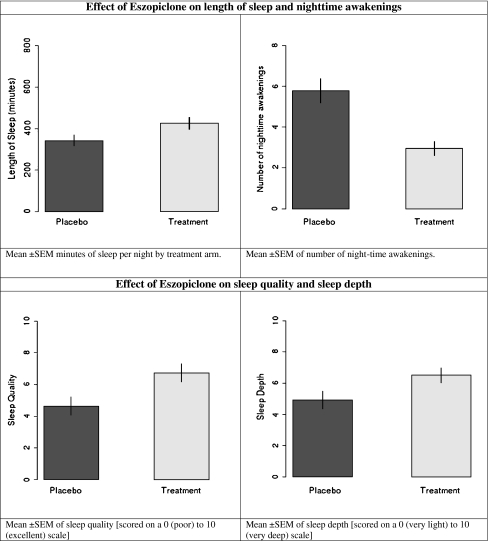
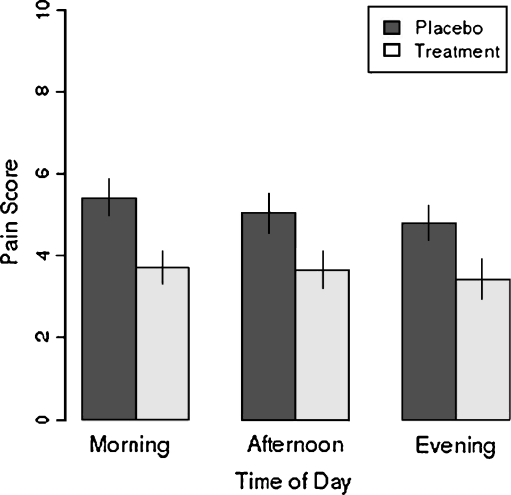
Results: Twenty-two patients were randomized to placebo and 23 to eszopiclone. Groups were comparable in age and treatment characteristics. Mean pain scores were lower in the eszopiclone group at all time points (morning p = 0.01, afternoon p = 0.04, evening p = 0.04). The eszopiclone group reported increased sleep time (p < 0.05), fewer nighttime awakenings (p < 0.001), better self-reported sleep quality (p = 0.01), and depth (p = 0.04). There were no significant differences between eszopiclone and placebo in terms of self-reports of fatigue or opioid usage.
Conclusion: Sedative hypnotic agents improve sleep and analgesia even in the setting of considerable pain and discomfort.
Figures
References
Publication types
MeSH terms
Substances
LinkOut - more resources
Full Text Sources
Medical
