. 2010 Nov 30:11:679.
doi: 10.1186/1471-2164-11-679.

In silico analysis highlights the frequency and diversity of type 1 lantibiotic gene clusters in genome sequenced bacteria

Affiliations

In silico analysis highlights the frequency and diversity of type 1 lantibiotic gene clusters in genome sequenced bacteria

Alan J Marsh et al. BMC Genomics. .

Abstract

Background: Lantibiotics are lanthionine-containing, post-translationally modified antimicrobial peptides. These peptides have significant, but largely untapped, potential as preservatives and chemotherapeutic agents. Type 1 lantibiotics are those in which lanthionine residues are introduced into the structural peptide (LanA) through the activity of separate lanthionine dehydratase (LanB) and lanthionine synthetase (LanC) enzymes. Here we take advantage of the conserved nature of LanC enzymes to devise an in silico approach to identify potential lantibiotic-encoding gene clusters in genome sequenced bacteria.

Results: In total 49 novel type 1 lantibiotic clusters were identified which unexpectedly were associated with species, genera and even phyla of bacteria which have not previously been associated with lantibiotic production.

Conclusions: Multiple type 1 lantibiotic gene clusters were identified at a frequency that suggests that these antimicrobials are much more widespread than previously thought. These clusters represent a rich repository which can yield a large number of valuable novel antimicrobials and biosynthetic enzymes.


Figures
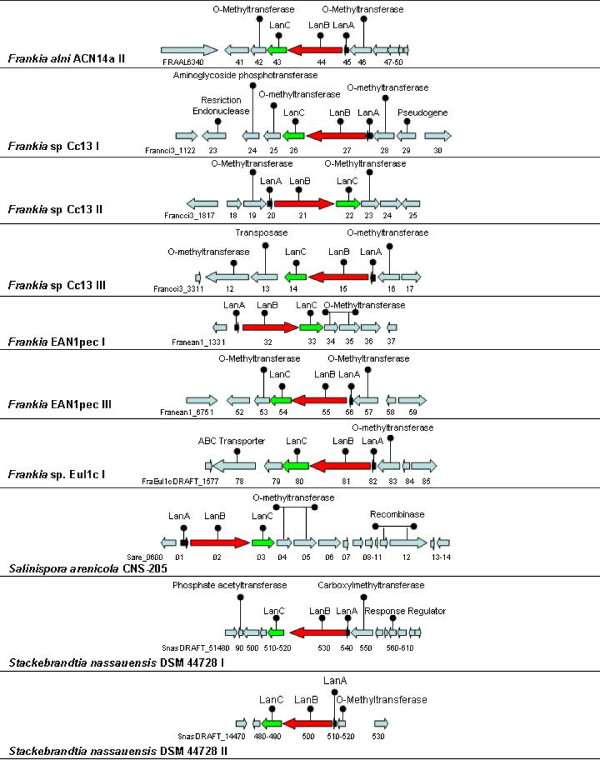
Figure 1
Figure 1
Diagramatic representation of the non-streptomyces Actinobacteria type 1 lantibiotic operons, found in the original NisC screen, which contain genes predicted to encode a structrural peptide LanA, and the modification enzymes LanB and LanC.
Figure 2
Figure 2
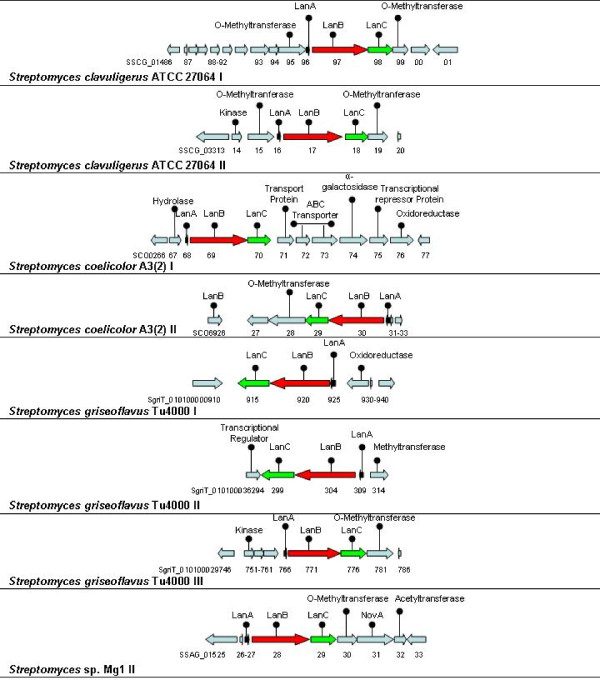
Diagramatic representation of the Streptomyces type 1 lantibiotic operons, found in the original NisC screen, which contain genes predicted to encode a structrural peptide LanA, and the modification enzymes LanB and LanC.
Figure 3
Figure 3
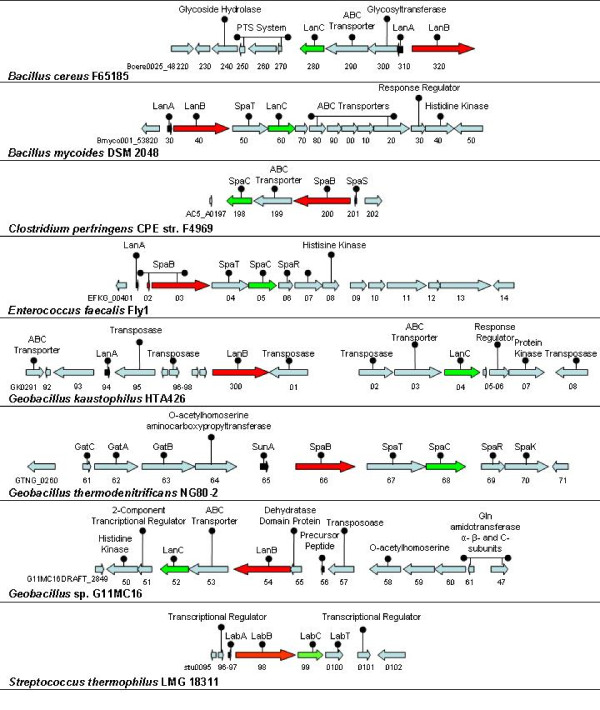
Diagramatic representation of the Firmicutes type 1 lantibiotic operons, found in the original NisC screen, which contain genes predicted to encode a structrural peptide LanA, and the modification enzymes LanB and LanC.
Figure 4
Figure 4
Diagramatic representation of the Chitinophaga pinensis (Bacteroidetes) type 1 lantibiotic operons, found in the original NisC screen, which contain genes predicted to encode a structrural peptide LanA, and the modification enzymes LanB and LanC.
Figure 5
Figure 5
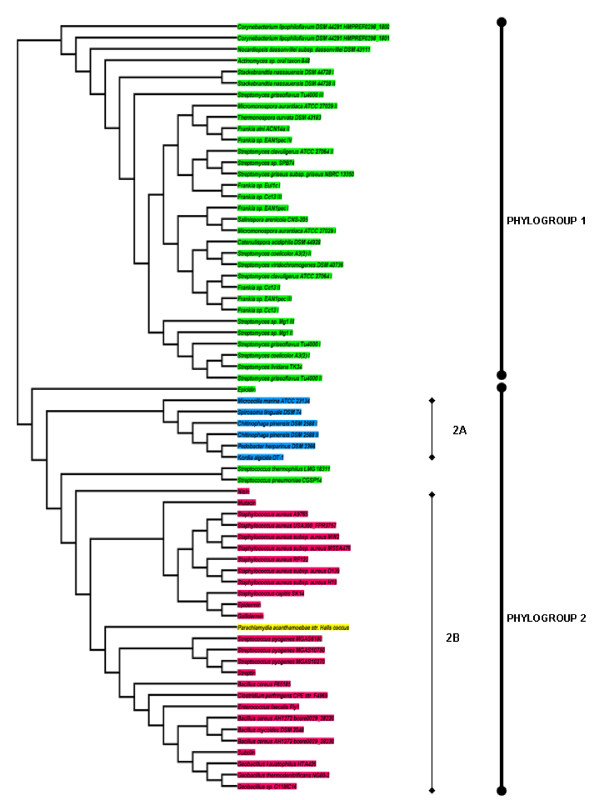
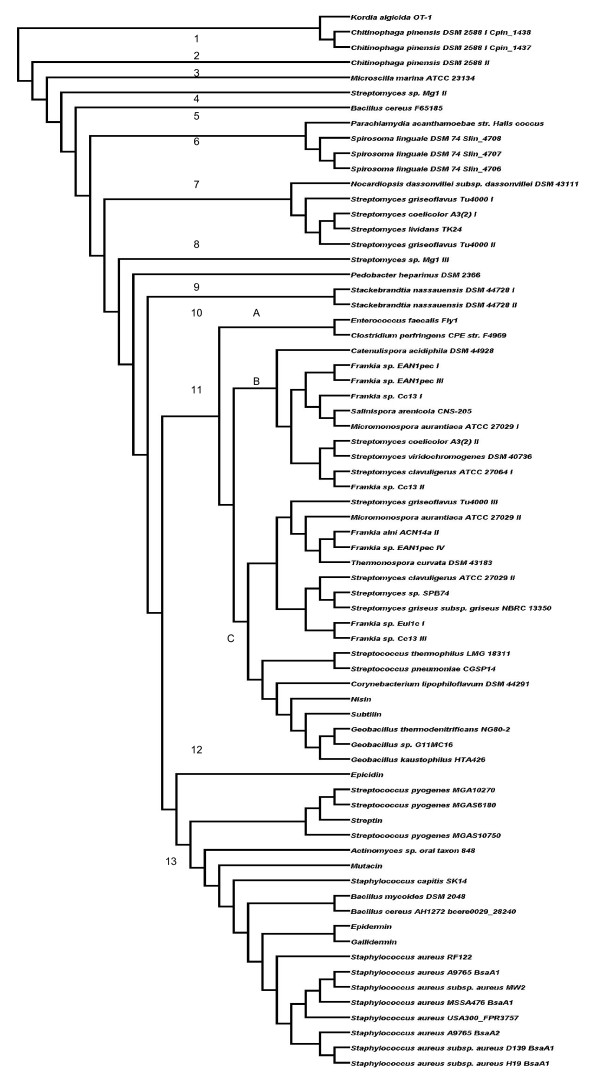
Cladogram of all the LanB enzymes from clusters encountered during the screen. Also included are dehydratases from some well-known lantibiotics. Green = Actinobacteria; Pink = Firmicutes; Blue = Bacteroidetes; Yellow = Chlamydiae
Figure 6
Figure 6
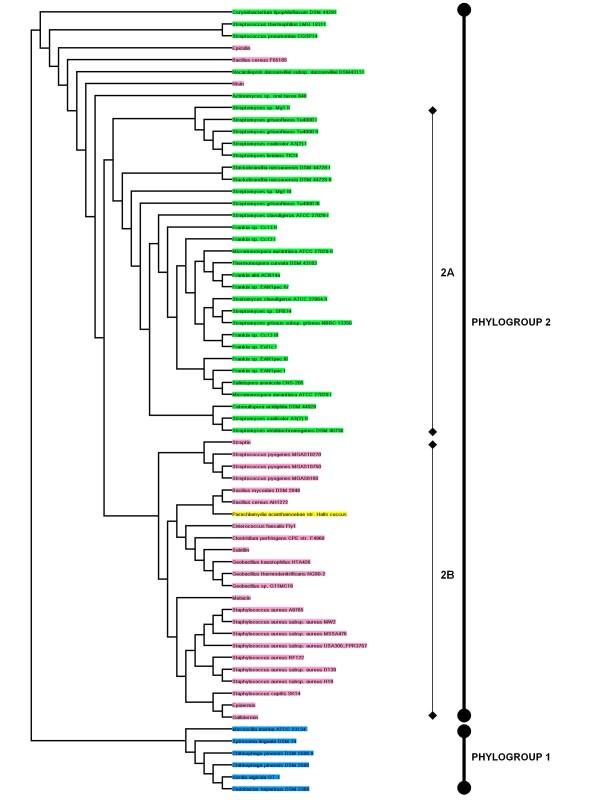
Cladogram of all the LanC enzymes from clusters encountered during the screen, as well as some from well-known lantibiotics. Green = Actinobacteria; Pink = Firmicutes; Blue = Bacteroidetes; Yellow = Chlamydiae
Figure 7
Figure 7
A cladogram of all the LanA prepeptides identified in this study, as well as a number of previously identified LanAs.
Figure 8
Figure 8
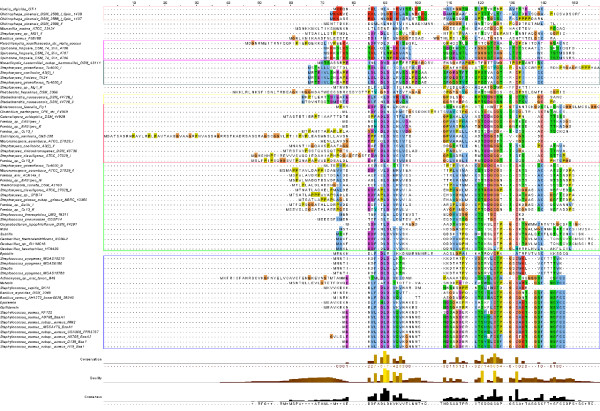
Alignment of the LanA prepeptides identified in this study, as well as a number of previously identified LanAs.

References

    1. Cotter PD, Hill C, Ross RP. Bacteriocins: Developing innate immunity for food. Nat Rev Microbiol. 2005;3(10):777–788. doi: 10.1038/nrmicro1273. - DOI - PubMed
    1. Rea M, Ross RP, Cotter PD, Hill C. In Prokaryotic antimicrobial peptides. Springer Press; 2010. Classification of bacteriocins from gram positive bacteria. in press .
    1. Willey JM, van der Donk WA. Lantibiotics: Peptides of diverse structure and function. Annual Review of Microbiology. 2007;61:477–501. doi: 10.1146/annurev.micro.61.080706.093501. - DOI - PubMed
    1. Kodani S, Hudson ME, Durrant MC, Buttner MJ, Nodwell JR, Willey JM. The SapB morphogen is a lantibiotic-like peptide derived from the product of the developmental gene ramS in Streptomyces coelicolor. Proceedings of the National Academy of Sciences of the United States of America. 2004;101(31):11448–11453. doi: 10.1073/pnas.0404220101. - DOI - PMC - PubMed
    1. Goto Y, Li B, Claesen J, Shi Y, Bibb M, Van der Donk W. Discovery of unique lanthionine synthetases reveals new mechanistic and evolutionary insights. PloS Biology. 2010;8(3) doi: 10.1371/journal.pbio.1000339. - DOI - PMC - PubMed

Publication types

LinkOut - more resources