


The lymph as a pool of self-antigens
- PMID: 21123113
- PMCID: PMC3052980
- DOI: 10.1016/j.it.2010.10.004
The lymph as a pool of self-antigens
Abstract
Prenodal lymph is generated from the interstitial fluid that surrounds organs, and thus contains products of organ metabolism and catabolism. New proteomic analyses of lymph have identified proteins and peptides that are derived from capillary extravasation and tissue-specific proteins. Many of these peptides are detected at nanomolar concentrations in the lymph before passage through a regional lymph node. Before entering the node and once inside, proteins and processed peptides are filtered from the lymph by circulating immature dendritic cells (DCs) or non-activated nodal antigen-presenting cells (APCs) (macrophages, B cells and immature DCs). Here, we suggest that this process ensures organ-specific self-antigens are displayed to circulating and nodal APCs, thus contributing to the maintenance of peripheral tolerance.
Copyright © 2010 Elsevier Ltd. All rights reserved.
Figures
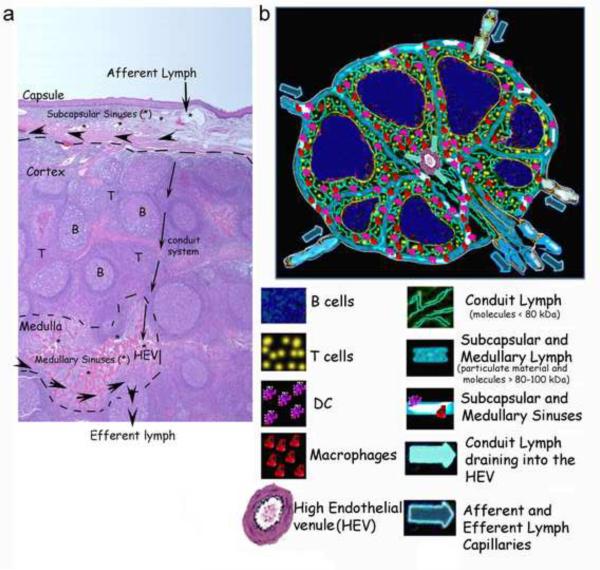
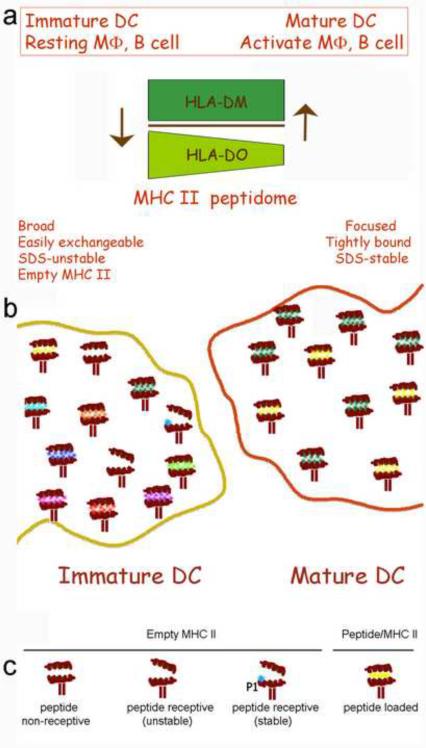
References
-
- Heim WJ. On the Chemical Composition of lymph from subcutaneous vessels. Harvard University Press; Cambridge, Mass.: 1932. pp. 553–558.
-
- Yoffey J, et al. Lymphatics, Lymph, and Lymphoid tissue. Harvard University Press; Cambridge, Mass.: 1956.
-
- Levick JR, Michel CC. Microvascular fluid exchange and the revised Starling principle. C. ardiovasc. Res. 2010;87(2):198–210. - PubMed
-
- Aukland K, et al. Protein concentration of lymph and interstitial fluid in the rat tail. Am. J. Physiol. 1984;247(1):4–9. - PubMed
-
- Leak LV, et al. Proteomic analysis of lymph. Proteomics. 2004;4:753–765. - PubMed
MeSH terms
Substances
Grants and funding
LinkOut - more resources
Full Text Sources
Miscellaneous
