Impact of the conjugation method on the immunogenicity of Streptococcus pneumoniae serotype 19F polysaccharide in conjugate vaccines
- PMID: 21123523
- PMCID: PMC3067356
- DOI: 10.1128/CVI.00402-10
Impact of the conjugation method on the immunogenicity of Streptococcus pneumoniae serotype 19F polysaccharide in conjugate vaccines
Abstract
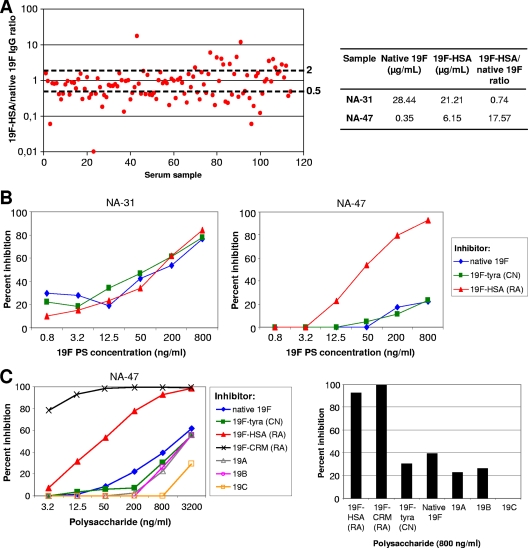
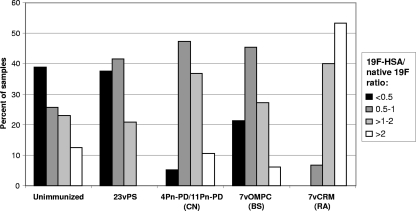
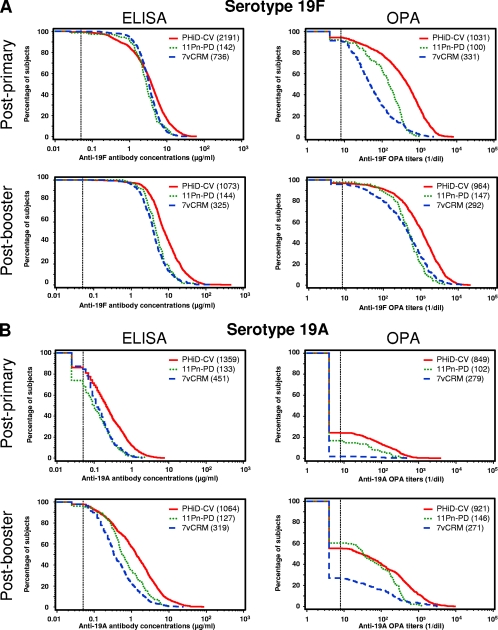
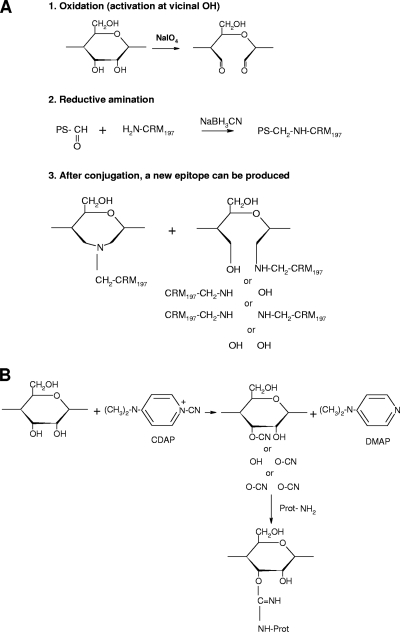
7vCRM (Pfizer, Inc.) and PHiD-CV (GlaxoSmithKline Biologicals) are two pneumococcal conjugate vaccines licensed for the prevention of invasive pneumococcal disease and acute otitis media caused by the vaccine serotypes of Streptococcus pneumoniae. Neither vaccine contains serotype 19A, but both contain the closely related serotype 19F. No decrease in the incidence of serotype 19A disease has been observed following the introduction of 7vCRM, suggesting that this serotype 19F-containing vaccine provides limited cross-protection against serotype 19A. To investigate the impact that conjugation methods may have on antipolysaccharide immune responses and to determine whether this limited cross-protection is characteristic of the serotype 19F polysaccharide or rather of the 19F-CRM (cross-reacting material) conjugate, we compared naturally induced antibodies against serotypes 19F and 19A with antibodies induced after vaccination with different pneumococcal conjugate vaccines. We found that conjugation of the serotype 19F polysaccharide using reductive amination (as in 7vCRM) resulted in the formation of at least one additional epitope that is not present in the native form of the 19F polysaccharide or following 19F conjugation using a bifunctional spacer (as in the prototype vaccine 7vOMPC) or cyanylation (as in PHiD-CV). We also found that pneumococcal vaccines conjugated using cyanylation induce more opsonophagocytic antibodies against serotype 19F and a considerably higher level of cross-opsonophagocytic antibodies against serotype 19A than vaccines conjugated using reductive amination. In conclusion, these results suggest that the conjugation method can influence the functionality of the antibodies induced against the homologous serotype 19F and the cross-reactive serotype 19A of S. pneumoniae.
Figures
References
-
- Bermal, N., et al. 2011. Safety and immunogenicity of a booster dose of the 10-valent pneumococcal nontypeable Haemophilus influenzae protein D conjugate vaccine (PHiD-CV) coadministered with DTPw-HBV/Hib and poliovirus vaccines. Pediatr. Infect. Dis. J. 30:69-72. - PubMed
-
- Bermal, N., et al. 2009. The 10-valent pneumococcal non-typeable Haemophilus influenzae protein D conjugate vaccine (PHiD-CV) co-administered with DTPw-HBV/Hib and poliovirus vaccines: assessment of immunogenicity. Pediatr. Infect. Dis. J. 28:S89-S96. - PubMed
-
- Black, S., et al. 2000. Efficacy, safety and immunogenicity of heptavalent pneumococcal conjugate vaccine in children. Northern California Kaiser Permanente Vaccine Study Center Group. Pediatr. Infect. Dis. J. 19:187-195. - PubMed
-
- Centers for Disease Control and Prevention. 2010. Licensure of a 13-valent pneumococcal conjugate vaccine (PCV13) and recommendations for use among children—Advisory Committee on Immunization Practices (ACIP), 2010. MMWR Morb. Mortal. Wkly. Rep. 59:258-261. - PubMed
Publication types
MeSH terms
Substances
LinkOut - more resources
Full Text Sources
Other Literature Sources
Medical