. 2010 Nov 24;6(11):e1001224.
doi: 10.1371/journal.pgen.1001224.

CTCF-dependent chromatin bias constitutes transient epigenetic memory of the mother at the H19-Igf2 imprinting control region in prospermatogonia

Affiliations

CTCF-dependent chromatin bias constitutes transient epigenetic memory of the mother at the H19-Igf2 imprinting control region in prospermatogonia

Dong-Hoon Lee et al. PLoS Genet. .

Abstract

Genomic imprints-parental allele-specific DNA methylation marks at the differentially methylated regions (DMRs) of imprinted genes-are erased and reestablished in germ cells according to the individual's sex. Imprint establishment at paternally methylated germ line DMRs occurs in fetal male germ cells. In prospermatogonia, the two unmethylated alleles exhibit different rates of de novo methylation at the H19/Igf2 imprinting control region (ICR) depending on parental origin. We investigated the nature of this epigenetic memory using bisulfite sequencing and allele-specific ChIP-SNuPE assays. We found that the chromatin composition in fetal germ cells was biased at the ICR between the two alleles with the maternally inherited allele exhibiting more H3K4me3 and less H3K9me3 than the paternally inherited allele. We determined genetically that the chromatin bias, and also the delayed methylation establishment in the maternal allele, depended on functional CTCF insulator binding sites in the ICR. Our data suggest that, in primordial germ cells, maternally inherited allele-specific CTCF binding sets up allele-specific chromatin differences at the ICR. The erasure of these allele-specific chromatin marks is not complete before the process of de novo methylation imprint establishment begins. CTCF-dependent allele-specific chromatin composition imposes a maternal allele-specific delay on de novo methylation imprint establishment at the H19/Igf2 ICR in prospermatogonia.


Conflict of interest statement

The authors have declared that no competing interests exist.

Figures
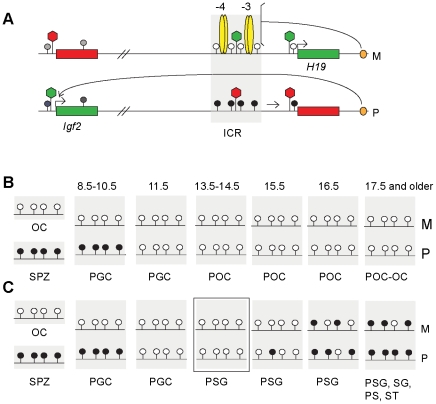
Figure 1
Figure 1. The imprint cycle at the H19/Igf2 ICR.
Schematic representation of epigenetic features at the H19/Igf2 imprinted domain based on publications referenced in the Introduction. (A) The H19/Igf2 imprinted domain in the soma. Maternal chromosome (M): unmethylated (white lollipops) ICR (shaded area) is inherited from the egg. CTCF protein (yellow ovals) at binding sites 1–2 and 3–4 at about −4 kb and −3 kb upstream of the H19 transcription start site imparts insulator activity (bracket) between the Igf2 promoters and the shared, downstream enhancers (orange oval). Paternal chromosome (P): methylated (black lollipops) ICR is inherited from the sperm, CTCF cannot bind, hence ICR has no insulator activity, Igf2 promoters and enhancers can interact. Early in postimplantation development, the H19 promoter is inactivated by an ICR-dependent mechanism (horizontal arrow). Active or repressive chromatin (green or red hexagon) is present at expressed or silent alleles of genes (green-red rectangles) and at respective alleles of the ICR. (B) Fate of the imprint in the female germ line. Methylation status of the ICR is depicted in the mature oocyte (OC), spermatozoon (SPZ), primordial germ cells (PGC) primary oocytes (POC) at gestational stages (in dpc). (C) Fate of the imprint in the male germ line. Methylation status is depicted in OC, SPZ and PGC as above and in prospermatogonia (PSG), spermatogonia (SG) pachytene spermatocytes (PS) and round spermatids (ST). The developmental stage under investigation is marked by a rectangle.
Figure 2
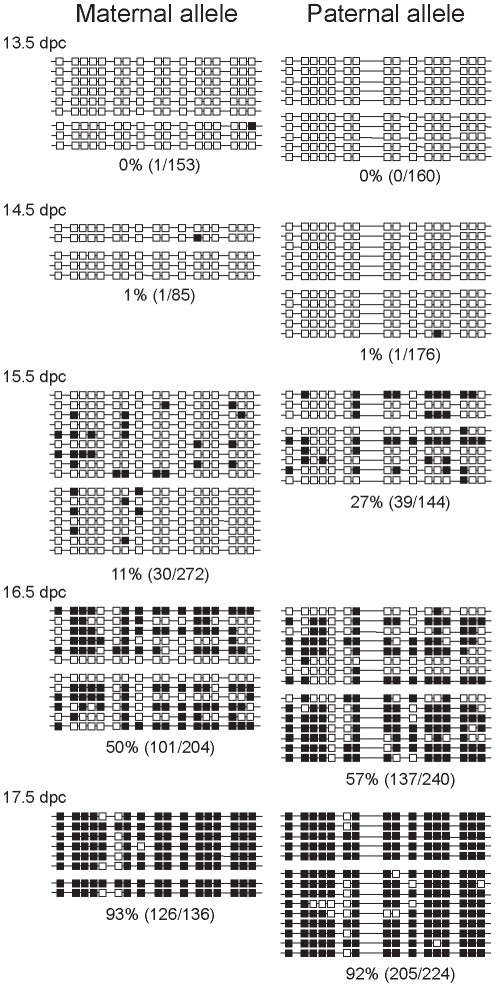
Figure 2. Methylation dynamics at the ICR in normal prospermatogonia.
Bisulfite sequencing results are shown at fetal stages (in dpc). Prospermatogonia of CS X OG2 fetuses were analyzed. Unmethylated CpGs (white squares) and methylated CpGs (black squares) are shown along independent chromosomes (horizontal lines). Groups of chromosomes were derived from the same bisulfite reaction. CTCF sires 1 and 2 of the ICR are included in the analyzed region. CpG site 8 is polymorphic and is only present in the CS type allele. The percentage of methylated CpGs (methylated CpG/total CpG) at each developmental stage is indicated for each allele.
Figure 3
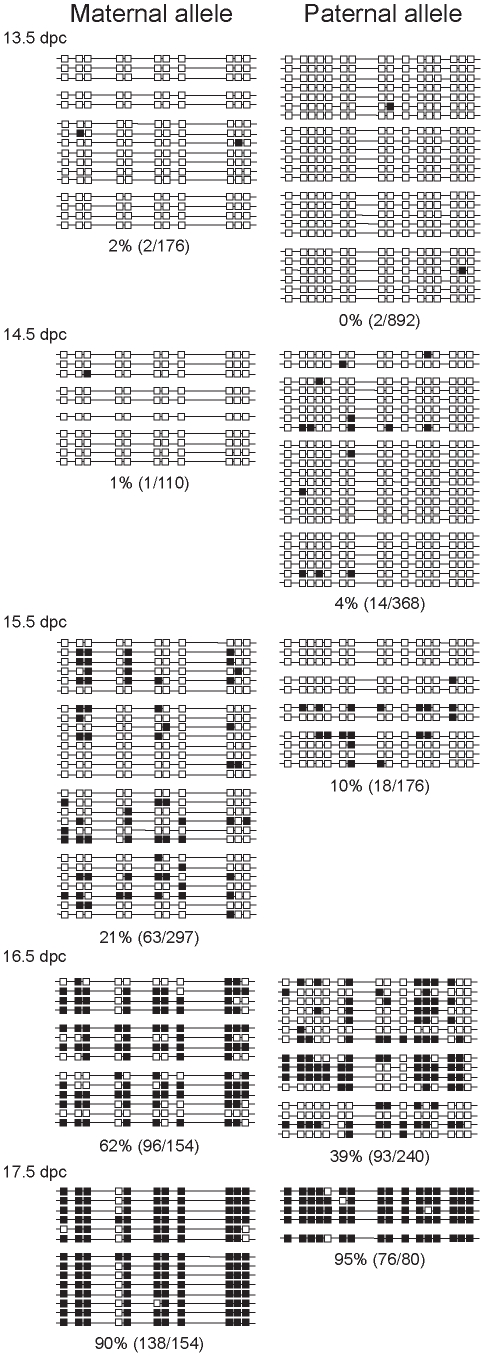
Figure 3. Methylation dynamics at the ICR in ICR CTCF site mutant prospermatogonia.
Bisulfite sequencing results of prospermatogonia from CTCFm X OG2 fetuses are shown. CpG sites 4–5 and 12–13 had been eliminated in the maternal allele by the CTCF site mutations. Other details are as in Figure 2.
Figure 4
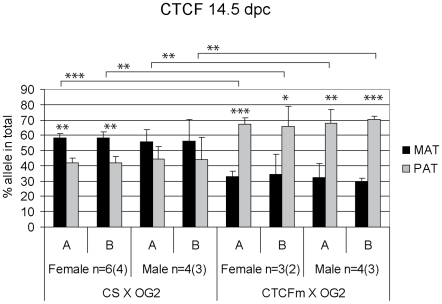
Figure 4. Allele-specific bias in CTCF binding chromatin at the H19/Igf2 ICR in 14.5 dpc fetal germ cells.
Female and male germ cell chromatin was precipitated from 14.5 dpc CS X OG2 and CTCFm X OG2 fetuses with the anti-CTCF antibody. Allele-specific enrichment in the immunoprecipitated chromatin was assessed at the H19/Igf2 ICR −4 kb and −3 kb regions (A and B, respectively) using ChIP-SNuPE assays. The number of ChIP reactions (n) is indicated and the number of independent germ cell pools/chromatin preparations is given in parentheses. Average maternal (MAT) and paternal (PAT) allele contributions are shown with standard deviations. Statistical significance of the difference between alleles and between wild type and mutant samples was evaluated using Student T-test (p values are shown by asterisks: <0.001***; <0.01**; <0.05*).
Figure 5
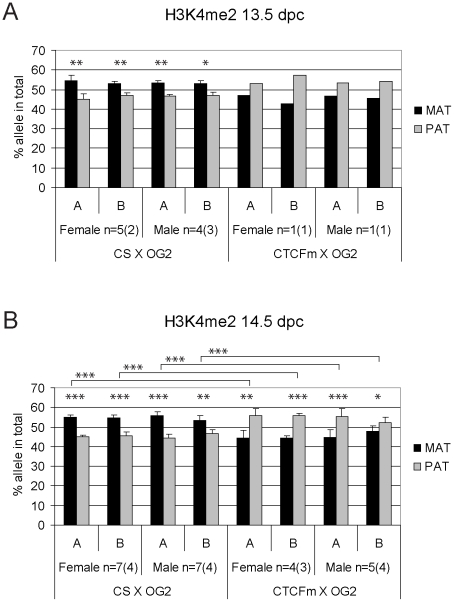
Figure 5. Allele-specific bias in H3K4me2 enrichment at the H19/Igf2 ICR in fetal germ cells.
ChIP-SNuPE Sequenom assay results of H3K4me2-precipitated (A) 13.5 dpc and (B) 14.5 dpc fetal germ cell chromatin are shown. Other details are as in Figure 4.
Figure 6
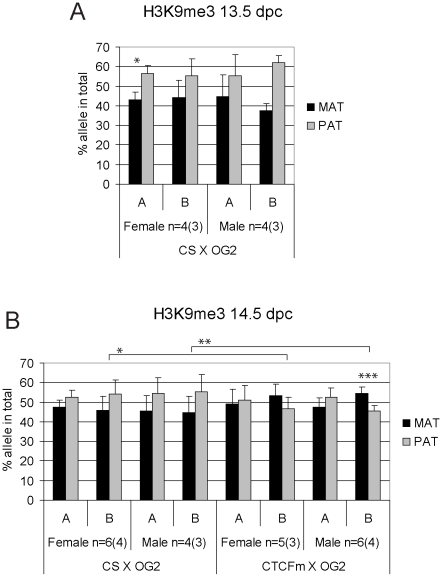
Figure 6. Allele-specific bias in H3K9me3 enrichment at the H19/Igf2 ICR in fetal germ cells.
ChIP-SNuPE Sequenom assays results of H3K9me3-precipitated (A) 13.5 dpc and (B) 14.5 dpc fetal germ cell chromatin is shown. Other details are as in Figure 4.
Figure 7
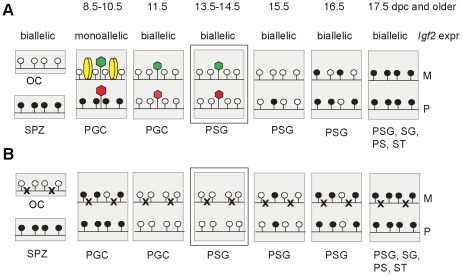
Figure 7. Model.
Functional CTCF sites are required for chromatin bias and delayed methylation of the maternally inherited ICR allele. Expected CTCF binding and chromatin composition is depicted in primordial germ cells (PGC). Observed chromatin bias is depicted in prospermatogonia (PSG). Other details are as Figure 1. The developmental stages are indicated above in dpc. (A) Imprint establishment of the ICR in the normal male germ line. Chromatin bias is observed in the normal ICR between the parental alleles in the absence of CpG methylation at 13.5–14.5 dpc. (B) Imprint establishment at the CTCF site mutant ICR in the male germ line. CTCF cannot bind in the maternal allele in PGCs because of the mutations (x) or in the paternal allele because of CpG methylation. The chromatin bias, found in normal cells, is no longer observed between parental alleles in the mutant cells at 13.5–14.5 dpc and the maternal allele's methylation is not delayed at 15.5–17.5 dpc.

References

    1. Ferguson-Smith AC, Surani MA. Imprinting and the epigenetic asymmetry between parental genomes. Science. 2001;293:1086–1089. - PubMed
    1. Reik W, Walter J. Genomic imprinting: parental influence on the genome. Nat Rev Genet. 2001;2:21–32. - PubMed
    1. Mann JR, Szabó PE, Reed MR, Singer-Sam J. Methylated DNA sequences in genomic imprinting. Crit Rev Eukaryot Gene Expr. 2000;10:241–257. - PubMed
    1. Wutz A, Smrzka OW, Schweifer N, Schellander K, Wagner EF, et al. Imprinted expression of the Igf2r gene depends on an intronic CpG island. Nature. 1997;389:745–749. - PubMed
    1. Thorvaldsen JL, Bartolomei MS. Molecular biology. Mothers setting boundaries. Science. 2000;288:2145–2146. - PubMed

Publication types

MeSH terms