TGF-b2 induction regulates invasiveness of Theileria-transformed leukocytes and disease susceptibility
- PMID: 21124992
- PMCID: PMC2987823
- DOI: 10.1371/journal.ppat.1001197
TGF-b2 induction regulates invasiveness of Theileria-transformed leukocytes and disease susceptibility
Abstract
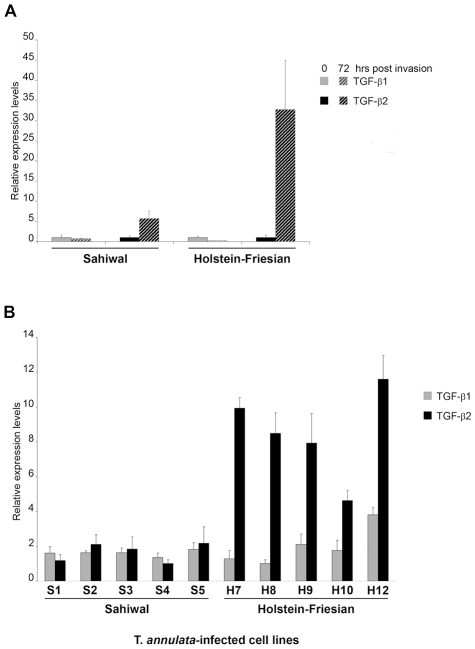
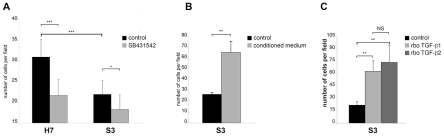
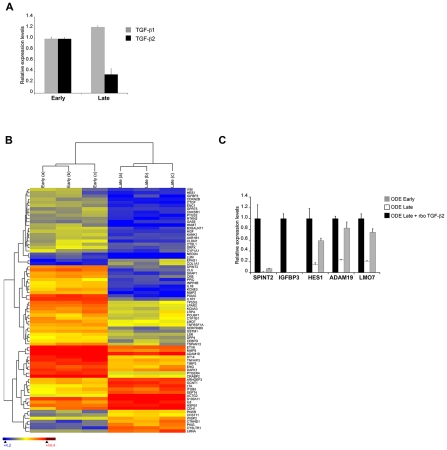
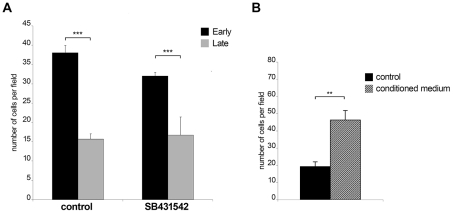
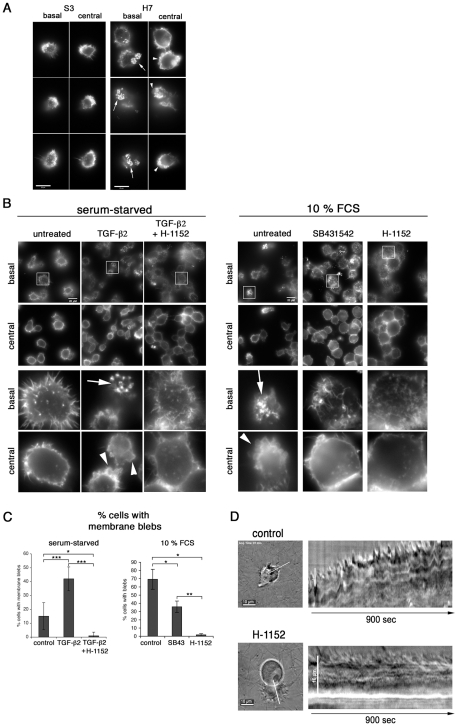
Theileria parasites invade and transform bovine leukocytes causing either East Coast fever (T. parva), or tropical theileriosis (T. annulata). Susceptible animals usually die within weeks of infection, but indigenous infected cattle show markedly reduced pathology, suggesting that host genetic factors may cause disease susceptibility. Attenuated live vaccines are widely used to control tropical theileriosis and attenuation is associated with reduced invasiveness of infected macrophages in vitro. Disease pathogenesis is therefore linked to aggressive invasiveness, rather than uncontrolled proliferation of Theileria-infected leukocytes. We show that the invasive potential of Theileria-transformed leukocytes involves TGF-b signalling. Attenuated live vaccine lines express reduced TGF-b2 and their invasiveness can be rescued with exogenous TGF-b. Importantly, infected macrophages from disease susceptible Holstein-Friesian (HF) cows express more TGF-b2 and traverse Matrigel with great efficiency compared to those from disease-resistant Sahiwal cattle. Thus, TGF-b2 levels correlate with disease susceptibility. Using fluorescence and time-lapse video microscopy we show that Theileria-infected, disease-susceptible HF macrophages exhibit increased actin dynamics in their lamellipodia and podosomal adhesion structures and develop more membrane blebs. TGF-b2-associated invasiveness in HF macrophages has a transcription-independent element that relies on cytoskeleton remodelling via activation of Rho kinase (ROCK). We propose that a TGF-b autocrine loop confers an amoeboid-like motility on Theileria-infected leukocytes, which combines with MMP-dependent motility to drive invasiveness and virulence.
Conflict of interest statement
The authors have declared that no competing interests exist.
Figures
References
-
- Dobbelaere DA, Rottenberg S. Theileria-induced leukocyte transformation. Curr Opin Microbiol. 2003;6:377–382. - PubMed
-
- Plattner F, Soldati-Favre D. Hijacking of host cellular functions by the Apicomplexa. Annu Rev Microbiol. 2008;62:471–487. - PubMed
-
- Somerville RP, Littlebury P, Pipano E, Brown CG, Shkap V, et al. Phenotypic and genotypic alterations associated with the attenuation of a Theileria annulata vaccine cell line from Turkey. Vaccine. 1998;16:569–575. - PubMed
-
- Adamson R, Logan M, Kinnaird J, Langsley G, Hall R. Loss of matrix metalloproteinase 9 activity in Theileria annulata-attenuated cells is at the transcriptional level and is associated with differentially expressed AP-1 species. Mol Biochem Parasitol. 2000;106:51–61. - PubMed
-
- Lizundia R, Chaussepied M, Huerre M, Werling D, Di Santo JP, et al. c-Jun NH2-terminal kinase/c-Jun signaling promotes survival and metastasis of B lymphocytes transformed by Theileria. Cancer Res. 2006;66:6105–6110. - PubMed
Publication types
MeSH terms
Substances
Grants and funding
LinkOut - more resources
Full Text Sources
Research Materials
Miscellaneous