


Perinatal exposure to environmentally relevant levels of bisphenol A decreases fertility and fecundity in CD-1 mice
- PMID: 21126938
- PMCID: PMC3080939
- DOI: 10.1289/ehp.1002559
Perinatal exposure to environmentally relevant levels of bisphenol A decreases fertility and fecundity in CD-1 mice
Abstract
Background: Perinatal exposure to low-doses of bisphenol A (BPA) results in alterations in the ovary, uterus, and mammary glands and in a sexually dimorphic region of the brain known to be important for estrous cyclicity.
Objectives: We aimed to determine whether perinatal exposure to environmentally relevant doses of BPA alters reproductive capacity.
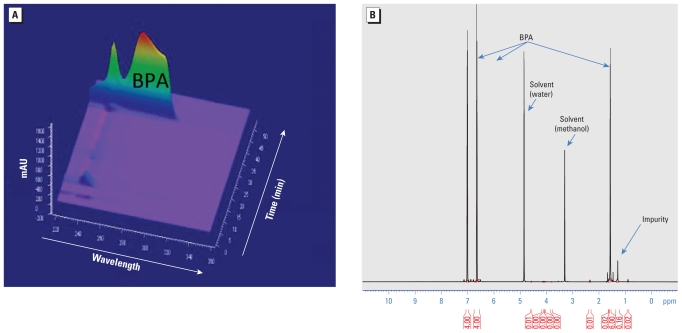
Methods: Female CD-1 mice that were exposed to BPA at 0, 25 ng, 250 ng, or 25 µg/kg body weight (BW)/day or diethylstilbestrol (DES) at 10 ng/kg BW/day (positive control) from gestational day 8 through day 16 of lactation were continuously housed with proven breeder males for 32 weeks starting at 2 months of age. At each delivery, pups born to these mating pairs were removed. The cumulative number of pups, number of deliveries, and litter size were recorded. The purity of the BPA used in this and our previous studies was assessed using HPLC, mass spectrometry, and nuclear magnetic resonance.
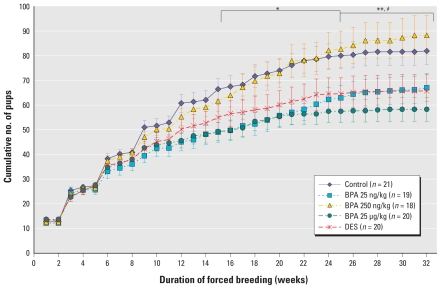
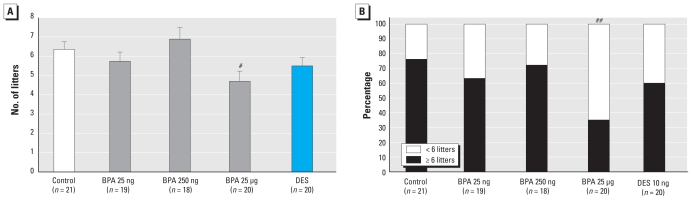
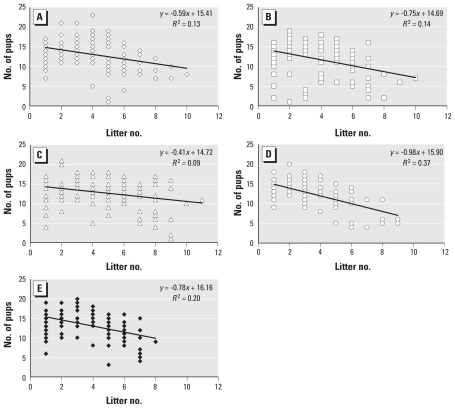
Results: The forced breeding experiment revealed a decrease in the cumulative number of pups, observed as a nonmonotonic dose-response effect, and a decline in fertility and fecundity over time in female mice exposed perinatally to BPA. The BPA was 97% pure, with no evidence of contamination by other phenolic compounds.
Conclusions: Perinatal exposure to BPA leads to a dose-dependent decline in the reproductive capacity of female mice. The effects on the cumulative number of pups are comparable to those previously reported in mice developmentally exposed to DES, a compound well known to impair reproduction in women. This association suggests the possibility that early BPA exposure may also affect reproductive capacity in women.
Figures
References
-
- Amara JF, Dannies PS. 17β-Estradiol has a biphasic effect on GH cell growth. Endocrinology. 1983;112:1141–1143. - PubMed
-
- Baird DD, Newbold R. Prenatal diethylstilbestrol (DES) exposure is associated with uterine leiomyoma development. Reprod Toxicol. 2005;20:81–84. - PubMed
-
- Bateson P, Barker D, Clutton-Brock T, Deb D, D’Udine B, Foley RA, et al. Developmental plasticity and human health. Nature. 2004;430:419–421. - PubMed
-
- Blair RM, Fang H, Branham WS, Hass BS, Dial SL, Moland CL, et al. The estrogen receptor relative binding affinities of 188 natural and xenochemicals: structural diversity of ligands. Toxicol Sci. 2001;54:138–153. - PubMed
Publication types
MeSH terms
Substances
Grants and funding
LinkOut - more resources
Full Text Sources