Historical review of occupational exposures and cancer risks in medical radiation workers
- PMID: 21128805
- PMCID: PMC4098897
- DOI: 10.1667/RR2014.1
Historical review of occupational exposures and cancer risks in medical radiation workers
Abstract
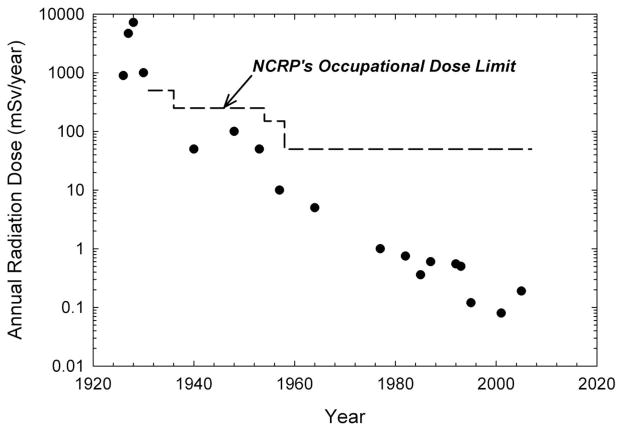
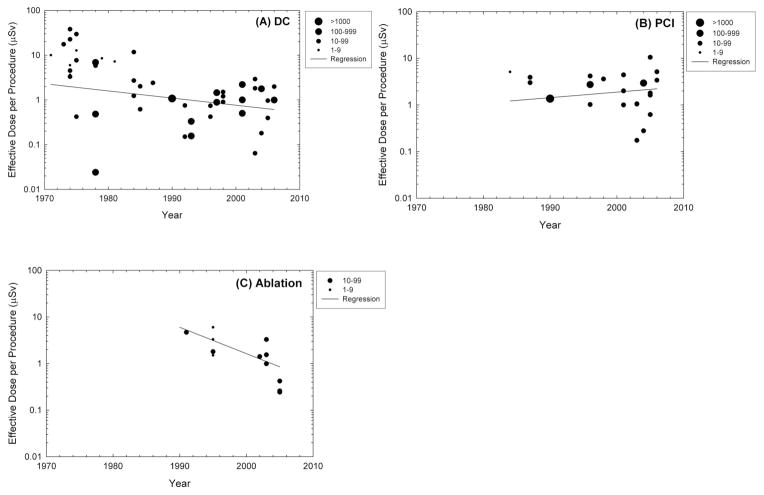
Epidemiological studies of medical radiation workers have found excess risks of leukemia, skin and female breast cancer in those employed before 1950 but little consistent evidence of cancer risk increases subsequently. Occupational radiation-related dose-response data and recent and lifetime cancer risk data are limited for radiologists and radiologic technologists and lacking for physicians and technologists performing fluoroscopically guided procedures. Survey data demonstrate that occupational doses to radiologists and radiologic technologists have declined over time. Eighty mostly small studies of cardiologists and fewer studies of other physicians reveal that effective doses to physicians per interventional procedure vary by more than an order of magnitude. For medical radiation workers, there is an urgent need to expand the limited information on average annual, time-trend and organ doses from occupational radiation exposures and to assess lifetime cancer risks of these workers. For physicians and technologists performing interventional procedures, more information about occupational doses should be collected and long-term follow-up studies of cancer and other serious disease risks should be initiated. Such studies will help optimize standardized protocols for radiologic procedures, determine whether current radiation protection measures for medical radiation workers are adequate, provide guidance on cancer screening needs, and yield valuable insights on cancer risks associated with chronic radiation exposure.
Figures
References
-
- DiSantis DJ. Early American Radiology: the pioneer years. AJR Am J Roentgenol. 1986;147:850–3. - PubMed
-
- Walker JS. The controversy over radiation safety. A historical overview. Jama. 1989;262:664–8. - PubMed
-
- Preston DL, Ron E, Tokuoka S, et al. Solid cancer incidence in atomic bomb survivors: 1958–1998. Radiat Res. 2007;168:1–64. - PubMed
-
- Boice JD., Jr . Ionizing radiation. In: Schottenfeld D, Fraumeni JF Jr, editors. Cancer Epidemiology and Prevention. 3. New York, New York: Oxford University Press; 2006.
-
- Mettler FA, Jr, Thomadsen BR, Bhargavan M, et al. Medical radiation exposure in the U.S. in 2006: preliminary results. Health Phys. 2008;95:502–7. - PubMed
Publication types
MeSH terms
Grants and funding
LinkOut - more resources
Full Text Sources
Medical