. 2011 Apr;44(2):266-76.
doi: 10.1016/j.jbi.2010.11.008. Epub 2010 Dec 2.

The DEDUCE Guided Query tool: providing simplified access to clinical data for research and quality improvement

Affiliations

The DEDUCE Guided Query tool: providing simplified access to clinical data for research and quality improvement

Monica M Horvath et al. J Biomed Inform. 2011 Apr.

Abstract

In many healthcare organizations, comparative effectiveness research and quality improvement (QI) investigations are hampered by a lack of access to data created as a byproduct of patient care. Data collection often hinges upon either manual chart review or ad hoc requests to technical experts who support legacy clinical systems. In order to facilitate this needed capacity for data exploration at our institution (Duke University Health System), we have designed and deployed a robust Web application for cohort identification and data extraction--the Duke Enterprise Data Unified Content Explorer (DEDUCE). DEDUCE is envisioned as a simple, web-based environment that allows investigators access to administrative, financial, and clinical information generated during patient care. By using business intelligence tools to create a view into Duke Medicine's enterprise data warehouse, DEDUCE provides a Guided Query functionality using a wizard-like interface that lets users filter through millions of clinical records, explore aggregate reports, and, export extracts. Researchers and QI specialists can obtain detailed patient- and observation-level extracts without needing to understand structured query language or the underlying database model. Developers designing such tools must devote sufficient training and develop application safeguards to ensure that patient-centered clinical researchers understand when observation-level extracts should be used. This may mitigate the risk of data being misunderstood and consequently used in an improper fashion.


Figures

Figure 1
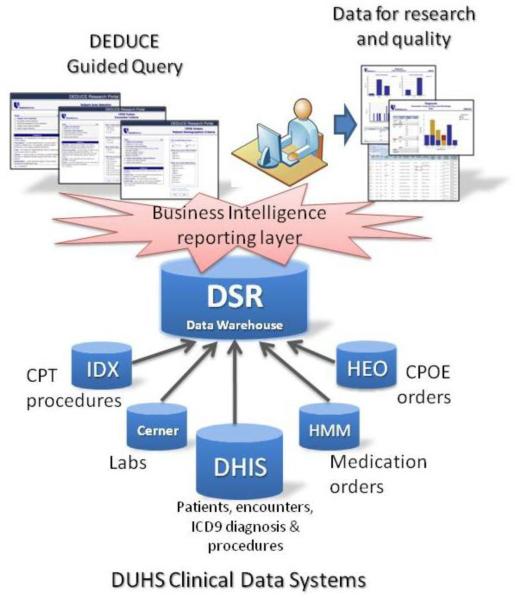
Figure 1. Overview of the DEDUCE Guided Query Architecture
Patient care data are stored in various silos: patient registration, professional billing, and CPT procedures = IDX (GE Healthcare); laboratory data = Cerner Classic; medication orders = Horizon Meds Manager (HMM, McKesson); CPOE orders = Horizon Expert Orders (HEO, McKesson); patients, encounters, ICD9 diagnoses, ICD9 procedures = DHIS (Duke Healthcare Information System), an in-house system that collects patient administration and management data. Extract-transform-load (ETL) processing is used to bring these streams into the Decision Support Repository (DSR), the DUHS organizational data warehouse. The business intelligence reporting layer interacts with the DSR to provide a complex, dynamic prompted report—the DEDUCE Guided Query (GQ). Users work through GQ to explore and extract information in support of research and quality initiatives.
Figure 2
Figure 2. DEDUCE Guided Query (GQ) Web Interface
In this example, the user is selecting relevant ICD9 codes pertaining to hip fracture diagnoses for older Duke University Hospital patients admitted to orthopedic services in the first 5 months of 2009. In Step 1 (not shown), the user selects the subject area of interest (diagnoses). In Step 2, encounter criteria are defined. Prompt boxes for service type and category auto-populate depending on patient visit type. In Step 3, the user makes selections for race, gender, and age (not shown). In Step 4, the user can search for ICD9 codes by description, category, or AHRQ bundle. Step 5 (not shown) provides the output options. In all GQ screens, the information box at top left shows query steps and selections made, while the information box at bottom left provides helpful definitions. To minimize user error, red text reminds the user of important caveats and red asterisks identify required fields.
Figure 3
Figure 3. Aggregate report output from DEDUCE Guided Query (GQ)
GQ was used to select all patients diagnosed with hypoglycemia admitted to the cardiology, emergency medicine, general medicine, and orthopedics services at Duke University Hospital during the first 5 months of 2009. A representative snapshot of report output is shown. Users can elect to have data displayed as tables, graphs, or both, and the information can be provided in Excel, PDF, or HTML formats. With proper IRB identifiers, users can also elect to obtain an observational-level extract that shows the details of each diagnosis, encounter, and PHI.

References

    1. Corrigan JM, editor. Institute of Medicine. National Academy Press; Washington, DC: 2001. Crossing the quality chasm: A new health care system for the 21st Century.
    1. Leape LL, Berwick DM. Five years after To Err Is Human: what have we learned? JAMA. 2005;293:2384–90. - PubMed
    1. Stelfox HT, Palmisani S, Scurlock C, Orav EJ, Bates DW. The “To Err is Human” report and the patient safety literature. Qual Saf Health Care. 2006;15:174–8. - PMC - PubMed
    1. Prokosch HU, Ganslandt T. Perspectives for medical informatics. Reusing the electronic medical record for clinical research. Methods Inf Med. 2009;48:38–44. - PubMed
    1. Steinbrook R. Health care and the American Recovery and Reinvestment Act. N Engl J Med. 2009;360:1057–60. - PubMed

Publication types

LinkOut - more resources