Antidepressant monotherapy vs sequential pharmacotherapy and mindfulness-based cognitive therapy, or placebo, for relapse prophylaxis in recurrent depression
- PMID: 21135325
- PMCID: PMC3311113
- DOI: 10.1001/archgenpsychiatry.2010.168
Antidepressant monotherapy vs sequential pharmacotherapy and mindfulness-based cognitive therapy, or placebo, for relapse prophylaxis in recurrent depression
Abstract
Context: Mindfulness-based cognitive therapy (MBCT) is a group-based psychosocial intervention designed to enhance self-management of prodromal symptoms associated with depressive relapse.
Objective: To compare rates of relapse in depressed patients in remission receiving MBCT against maintenance antidepressant pharmacotherapy, the current standard of care.
Design: Patients who met remission criteria after 8 months of algorithm-informed antidepressant treatment were randomized to receive maintenance antidepressant medication, MBCT, or placebo and were followed up for 18 months.
Setting: Outpatient clinics at the Centre for Addiction and Mental Health, Toronto, Ontario, Canada, and St Joseph's Healthcare, Hamilton, Ontario.
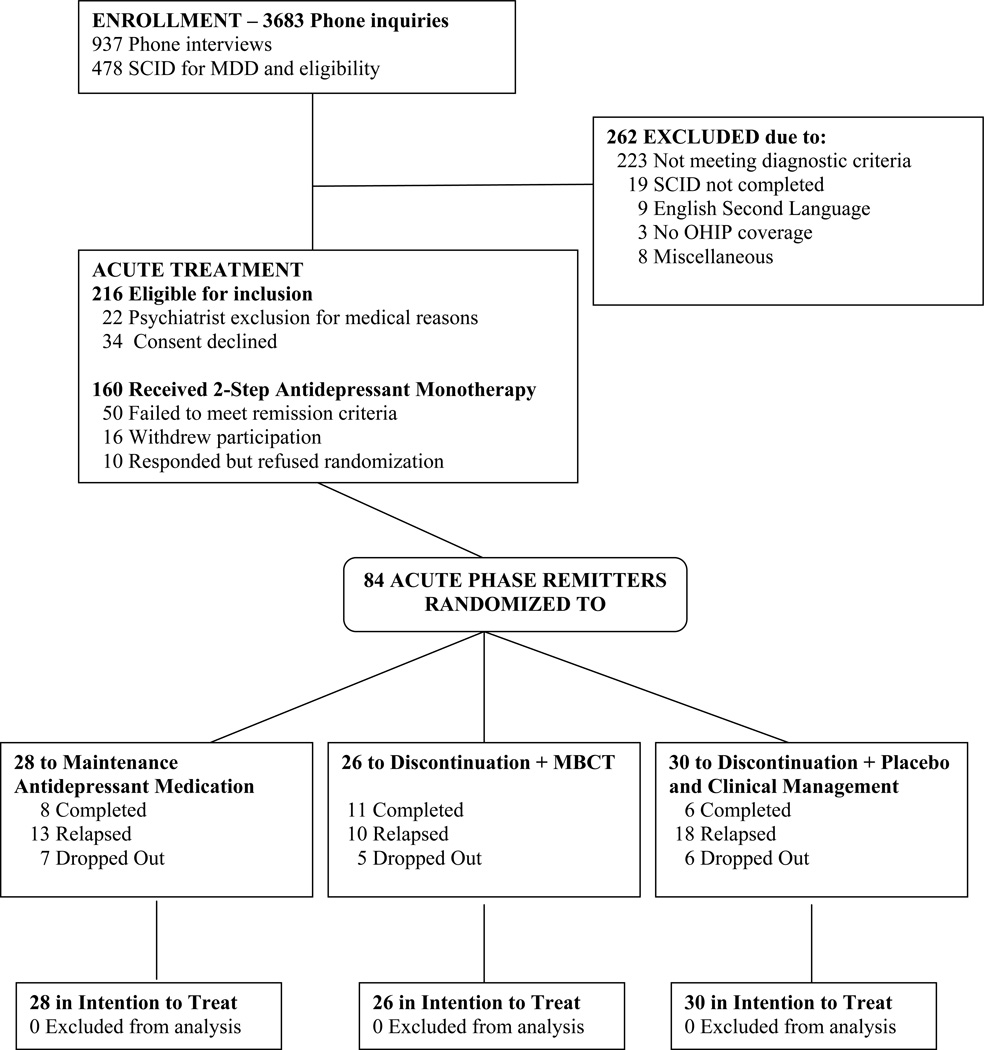
Participants: One hundred sixty patients aged 18 to 65 years meeting DSM-IV criteria for major depressive disorder with a minimum of 2 past episodes. Of these, 84 achieved remission (52.5%) and were assigned to 1 of the 3 study conditions.
Interventions: Patients in remission discontinued their antidepressants and attended 8 weekly group sessions of MBCT, continued taking their therapeutic dose of antidepressant medication, or discontinued active medication and were switched to placebo.
Main outcome measure: Relapse was defined as a return, for at least 2 weeks, of symptoms sufficient to meet the criteria for major depression on module A of the Structured Clinical Interview for DSM-IV.
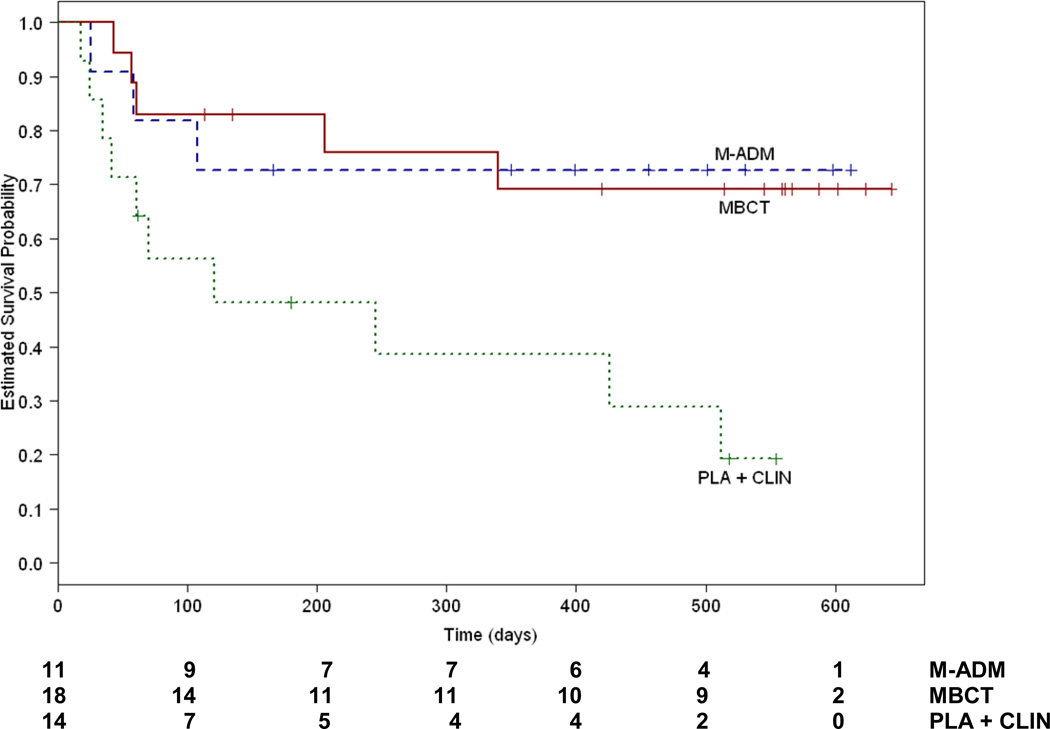
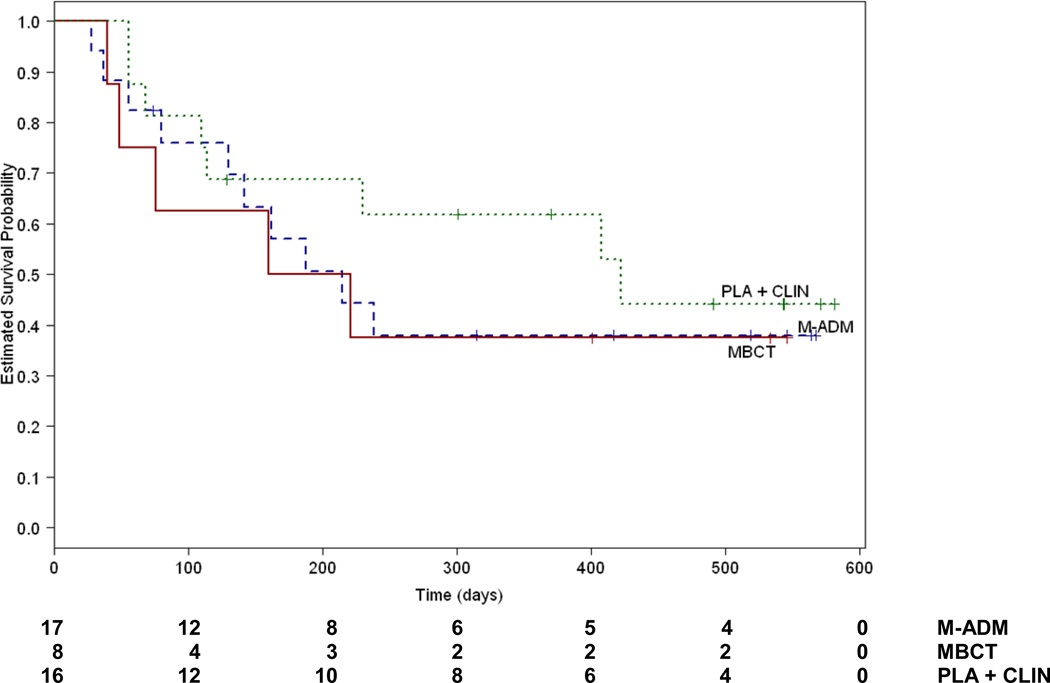
Results: Intention-to-treat analyses showed a significant interaction between the quality of acute-phase remission and subsequent prevention of relapse in randomized patients (P = .03). Among unstable remitters (1 or more Hamilton Rating Scale for Depression score >7 during remission), patients in both MBCT and maintenance treatment showed a 73% decrease in hazard compared with placebo (P = .03), whereas for stable remitters (all Hamilton Rating Scale for Depression scores ≤7 during remission) there were no group differences in survival.
Conclusions: For depressed patients achieving stable or unstable clinical remission, MBCT offers protection against relapse/recurrence on a par with that of maintenance antidepressant pharmacotherapy. Our data also highlight the importance of maintaining at least 1 long-term active treatment in unstable remitters.
Figures
References
-
- Judd LL, Akiskal HS, Zeller PJ, Paulus M, Leon AC, Maser JD, Endicott J, Coryell W, Kunovac JL, Mueller TI, Rice JP, Keller MB. Psychosocial disability during the long-term course of unipolar major depressive disorder. Arch Gen Psychiatry. 2000;57:375–380. - PubMed
-
- Practice guideline for the treatment of patients with major depressive disorder (revision) Am J Psychiatry. 2000;157(4 suppl):1–45. - PubMed
-
- ten Doesschate MC, Bockting CL, Schene AH. Adherence to continuation and maintenance antidepressant use in recurrent depression. J Affect Disord. 2009;115:167–170. - PubMed
-
- Simon GE, Von Korff M, Rutter CM, Peterson DA. Treatment process and outcomes for managed care patients receiving new antidepressant prescriptions from psychiatrists and primary care physicians. Arch Gen Psychiatry. 2001;58:395–401. - PubMed
-
- Fava GA, Ruini C, Rafanelli C. Sequential treatment of mood and anxiety disorders. J Clin Psychiatry. 2005;66:1392–1400. - PubMed
Publication types
MeSH terms
Substances
Grants and funding
LinkOut - more resources
Full Text Sources
Other Literature Sources
Medical
Miscellaneous